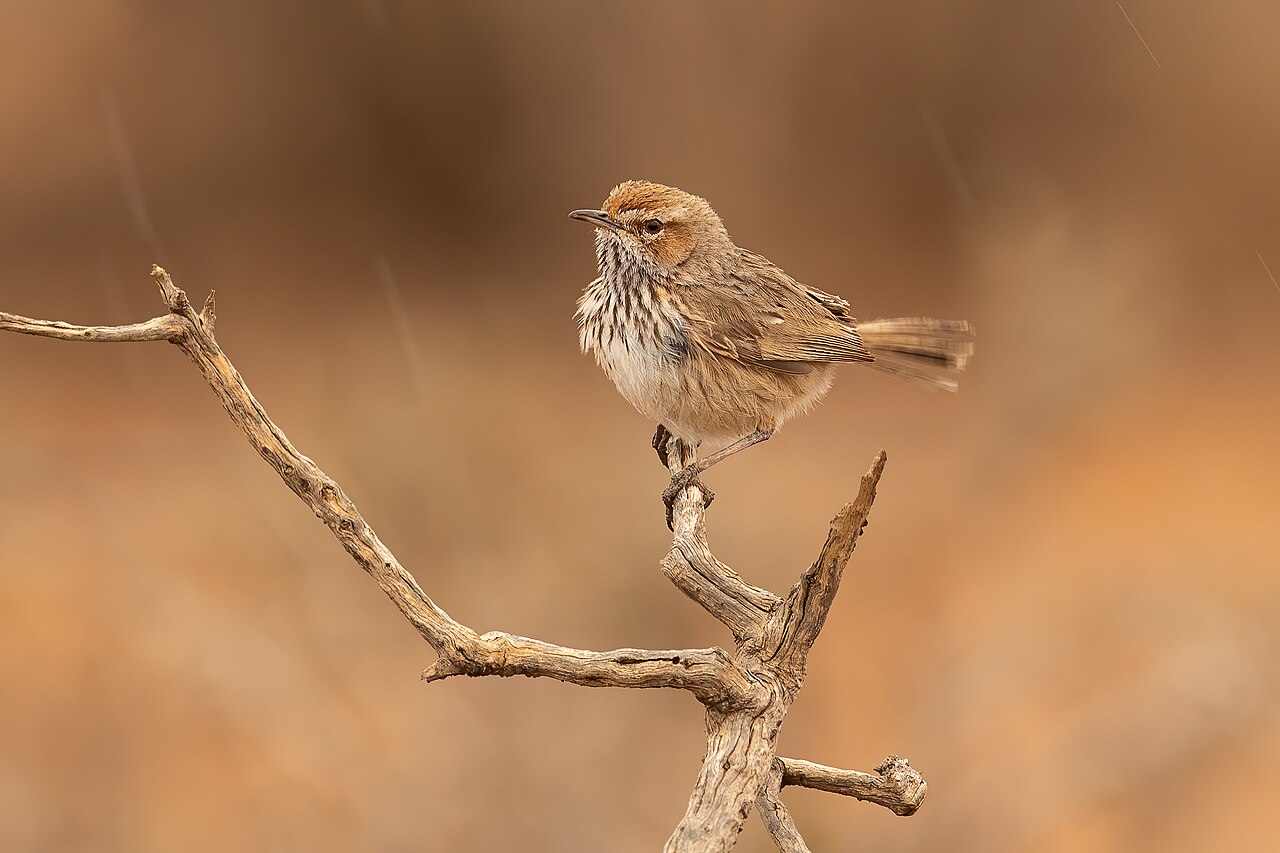
The rufous cisticola is a species of bird in the family Cisticolidae. It is found in Burkina Faso, Cameroon, Central African Republic, Chad, Gambia, Ghana, Guinea, Mali, Nigeria, Senegal, Sierra Leone, and Togo. Its natural habitats are subtropical or tropical dry shrubland and subtropical or tropical dry lowland grassland.
Region
West and Central Africa (Sahel–Sudanian belt)
Typical Environment
Occurs from Senegal and Gambia east through Mali, Burkina Faso, Ghana, Togo, Benin, Nigeria, and into Chad, Cameroon, Central African Republic, and nearby regions. It favors dry savanna, thorny shrubland, and open tall-grass areas, including fallows and edges of cultivation. Birds keep close to ground cover, using tussocks and low bushes for shelter and song perches. It also occupies lightly wooded savannas and seasonally dry lowlands with scattered shrubs.
Altitude Range
0–1600 m
Climate Zone
Tropical
Ease of Keeping
Beginner friendly: 2/5
A small, warm-toned cisticola of dry savannas and shrubby grasslands, the rufous cisticola often keeps low in vegetation, making brief fluttering flights between perches. It is widespread across the Sahel and Sudanian zones of West and Central Africa. Like many cisticolas, it weaves a neat, concealed nest in grasses and is most easily detected by its repetitive, high-pitched song.

Temperament
skulking but active
Flight Pattern
short rapid wingbeats, low fluttering flights between shrubs
Social Behavior
Usually seen singly or in pairs, maintaining small territories in the breeding season. Builds a neat, woven nest low in grasses or shrubs, often well concealed. Likely monogamous with both sexes involved in nesting activities.
Migratory Pattern
Resident
Song Description
A high, thin, repetitive series of notes or short trills delivered from low perches or during brief display flights. Calls include sharp ticks and soft trills used to keep contact in dense cover.
Plumage
Mostly plain warm rufous upperparts with a slightly richer rufous crown; underparts buff to whitish with minimal streaking. Tail is graduated with darker subterminal shading and paler tips. Overall appearance is uniform and cinnamon-toned compared to streakier cisticolas.
Diet
Feeds mainly on small insects such as beetles, grasshoppers, ants, termites, and caterpillars, as well as spiders and other arthropods. Gleans prey from grass stems and low shrubs, occasionally sallying a short distance to capture flying insects. Opportunistic after rains when insect abundance increases.
Preferred Environment
Forages within dense grasses, tussocks, and scattered shrubs in dry savanna and fallow fields. Often keeps to cover, working methodically through low vegetation near the ground.