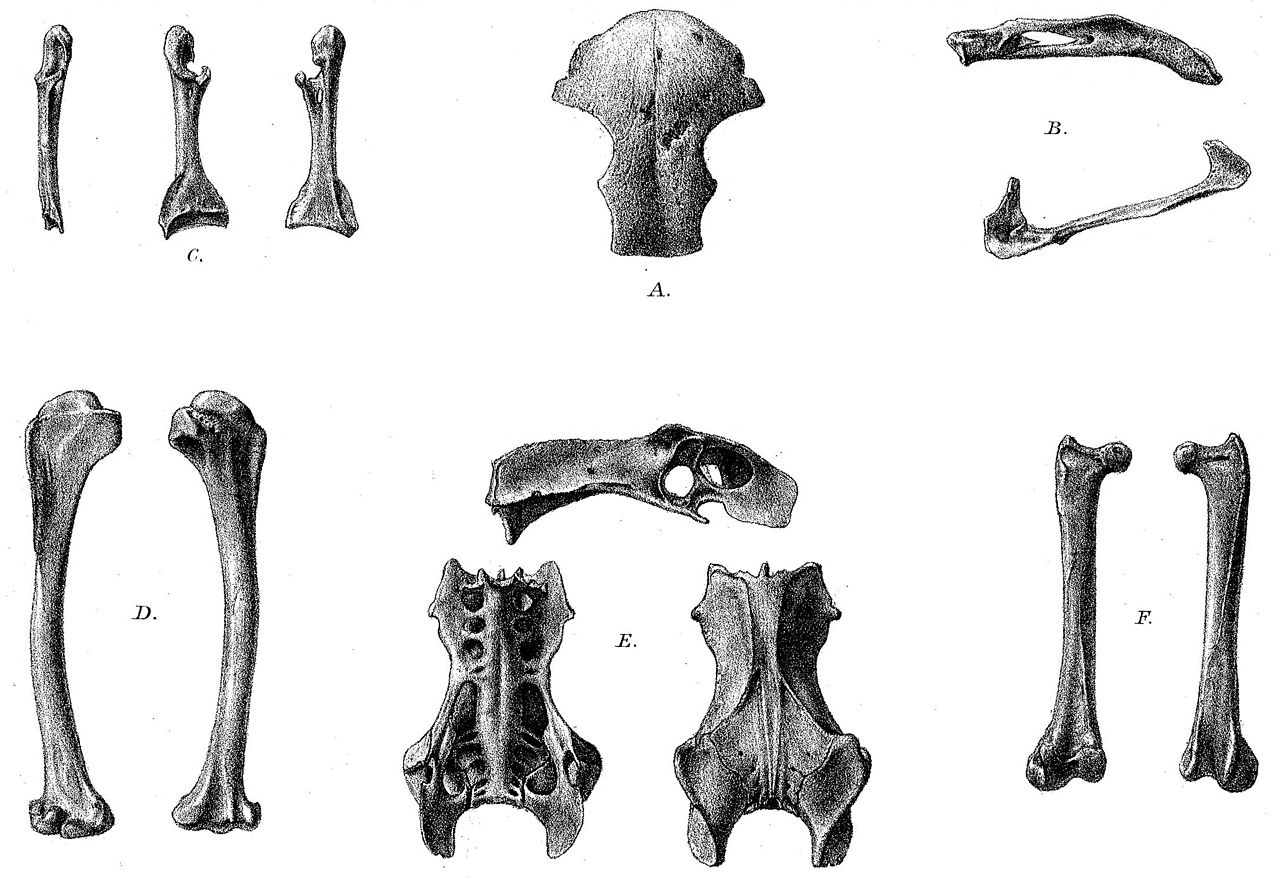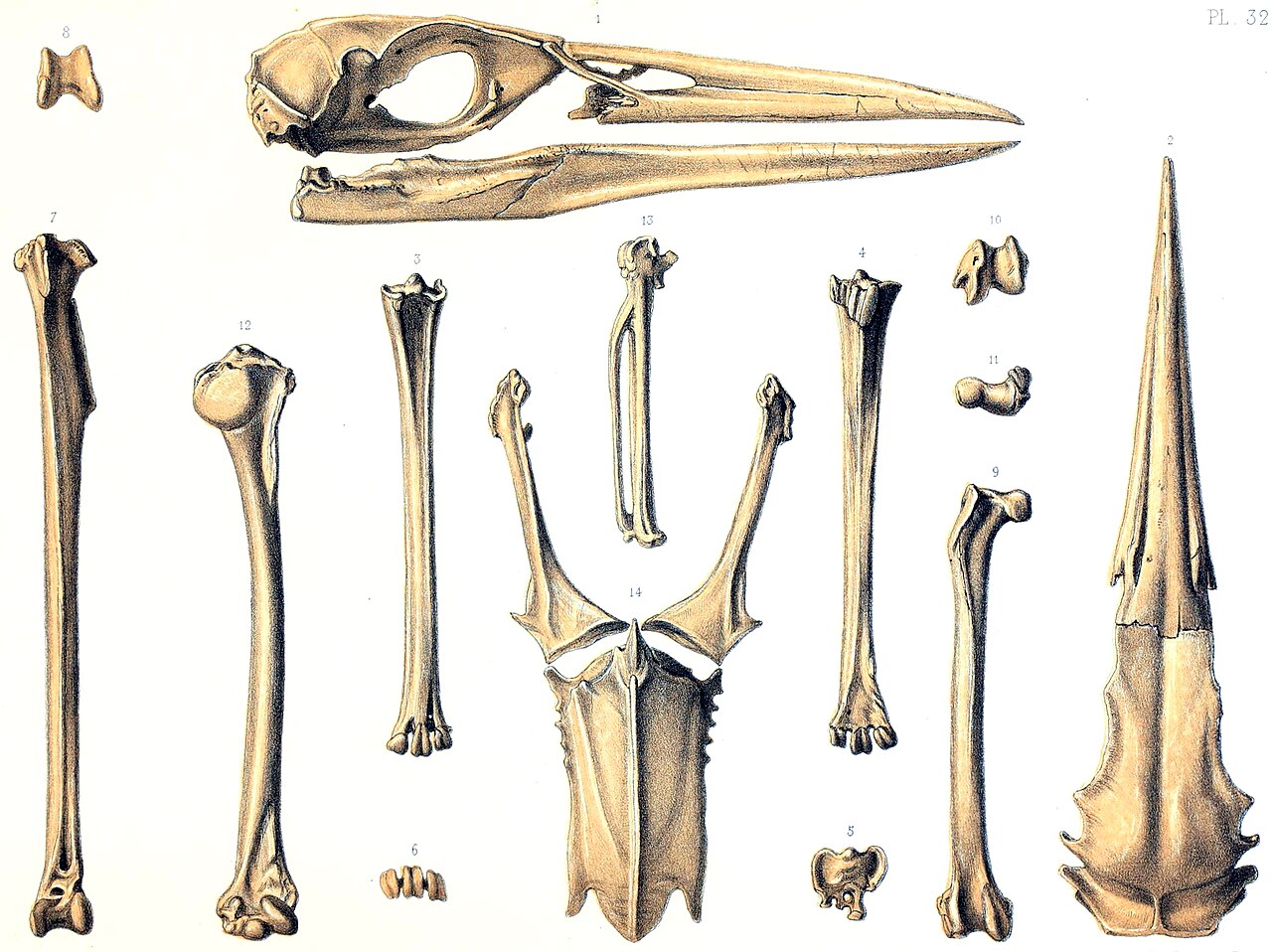
The Rodrigues night heron is an extinct species of heron that was endemic to the Mascarene island of Rodrigues in the Indian Ocean. The species was first mentioned as "bitterns" in two accounts from 1691–1693 and 1725–1726, and these were correlated with subfossil remains found and described in the latter part of the 19th century. The bones showed that the bird was a heron, first named Ardea megacephala in 1873, but moved to the night heron genus Nycticorax in 1879 after more remains were described. The specific name megacephala is Greek for "great-headed". Two related extinct species from the other Mascarene islands have also been identified from accounts and remains: the Mauritius night heron and the Réunion night heron.
Region
Mascarene Islands (Rodrigues)
Typical Environment
Endemic to the small volcanic island of Rodrigues in the western Indian Ocean. It likely used coastal flats, stream margins, and marshy areas, but subfossil evidence and accounts indicate frequent foraging on the ground in dry woodland and scrub as well. Mangrove edges and rocky shorelines would have provided access to crabs and other prey. Forest fragments and valley bottoms offered cover and nesting opportunities. Its range did not extend beyond Rodrigues.
Altitude Range
Sea level to 400 m
Climate Zone
Tropical
Ease of Keeping
Beginner friendly: 1/5
An extinct night heron once confined to Rodrigues in the Mascarene Islands, it was described from early traveler accounts and later subfossil bones. Its skull and limb proportions suggest a large head, robust bill, and a more terrestrial lifestyle with reduced flight ability compared to mainland relatives. It likely declined rapidly after human arrival due to hunting, habitat loss, and introduced predators. Two closely related Mascarene night herons on Mauritius and Réunion also went extinct.


The black-crowned night heron, an extant relative in the same genus

Rodrigues night heron pelvis (G, middle two, from below and above) compared to that of the black-crowned night heron (H, at left and right), 1879

Restoration of a Rodrigues night heron eating a Rodrigues day gecko, based on contemporary accounts, remains, and related species

Frontispiece to François Leguat's 1708 memoir, showing his settlement on Rodrigues; a lizard can be seen in a palm-tree (right)


Temperament
solitary and crepuscular
Flight Pattern
short rapid wingbeats; reluctant flier
Social Behavior
Likely nested in small groups or loose colonies as in other Nycticorax, using trees or dense shrubs. Foraging was probably solitary or in small, dispersed parties on the ground and along water margins. Breeding timing on Rodrigues is unknown but may have aligned with wetter periods when prey was abundant.
Migratory Pattern
Resident
Song Description
Vocalizations were not recorded, but night herons typically give harsh, croaking “quawk” calls in flight and near roosts. Calls are usually short and repeated, especially at dusk and night.
Plumage
unknown
Diet
A generalist carnivore likely taking crustaceans (including land and shore crabs), insects, snails, small lizards, and possibly small fish or amphibians when available. Robust bill and terrestrial habits suggest frequent probing and striking at ground-dwelling prey. It may have scavenged opportunistically. Prey choice would have varied with habitat and season.
Preferred Environment
Foraged along stream edges, marshy patches, and coastal flats, but also on the forest floor and in scrub. Likely hunted from low perches or while stalking slowly on the ground, taking advantage of cover.