
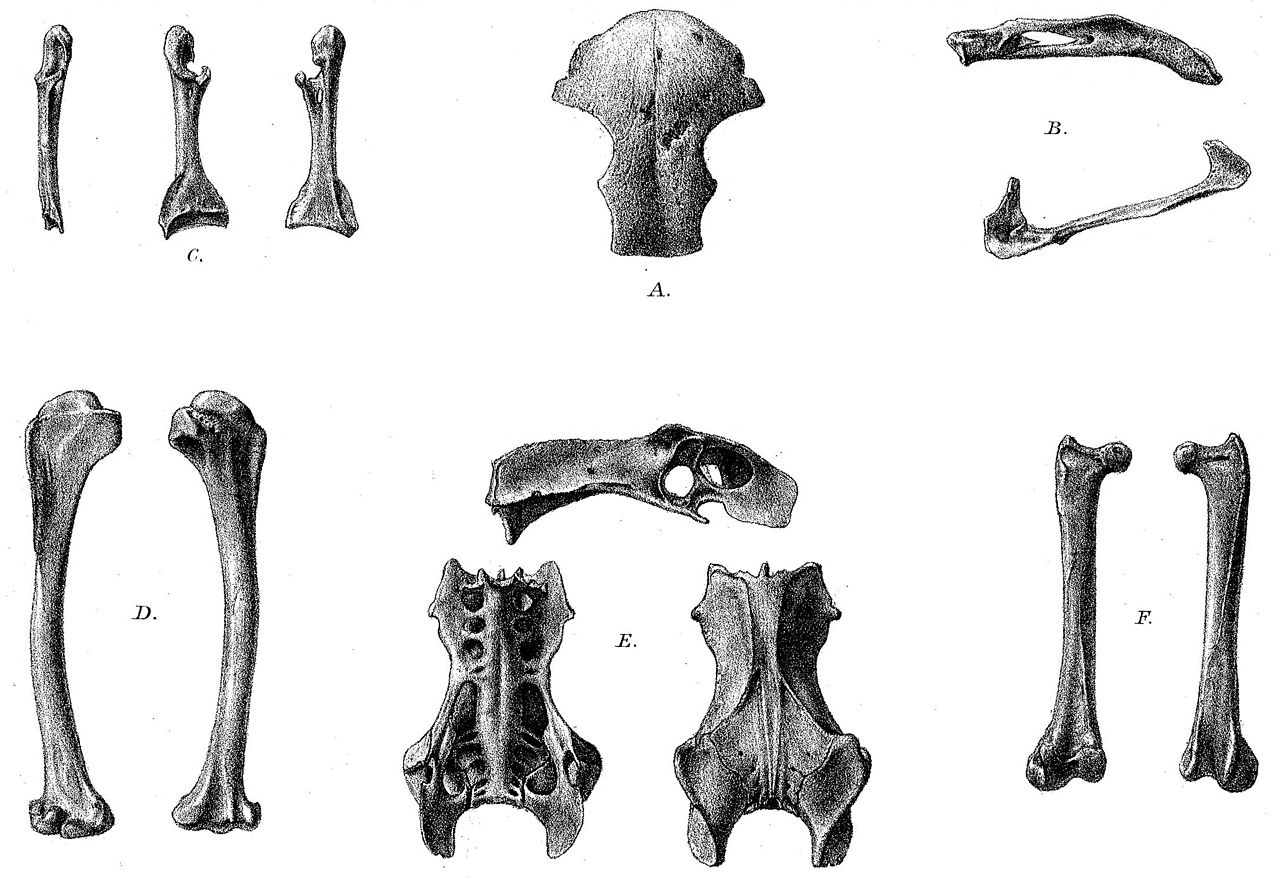
The Rodrigues scops owl, also known as Rodrigues owl, Rodrigues lizard owl, Leguat's owl, or Rodrigues little owl, is an extinct species of small owl. It lived on the Mascarene island of Rodrigues before going extinct. It is part of the three Mascarene owls, formerly classified in the genus Mascarenotus, although they are now classified in the genus Otus. Like many of the Mascarene land-birds, the genus was a distinct relative to South-East Asian taxa, in this case apparently being a descendant of the direct ancestor of the Oriental scops owl. This insular scops owl had evolved gigantism, becoming twice as large and four times heavier than its continental ancestor.
Region
Mascarene Islands
Typical Environment
Known only from Rodrigues, where it inhabited native dry to evergreen woodland and thickets. It likely used tree cavities for roosting and nesting and hunted along the forest floor and understory. Subfossil evidence and early accounts suggest it was adapted to a terrestrial, stealthy lifestyle, taking prey among rocks and leaf litter. The species disappeared following widespread deforestation and the arrival of invasive mammals.
Altitude Range
Sea level to 400 m
Climate Zone
Tropical
Ease of Keeping
Beginner friendly: 1/5
Also called the Rodrigues lizard owl, this extinct island scops owl was endemic to Rodrigues in the Mascarene Islands. It is one of three Mascarene scops owls formerly placed in Mascarenotus, now in Otus, and likely descended from the Oriental scops owl lineage. On Rodrigues it evolved insular gigantism, becoming roughly twice as long and several times heavier than its continental relatives. It likely vanished in the 18th century due to habitat loss and introduced predators.



Leg bones
Temperament
solitary and territorial
Flight Pattern
short, silent flights with rapid wingbeats
Social Behavior
Likely paired during the breeding season and otherwise solitary. Nesting probably occurred in natural tree cavities, as in other scops owls, with both parents tending the young. Chicks were almost certainly altricial and remained in the nest until fledging.
Migratory Pattern
Resident
Song Description
Presumed to have given soft, repetitive hoots or whistles typical of scops owls. Calls were likely most frequent at night during territorial advertisement and pair bonding.
Plumage
Cryptic, mottled brown plumage with buff and grey streaking and fine barring, providing excellent camouflage in woodland. Soft, dense feathers for silent flight and a defined facial disk typical of scops owls.
Diet
Primarily small vertebrates such as geckos and skinks, reflecting its nickname 'lizard owl.' It also likely consumed large insects like beetles, orthopterans, and moths, and occasionally small birds or rodents if available. Hunting was by perch-and-pounce or short ground pursuits, using keen hearing and vision.
Preferred Environment
Foraged in native woodland, thickets, and along forest edges, especially where rock outcrops and leaf litter offered cover for lizards and large insects. Often hunted from low perches or on foot through the understory.


