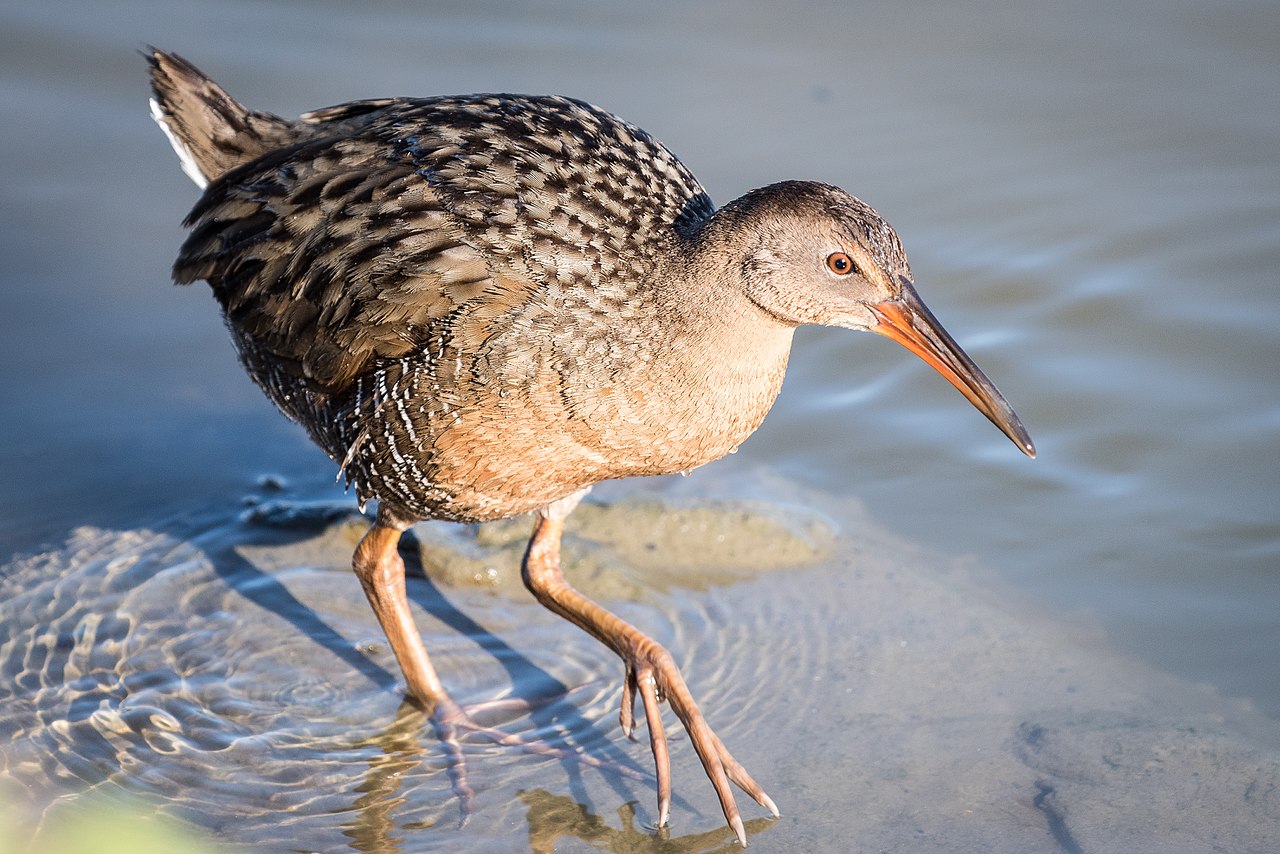
Ridgway's rail is a species of bird found principally along the Pacific coast of North America from the San Francisco Bay Area to southern Baja California, as well as in some regions of the Gulf of California. A member of the rail family, Rallidae, it is a chicken-sized bird that lives brackish tidal marshes and rarely flies. Its name commemorates American ornithologist Robert Ridgway.
Region
Pacific coast of North America and Gulf of California
Typical Environment
Occurs in coastal and estuarine marshes from the San Francisco Bay region south through coastal California and Baja California, with populations around the Gulf of California and lower Colorado River. It favors brackish to salt tidal marshes with dense vegetation such as cordgrass and pickleweed, intersected by tidal channels and mudflats. Inland along the lower Colorado River it uses freshwater and brackish cattail and bulrush marshes. The species is typically tied to areas with regular tidal or water-level fluctuation and abundant invertebrate prey.
Altitude Range
Sea level to 100 m
Climate Zone
Temperate
Ease of Keeping
Beginner friendly: 1/5
Ridgway's rail is a secretive marsh bird of the Pacific coast, split from the clapper rail complex in 2014. It depends on extensive, healthy tidal marshes and is highly vulnerable to habitat loss and sea-level rise. Several subspecies, including the California and Yuma Ridgway's rails, have legal protection due to declining habitats.


Pickleweed Creek, the upper arm of Richardson Bay looking toward Bothin Marsh

Feeding on a crab
Temperament
solitary and territorial
Flight Pattern
short rapid wingbeats; reluctant flier that usually stays low over marsh
Social Behavior
Typically secretive, moving through dense vegetation and along tidal creeks. Pairs form in late winter to spring and are generally monogamous within a season. Nests are cup-shaped platforms of marsh vegetation, often with canopy or ramps; both parents incubate and tend young.
Migratory Pattern
Resident
Song Description
Vocalizations include a sharp series of kek-kek-kek notes and a rapid clattering ‘clapper’-like rattle. Also gives grunts and harsh scolds during territorial interactions, especially at dawn and dusk.
Plumage
Warm brown upperparts with dark streaking, gray face and nape, and rich cinnamon to buff underparts with bold black-and-white barring on the flanks.
Diet
Feeds on small crabs, crayfish, snails, aquatic insects, worms, and small fish, supplemented with seeds and plant material. Probes mud and shallow water with its long bill and also picks prey from vegetation and wrack lines. Diet composition shifts with tides and season, taking advantage of exposed mudflats at low tide.
Preferred Environment
Forages along the edges of tidal channels, mudflats, and within dense pickleweed, cordgrass, bulrush, or cattail stands. Frequently uses shallow water and soft mud where invertebrates are abundant.