
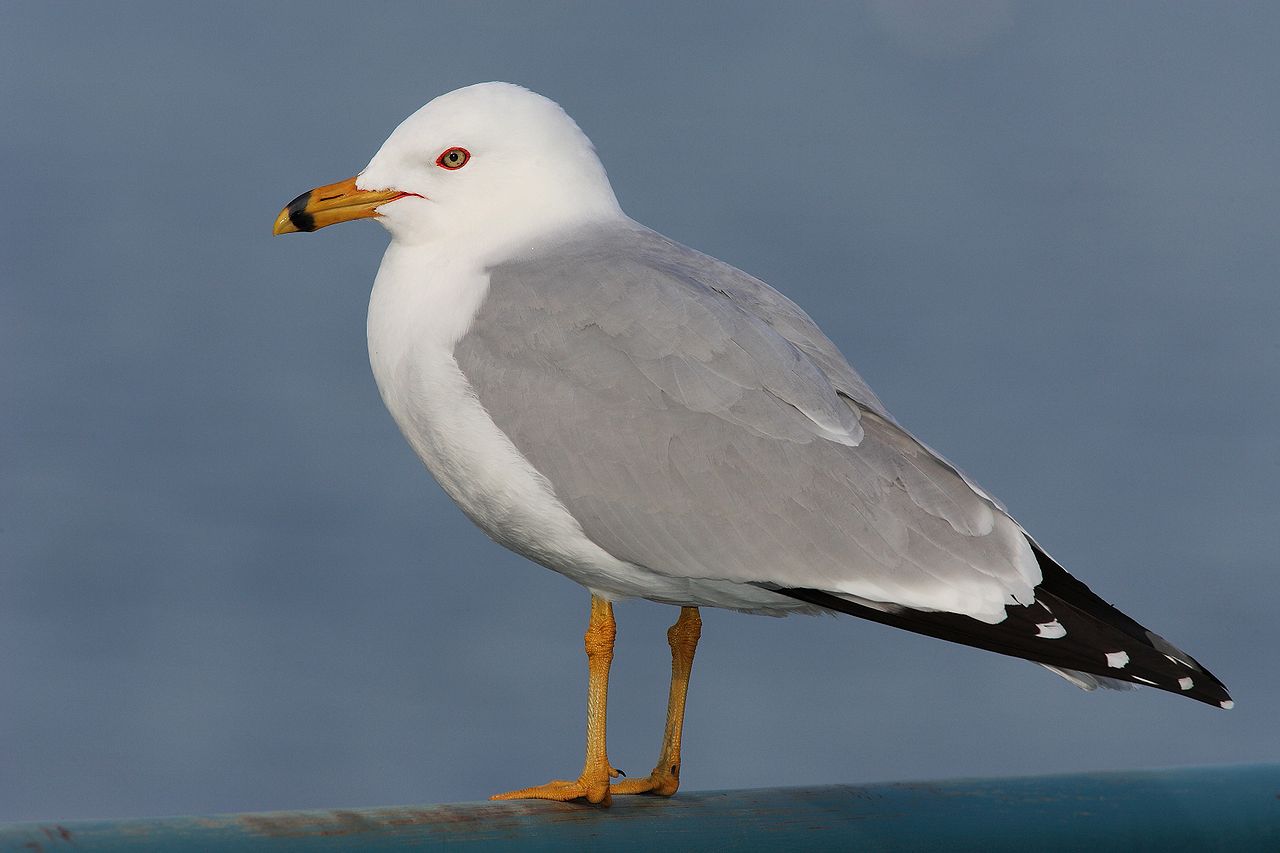
The ring-billed gull is a medium-sized gull native to North America, breeding in Canada and the northern Contiguous United States, and wintering mainly in the United States and northern Mexico. The genus name is from Latin Larus which appears to have referred to a gull or other large seabird. The specific delawarensis refers to the Delaware River.
Region
North America
Typical Environment
Breeds widely across Canada and the northern United States, favoring large inland lakes, rivers, and marshes with nearby open ground for nesting. Winters throughout much of the United States, along both coasts, the Gulf of Mexico, and into northern Mexico. Regularly wanders to the Caribbean and occasionally reaches western Europe as a rare vagrant. Common in urban areas, shorelines, reservoirs, and agricultural fields, especially outside the breeding season.
Altitude Range
Sea level to 2500 m
Climate Zone
Temperate
Ease of Keeping
Beginner friendly: 1/5
Ring-billed gulls are highly adaptable and commonly frequent parking lots, landfills, and urban waterfronts where they often scavenge human food. Adults are readily identified by the distinct black ring encircling their yellow bill. They breed colonially on islands in lakes and rivers and often return to the same sites each year. Individuals can live over two decades in the wild.


A winter plumage ring-billed gull in flight at Black Butte Lake, California

Winter plumage, Windsor, Ontario

In flight, New York

Eating a fish
Temperament
social and opportunistic
Flight Pattern
strong flier with steady wingbeats and buoyant glides
Social Behavior
Breeds in dense colonies on islands, dikes, and gravelly shores, nesting on the ground in scrapes lined with vegetation. Typically monogamous within a season, with both parents incubating and feeding chicks. Outside breeding, forms large flocks at feeding and roosting sites, often mixing with other gull species.
Migratory Pattern
Seasonal migrant
Song Description
Vocal repertoire includes sharp, nasal kyow and keee-yah calls, along with chattering notes in social contexts. Long-calls are used in displays and territorial disputes, carrying far over water and open areas.
Plumage
Adult with clean white head and underparts, pale gray mantle, and black wingtips with white 'mirrors'; nonbreeding adults show light brown streaking on the head and neck. Juveniles and first-winter birds are mottled brown with dark tails and gradually acquire adult plumage over several years.
Diet
An opportunistic omnivore that consumes fish, aquatic invertebrates, insects, earthworms, grain, and small vertebrates. Frequently scavenges at landfills, beaches, and urban sites, readily taking discarded food. Will also pirate food from other birds and follow plows to catch exposed invertebrates.
Preferred Environment
Often feeds along lakeshores, river edges, beaches, and estuaries, as well as agricultural fields and urban parking lots. Takes food from the surface of water, ground, and air, and frequently forages at refuse sites.


