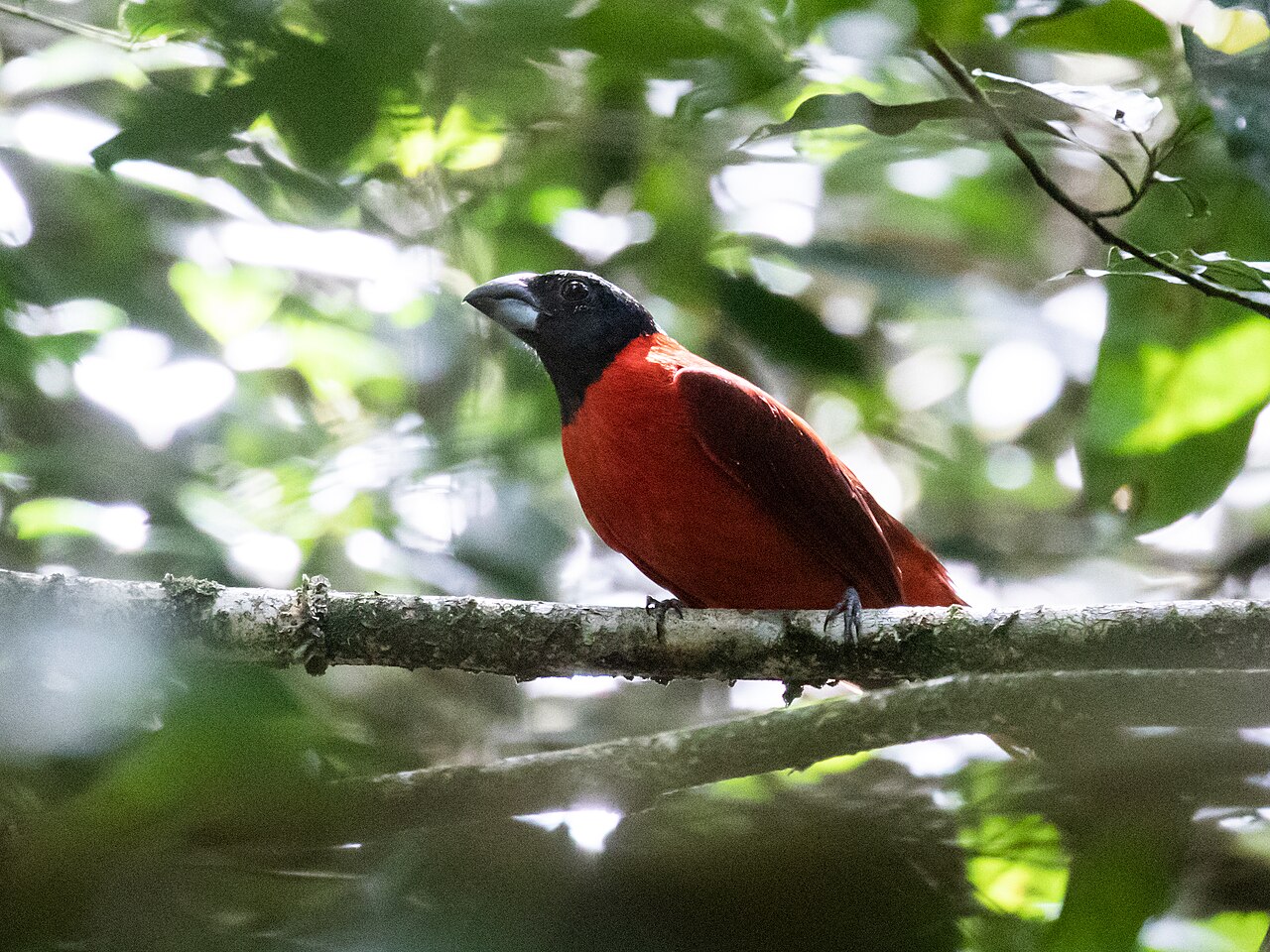
The red siskin is a small endangered finch.
Region
Northern South America
Typical Environment
Occurs patchily in northern Venezuela and adjacent parts of Colombia and Guyana, favoring open, scrubby habitats and dry deciduous woodland edges. It frequents savanna margins, thorny brush, weedy fields, and lightly cultivated areas where seed-bearing plants are abundant. Birds often forage in hedgerows and along roadsides, and may visit edges of plantations or secondary growth. Nesting is typically in shrubs or small trees in relatively open country near reliable food sources.
Altitude Range
0–1200 m
Climate Zone
Tropical
Ease of Keeping
Beginner friendly: 2/5
The red siskin is a small endangered finch from northern South America, with males famed for their striking scarlet plumage and black head. Intense trapping for the cage-bird trade caused severe declines, and it played a role in the creation of red-factor canaries through hybridization in captivity. Conservation programs, including habitat protection and managed breeding, are underway to bolster remaining wild populations. It typically forms small flocks outside the breeding season and is highly seed-focused in its diet.


Temperament
social and active
Flight Pattern
short rapid wingbeats with undulating flight
Social Behavior
Outside the breeding season, it forms small, loose flocks that move through open scrub and field edges in search of seeds. Pairs are monogamous during breeding, building a neat cup nest in shrubs or small trees. Both parents tend the young, with males often provisioning females during incubation.
Migratory Pattern
Resident
Song Description
Males deliver a fast, twinkling series of high-pitched trills, twitters, and sweet warbles. Calls are thin, siskin-like notes used to keep contact in flocks and when foraging.
Plumage
Male with vivid red body contrasted by a black head, throat, wings, and tail; wings show a pale wingbar. Female is mostly gray-brown with a reddish wash on rump and underparts and darker wings, lacking the full black hood.
Diet
Primarily granivorous, taking seeds of grasses, composites, and other herbaceous plants. It also consumes buds and small fruits when available. During the breeding season, it may take small insects to provide extra protein for nestlings. Foraging is often in small groups, methodically picking seed heads and gleaning from low vegetation.
Preferred Environment
Feeds in weedy fields, scrubby clearings, hedgerows, and the edges of dry woodland or savanna. It often uses disturbed or secondary habitats with abundant seed-bearing plants and sometimes visits agricultural margins.