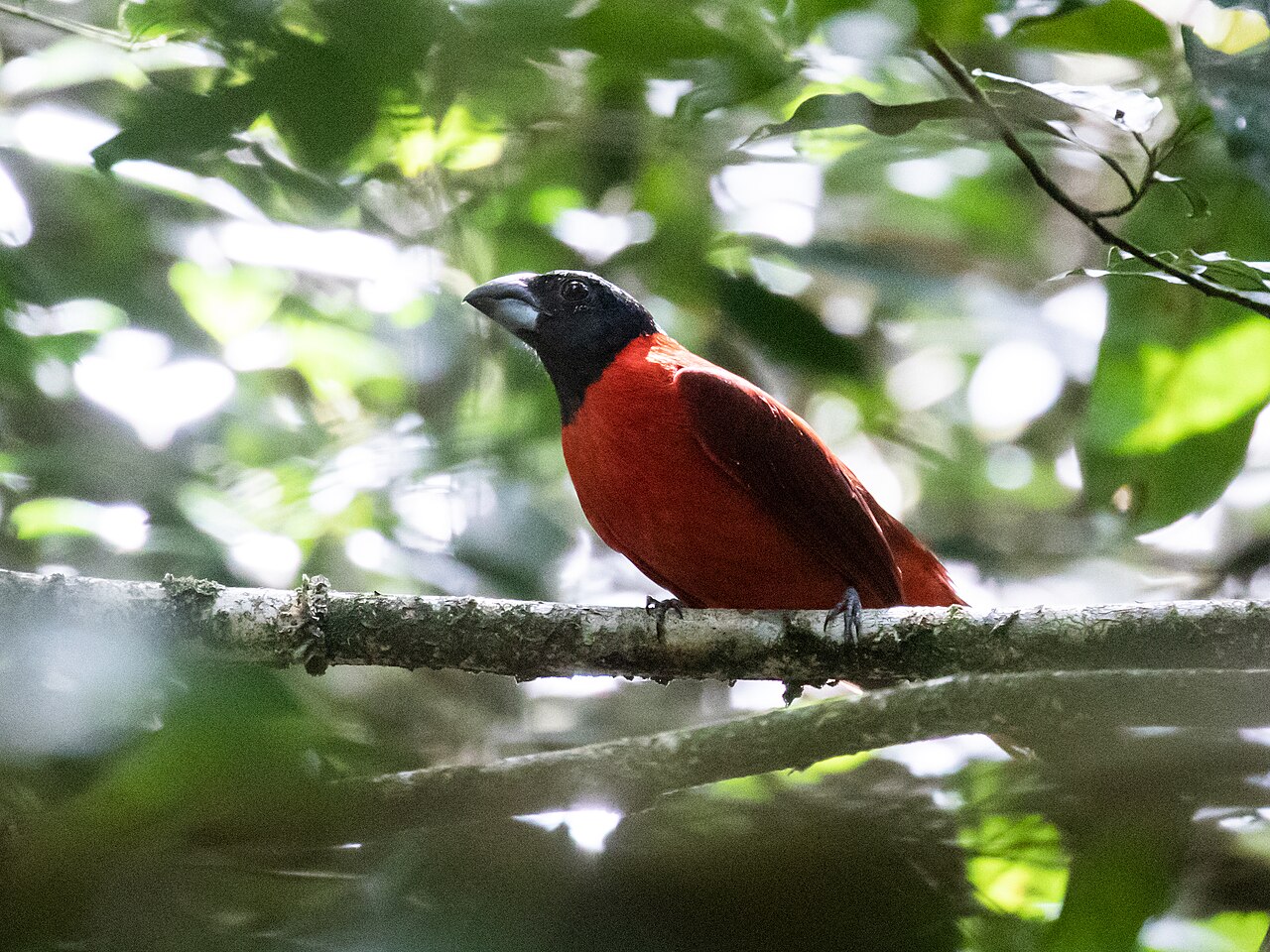
The red warbler is a small passerine bird of the New World warbler family Parulidae endemic to the highlands of Mexico, north of the Isthmus of Tehuantepec. It is closely related to, and forms a superspecies with, the pink-headed warbler of southern Mexico and Guatemala. There are three subspecies, found in disjunct populations, which differ in the color of their ear patch and in the brightness and tone of their body plumage. The adult is bright red, with a white or gray ear patch, depending on the subspecies; young birds are pinkish-brown, with a whitish ear patch and two pale wingbars.
Region
Mexican Highlands
Typical Environment
Found in montane pine–oak, fir, and mixed conifer forests with dense understory, often near ravines and streams. It favors mature stands with patches of shrubs and regenerating edges for foraging. The species occurs in disjunct populations across the Sierra Madre ranges and the Trans-Mexican Volcanic Belt. It is generally resident year-round, with only minor local movements in response to weather or food availability.
Altitude Range
2000–3500 m
Climate Zone
Highland
Ease of Keeping
Beginner friendly: 1/5
A vivid montane warbler endemic to Mexico, it often travels with mixed-species flocks in pine–oak and fir forests. It forms a superspecies with the pink-headed warbler, and its subspecies differ by the color of the ear patch (white or gray) and the intensity of red plumage. Adults are strikingly red, while juveniles are duller and show pale wingbars.


The subspecies C. r. rubra has a white, rather than gray, ear patch.

The gray-eared subspecies melanauris is found from southwestern Chihuahua to northern Nayarit.

A red warbler in typical habitat
Temperament
active and somewhat skulking
Flight Pattern
short rapid wingbeats through the understory
Social Behavior
Typically seen singly or in pairs during the breeding season, becoming more gregarious afterward. Frequently joins mixed-species feeding flocks with other warblers and small insectivores. Builds a well-concealed cup nest in dense vegetation; both parents attend the young.
Migratory Pattern
Resident
Song Description
A sweet, clear series of thin, high-pitched notes and trills, delivered at a steady pace. Calls include sharp chips used for contact within flocks. Song carries well in cool montane forests.
Plumage
Adults are bright, uniform red with a contrasting pale ear patch; plumage tone varies slightly by subspecies. Juveniles are pinkish-brown with two pale wingbars and a whitish ear patch. Feathers are sleek and smooth, giving a clean, even appearance.
Diet
Primarily takes small insects and other arthropods, including caterpillars, beetles, and spiders. Gleans prey from leaves, twigs, and bark, often hanging briefly to reach the undersides of foliage. Occasionally makes short sallies to catch flying insects. Foraging intensity increases during the breeding season to provision nestlings.
Preferred Environment
Feeds in the understory and midstory of pine–oak and fir forests, along riparian thickets, and at forest edges. Often forages in shaded, humid microsites such as ravines where insect activity is high.