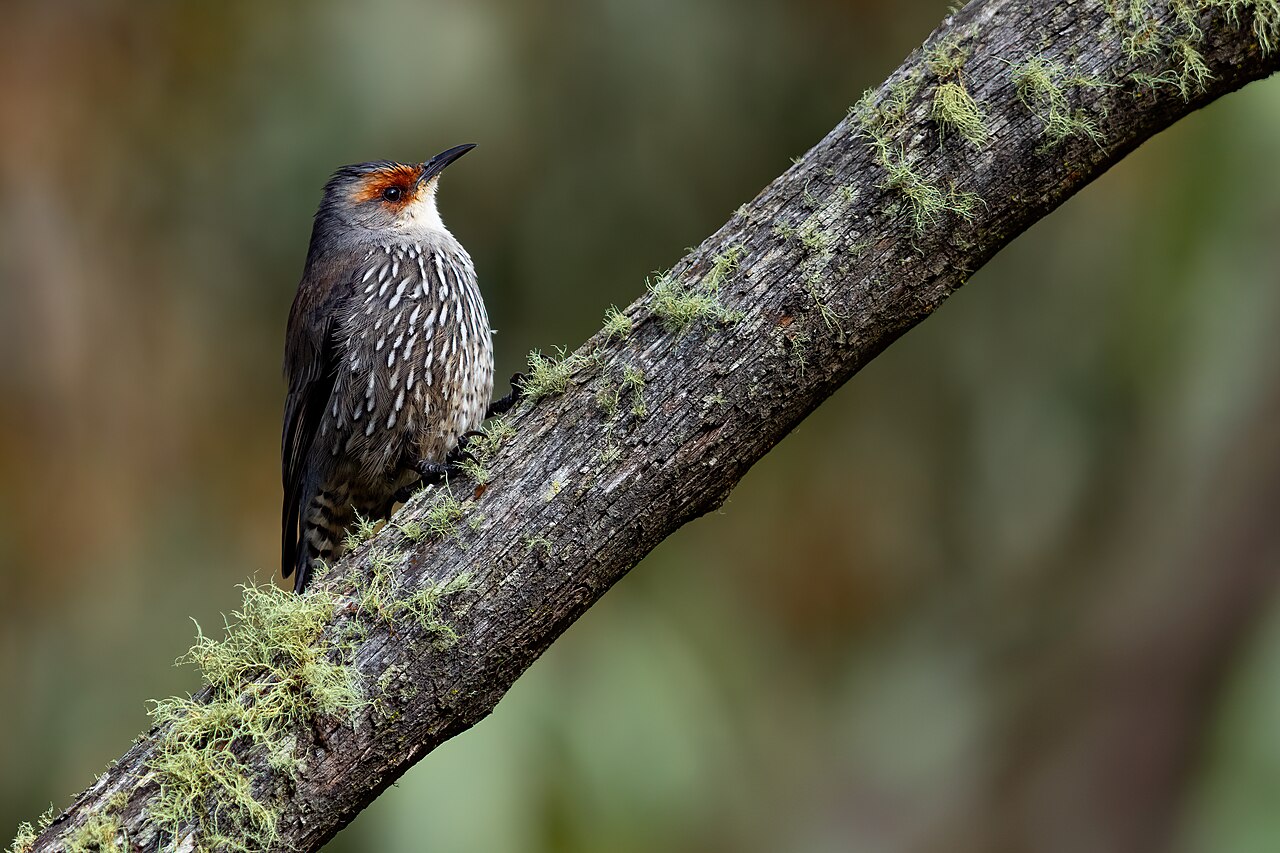
The red-browed amazon is a species of parrot in the family Psittacidae. It is endemic to Atlantic Forest in eastern Brazil. It has been considered a subspecies of the blue-cheeked amazon, but today all major authorities consider them separate species. It is threatened both by habitat loss and by being captured for the trade in wild parrots.
Region
Atlantic Forest of eastern Brazil
Typical Environment
Occurs in remnant tracts of lowland and foothill Atlantic Forest, including evergreen and semi-deciduous forests. It uses primary forest, well-developed secondary growth, and forest edges, and will sometimes forage in agroforestry systems like shade-cocoa. Birds roost communally in tall trees and commute to feeding sites across fragmented landscapes. Nesting is in tree cavities, often in large, mature trees. Ongoing deforestation and fragmentation strongly limit suitable habitat and connectivity.
Altitude Range
Sea level to 1200 m
Climate Zone
Tropical
Ease of Keeping
Beginner friendly: 2/5
The Red-browed Amazon is a striking parrot of Brazil’s Atlantic Forest, easily recognized by its vivid red forehead. It was once treated as a subspecies of the Blue-cheeked Amazon but is now widely accepted as a distinct species. Trapping for the pet trade and severe habitat loss have fragmented its populations. It often forms noisy roosts and may visit shade-cocoa and fruit plantations when forest resources are scarce.


Temperament
social but wary
Flight Pattern
strong flier with rapid wingbeats
Social Behavior
Typically seen in pairs or small flocks, expanding to larger groups at communal roosts. Courtship includes mutual preening and display flights, with pairs nesting in natural tree cavities. Breeding is during the austral spring to early summer, with both parents caring for the young. Flock cohesion is maintained by loud contact calls while commuting between roosts and feeding areas.
Migratory Pattern
Resident
Song Description
Vocalizations are loud, harsh screeches and ringing yelps that carry over long distances. At close range they add chattering notes and richer whistles during social interactions. Dawn and dusk flights are especially noisy.
Plumage
Mostly bright green with blackish scalloping on the neck, a vivid red forecrown/brow, and bluish cheeks and head sides. The nape shows dusky edging giving a scaled look. Often shows a red patch at the carpal bend and yellowish tones on the tail tips. Bill is horn-colored and hefty.
Diet
Feeds mainly on fruits, seeds, and berries from native forest trees, including palm fruits and figs. Also takes blossoms and leaf buds seasonally. It may visit cultivated fruit trees and shade-cocoa to exploit seasonal abundance. Foraging often occurs in the canopy, where birds use their strong bill to manipulate tough husks and pods.
Preferred Environment
Primarily the upper and mid-canopy of mature or well-regenerated forest. Will forage along forest edges and in mixed agroforestry mosaics adjacent to native fragments. Uses tall emergent trees for feeding, resting, and roosting.