
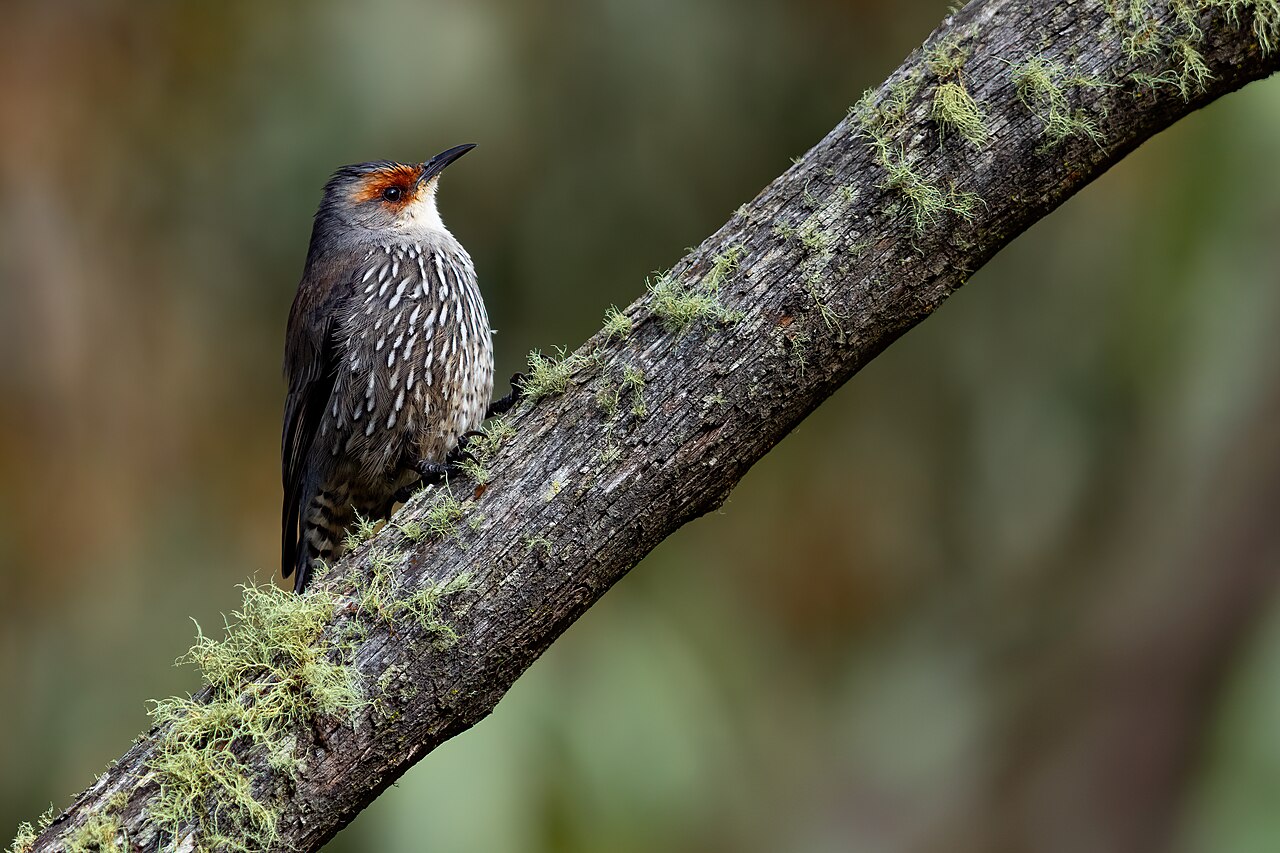
The red-browed treecreeper is a species of bird in the family Climacteridae. It is endemic to temperate and subtropical eastern Australia. It is found in mature eucalypt forests and woodlands in both coastal and mountainous regions, from central Victoria to south-eastern Queensland.
Region
Eastern Australia
Typical Environment
Found from central Victoria through New South Wales to south-eastern Queensland, mainly in mature eucalypt forests and taller woodlands. It favors wetter forests and ranges with abundant rough-barked trees, including stringybarks and gums. The species occurs from coastal foothills to montane zones along the Great Dividing Range. It avoids extensive open farmland and heavily cleared areas, persisting best in large, continuous tracts of native forest.
Altitude Range
Sea level to 1500 m
Climate Zone
Temperate
Ease of Keeping
Beginner friendly: 1/5
This trunk-climbing specialist spirals up rough-barked eucalypts, probing crevices for insects with its slender, slightly decurved bill. It depends on mature forests with abundant old trees for foraging and nesting hollows. Often seen in pairs, it helps control bark-dwelling insect populations in eastern Australian forests.

Temperament
solitary and territorial
Flight Pattern
short rapid wingbeats between trunks; mostly creeps on bark
Social Behavior
Usually seen singly or in pairs that maintain year-round territories, occasionally joining mixed-species foraging parties. Nests are placed in tree cavities or behind loose bark in mature eucalypts. Both adults contribute to nest-building and rearing the young.
Migratory Pattern
Resident
Song Description
A series of high, thin, piping whistles, often delivered in short phrases. Calls include sharp contact notes and soft trills while foraging, carrying well through forest understory.
Plumage
Warm brown upperparts with a distinct rufous-red eyebrow and pale, finely scalloped underparts. Tail and wings are brownish-rufous; throat pale buff to whitish with subtle mottling. Overall appearance is earthy and well camouflaged against bark.
Diet
Feeds mainly on insects and their larvae, including ants, beetles, moth larvae, and other bark-dwelling arthropods. It gleans from bark, probes under flakes, and inspects crevices on trunks and large branches. Prey is typically taken by quick pecks while the bird spirals upward along the trunk.
Preferred Environment
Forages on rough-barked eucalypts in mature forests, especially where old trees provide abundant fissured bark. It works from the lower trunk to mid-canopy, often moving methodically around each tree before flying to the next.


