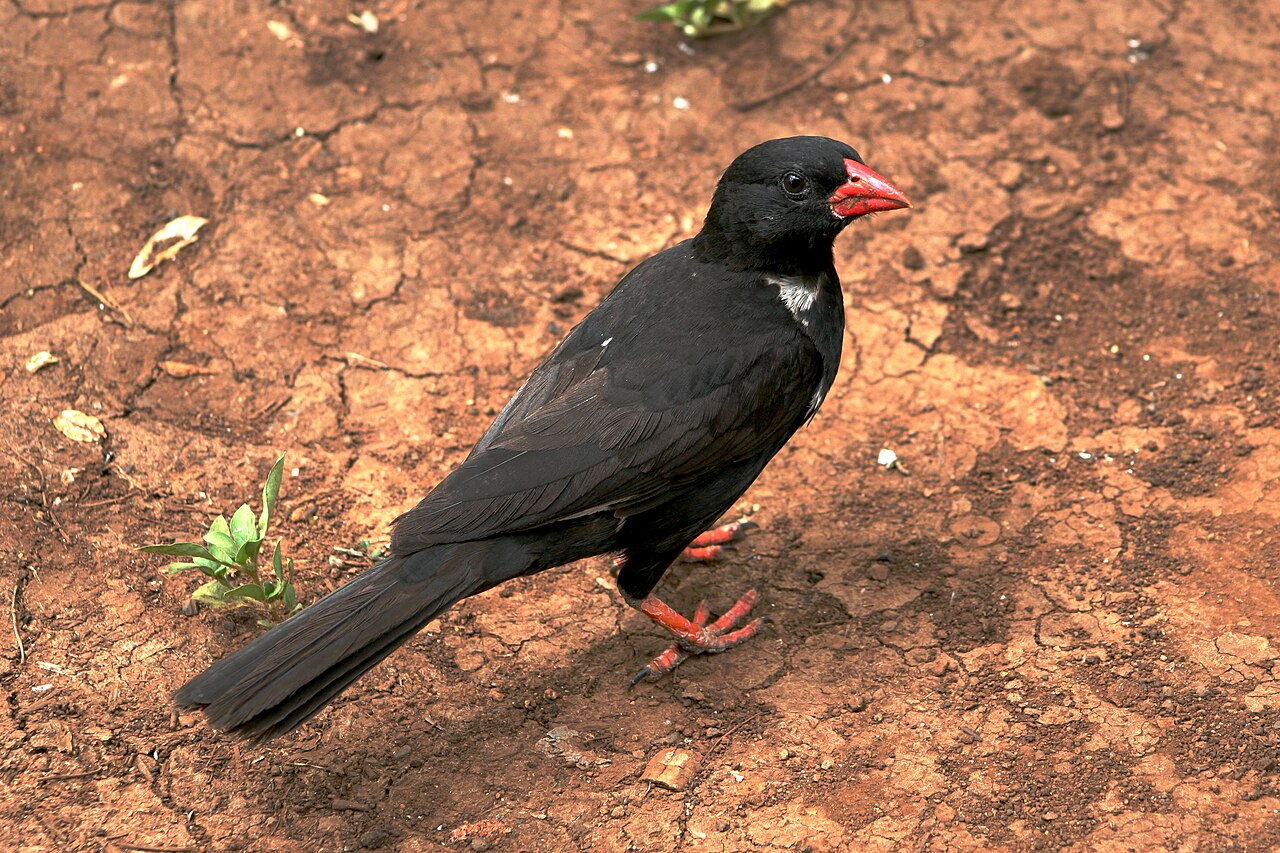
The red-billed blue magpie is a species of bird (magpie) in the crow family, Corvidae. It is about the same size as the Eurasian magpie, but has a much longer tail, one of the longest of any corvid. It is 65–68 cm (25.5–27 in) long and weighs 196–232 g (6.9–8.2 oz).
Region
Himalayas and southern China
Typical Environment
Found from the western and central Himalayas across northeastern India, Nepal and Bhutan into Myanmar, southern China, and northern Indochina. It inhabits broadleaf and mixed forests, wooded valleys, scrub, and forest edges, and readily uses orchards and village groves. The species adapts well to disturbed habitats provided there is sufficient tree cover. It often stays near streams and ravines where cover and food are plentiful.
Altitude Range
200–3000 m
Climate Zone
Subtropical
Ease of Keeping
Beginner friendly: 1/5
This striking corvid has one of the longest tails relative to body size in the crow family, which it uses for balance and display. Bold and inquisitive, it often ventures near villages and forest edges. Its loud, varied calls frequently alert other wildlife to predators, and it sometimes joins mixed-species foraging flocks.


Red-billed blue magpie

Feeding in Uttarakhand, India

In Uttarakhand, India

Red-billed blue magpie in Shimla Water Catchment Wildlife Sanctuary H.P.
Temperament
social and active
Flight Pattern
short rapid wingbeats with agile swoops and short glides between trees
Social Behavior
Usually seen in noisy parties or small family groups moving through mid- to upper canopy. Nests are cup-shaped and placed high in trees; clutches typically contain 3–5 eggs. Both sexes participate in nest building and feeding of young, and groups may loosely cooperate while foraging.
Migratory Pattern
Resident
Song Description
Vocal repertoire includes harsh chatters, rattles, and ringing whistles. Calls carry far and are often used as alarm signals; softer contact notes are given within groups.
Plumage
Glossy black head, neck, and upper breast with a contrasting white nape and upper back patch; mantle and wings bright cobalt-blue. Very long, graduated blue tail with bold white tips and subterminal bars; underparts pale buff to whitish. Feathers are sleek with a slight sheen typical of corvids.
Diet
An opportunistic omnivore, it takes insects, spiders, and other invertebrates, as well as small reptiles, eggs, and nestlings when available. It also eats fruits, berries, seeds, and occasionally carrion or human food scraps. Foraging is versatile, shifting seasonally with fruiting and insect abundance.
Preferred Environment
Feeds in forest canopy, along edges, and in secondary growth, frequently descending to the ground or visiting orchards and gardens. Often forages near streams and along paths where prey is exposed.