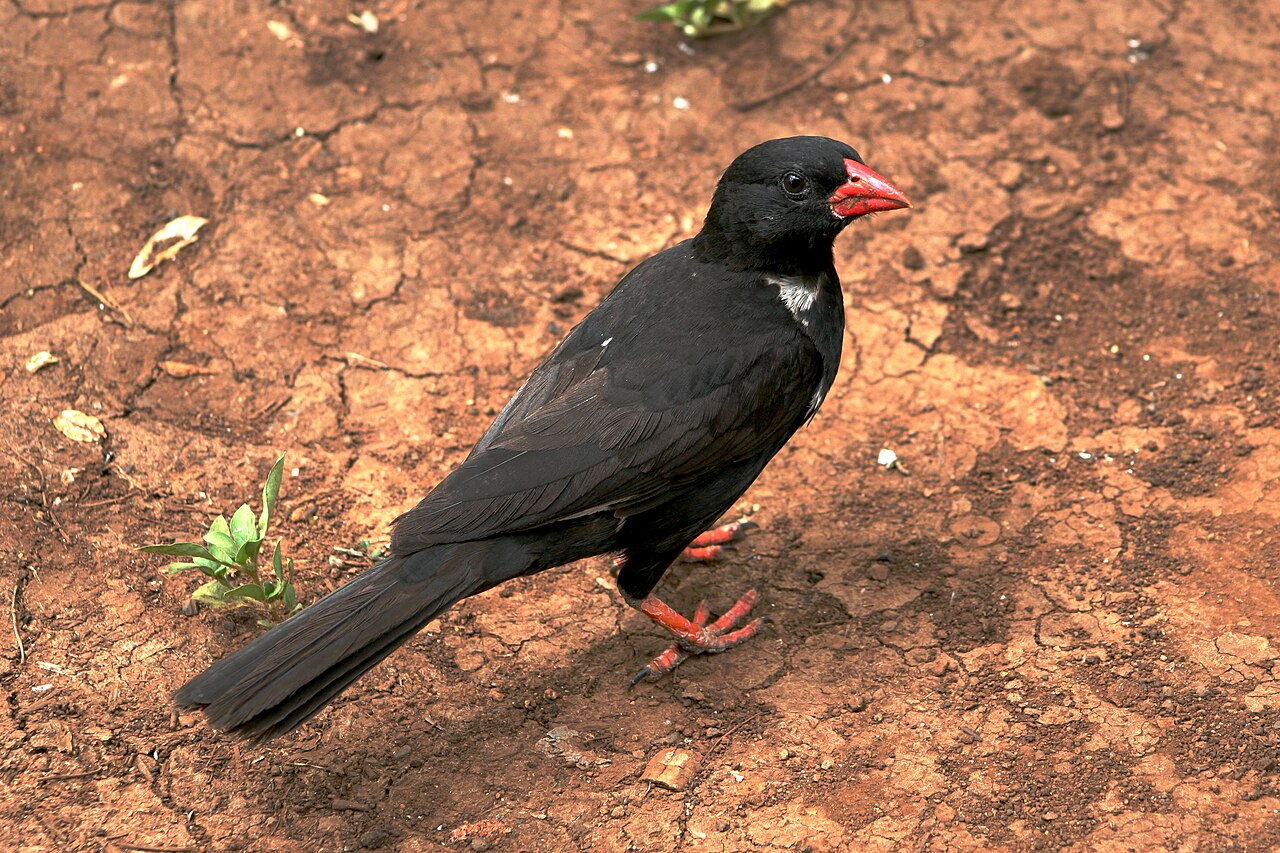
The red-billed brushturkey also known as red-billed talegalla or Cuvier's brushturkey, is a large, up to 57 cm long, black megapode with bare yellow facial skin, a reddish orange bill, yellow iris, and orange feet. The head is covered with bristle-like black feathers. The sexes are similar.
Region
New Guinea
Typical Environment
Occurs in lowland and hill rainforests across much of New Guinea, including primary forest, secondary growth, riverine thickets, and swamp-forest margins. It favors dense understory with abundant leaf litter where it can forage and build incubation mounds. Frequently uses forest edges and fallow gardens near villages but rarely ventures into open areas. The species is largely terrestrial, retreating into thick cover when disturbed. Nest mounds are placed on well-drained forest floors with ample organic material.
Altitude Range
Sea level to 1400 m
Climate Zone
Tropical
Ease of Keeping
Beginner friendly: 1/5
A ground-dwelling megapode of New Guinea, the red-billed brushturkey incubates its eggs in large mounds of decaying vegetation, using the heat from decomposition rather than body warmth. Males tend and regulate the mound temperature by adding or removing material. Chicks hatch fully feathered, are highly precocial, and can fly short distances within a day or two. It is wary and more often heard rustling through leaf litter than seen.

Temperament
shy and wary
Flight Pattern
short rapid wingbeats; reluctant flier
Social Behavior
Typically seen singly or in pairs, with males maintaining territories around their incubation mounds. Mounds may be used for multiple breeding seasons and can receive eggs from more than one female. Chicks are independent from hatching and receive no parental care beyond mound maintenance by the male.
Migratory Pattern
Resident
Song Description
Vocalizations include deep booming hoots, gruff grunts, and harsh squawks, often delivered from the ground or low perches at dawn. It also produces loud rustling noises while scratching through leaf litter. Calls carry through dense forest and are useful for locating the bird.
Plumage
Mostly black, with a shaggy, bristle-like texture on the head and neck; body plumage smooth and glossy on the back and wings.
Diet
Feeds on fallen fruits, seeds, shoots, and a variety of invertebrates such as insects, worms, and small snails. It scratches vigorously through leaf litter to uncover food. Seasonal fruit availability influences diet composition, with more animal matter taken when fruit is scarce.
Preferred Environment
Forages on the forest floor in dense understory, along forest trails, and at forest edges. Often visits areas near fruiting trees and occasionally explores village gardens adjacent to forest.