

The red-billed chough, Cornish chough or simply chough is a bird in the crow family, one of only two species in the genus Pyrrhocorax. Its eight subspecies breed on mountains and coastal cliffs from the western coasts of Ireland and Britain east through southern Europe, North Africa and Middle East to Central Asia, India and China.
Region
Eurasia and North Africa
Typical Environment
This species breeds along coastal cliffs and inland mountains from Ireland and Britain across southern Europe and North Africa to Central Asia, the Indian subcontinent, and western China. It favors open, short-sward habitats such as grazed pastures, cliff-top grasslands, heaths, and alpine meadows. Nests are placed in rock crevices, caves, mine adits, and sometimes old buildings or bridges. Outside the breeding season it forms flocks that range widely over suitable foraging areas, often near livestock.
Altitude Range
Sea level to 4500 m
Climate Zone
Temperate
Ease of Keeping
Beginner friendly: 2/5
Famed for its bright red bill and legs, the red-billed chough performs acrobatic, tumbling flight over cliffs and uplands. It favors short, closely grazed turf maintained by traditional pastoralism, making it an indicator of healthy, low-intensity farmland. In parts of Britain it holds cultural significance and has benefited from habitat restoration and protection of cliff-nesting sites.


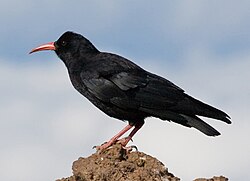
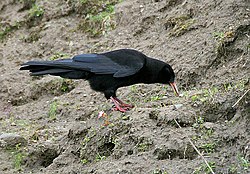


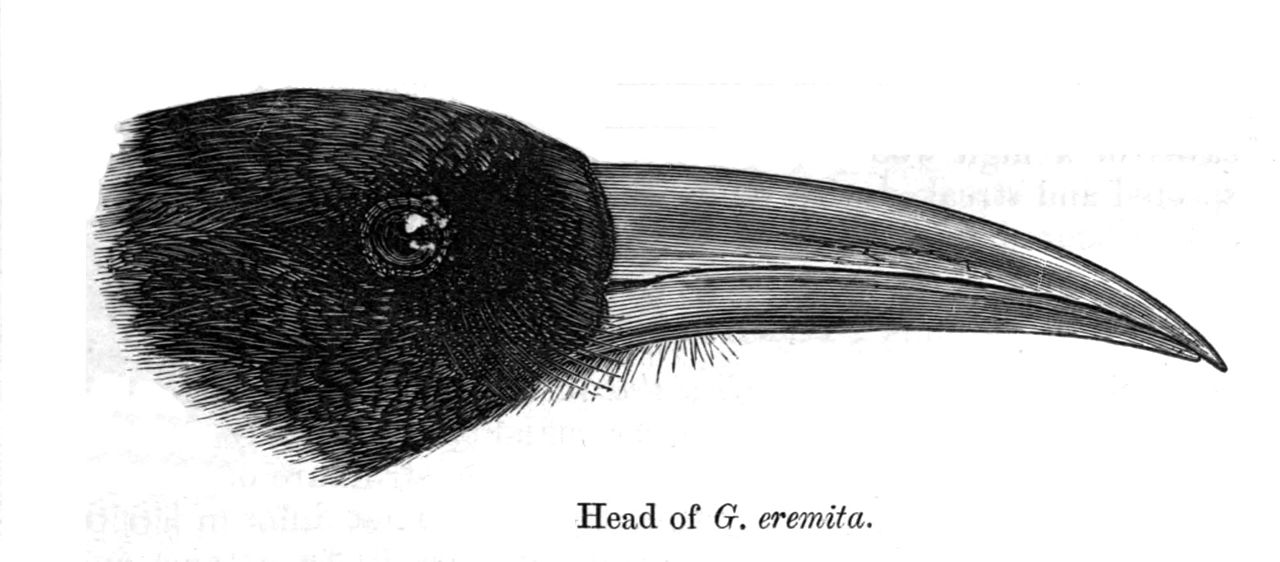
The long curved bill is used to dig for invertebrates and bulbs.
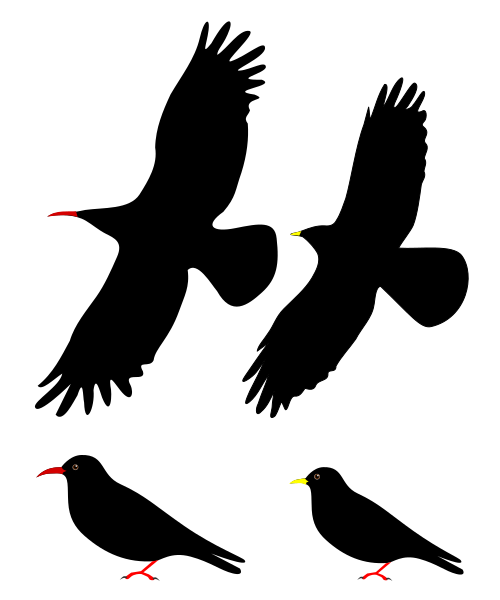
Red-billed chough (left) can be distinguished from Alpine chough in flight by its deeper primary "fingers" and tail wedge. Its wings extend further, to or beyond the tail tip, when it is standing.


Temperament
social and active
Flight Pattern
strong, agile flier with deep wingbeats and frequent acrobatic swoops and rolls
Social Behavior
Breeds in territorial pairs that nest in crevices on sea cliffs, quarries, or buildings, constructing bulky stick-and-grass nests. Both parents feed the chicks. Outside the breeding season, they form loose flocks that forage together and often roost communally on cliffs or in structures.
Migratory Pattern
Partial migrant
Song Description
Vocalizations are clear, ringing 'chee-ow' and 'chow' notes that carry over cliffs and open ground. Calls can be conversational in flocks, with varied metallic chacks and whistles. Song is simple and limited compared to other corvids, consisting mainly of rhythmic call sequences.
Plumage
Glossy black with a subtle bluish-green sheen; sleek contour feathers and broad wings.
Diet
Primarily takes ground-dwelling invertebrates such as beetles, ants, fly larvae, and spiders, probing soil, turf, and dung with its long bill. It supplements this with seasonally available plant material, including berries and some seeds. Foraging often follows livestock to exploit disturbed soil and dung fauna.
Preferred Environment
Feeds on short, closely grazed pastures, cliff-top turf, recently burnt or grazed heath, and occasionally ploughed fields and beaches. Prefers open ground with low vegetation where probing is easy and prey is accessible.


