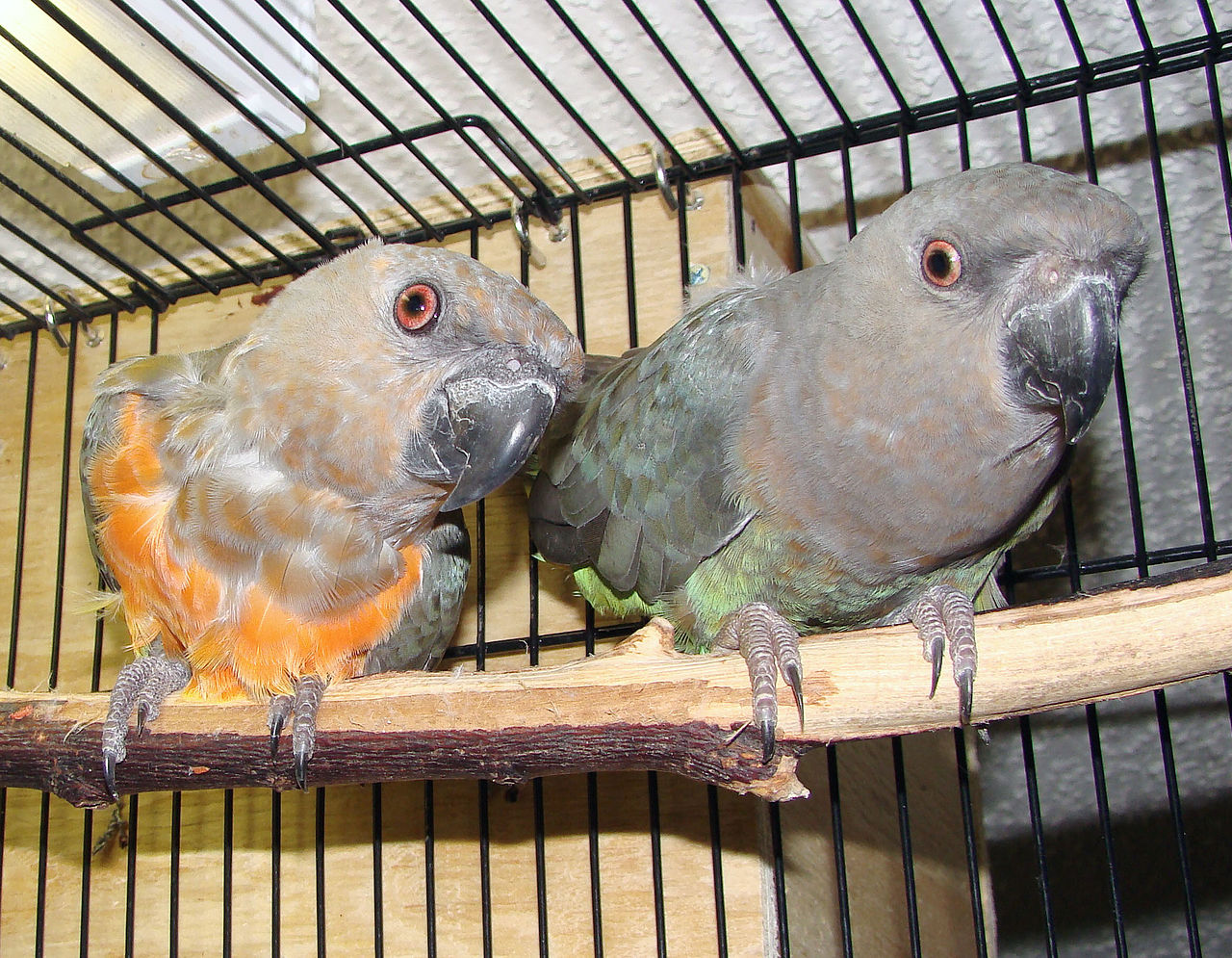
The red-bellied macaw, also known as Guacamaya manilata, is a medium-sized, mostly green parrot, a member of a group of large Neotropical parrots known as macaws. It is the largest of what are commonly called "mini-macaws". The belly has a large maroon patch which gives the species its name.
Region
Amazon Basin and Guiana Shield
Typical Environment
Occurs across northern South America, especially in lowland Amazonia and the Guianas. Strongly associated with palm swamps, seasonally flooded forests, and gallery forests along rivers. It is seldom found far from stands of Mauritia (moriche) and other fruiting palms. Communal roosts are often in dead or living palms within extensive wetlands. Local movements track fruiting palms and seasonal water levels.
Altitude Range
0–600 m
Climate Zone
Tropical
Ease of Keeping
Beginner friendly: 1/5
The red-bellied macaw is the largest of the so-called mini-macaws and is highly specialized for life in palm-dominated habitats. It depends heavily on moriche (Mauritia flexuosa) and other palms for food, nesting cavities, and communal roosts. These macaws are fast, wary, and often gather in noisy flocks around palm swamps. In captivity they are notably difficult to keep due to their need for a palm-rich, oily diet.


A pet juvenile in Peru
Temperament
social and active
Flight Pattern
strong flier with swift, direct flight and rapid wingbeats
Social Behavior
Often seen in small to medium flocks, especially around palm swamps where they roost communally in palms. Pairs form strong bonds and remain together within flocks. They nest in cavities of dead or living palms, typically laying a small clutch in the early wet season. Both parents attend the nest and care for the young.
Migratory Pattern
Resident
Song Description
Calls are loud, harsh screeches and nasal yelps typical of macaws, carrying over long distances. In flight they give rapid, repetitive notes, while at roosts they exchange noisy contact calls. Vocal activity peaks during departures at dawn and returns at dusk.
Plumage
Mostly bright green with a bluish wash on the crown and nape, and a distinct maroon patch on the belly. Underwings are olive, and the long tail has bluish tips. Bare yellow facial skin surrounds the eye and base of the bill.
Diet
Specializes on oily fruits and seeds of palms, especially Mauritia (moriche), Oenocarpus, and Euterpe. It extracts pulp and seeds with its powerful bill and may swallow fruits whole. When palm crops are scarce, it will shift among palm species and occasionally take other fruits. Grit or mineral-rich soil may be ingested to aid digestion of fatty foods.
Preferred Environment
Feeds primarily in the canopy of palm swamps, seasonally flooded forest edges, and riverine groves. Often commutes between roosting palms and fruiting stands, pausing to feed in mixed-species flocks of parrots. Foraging is concentrated where palms fruit heavily.