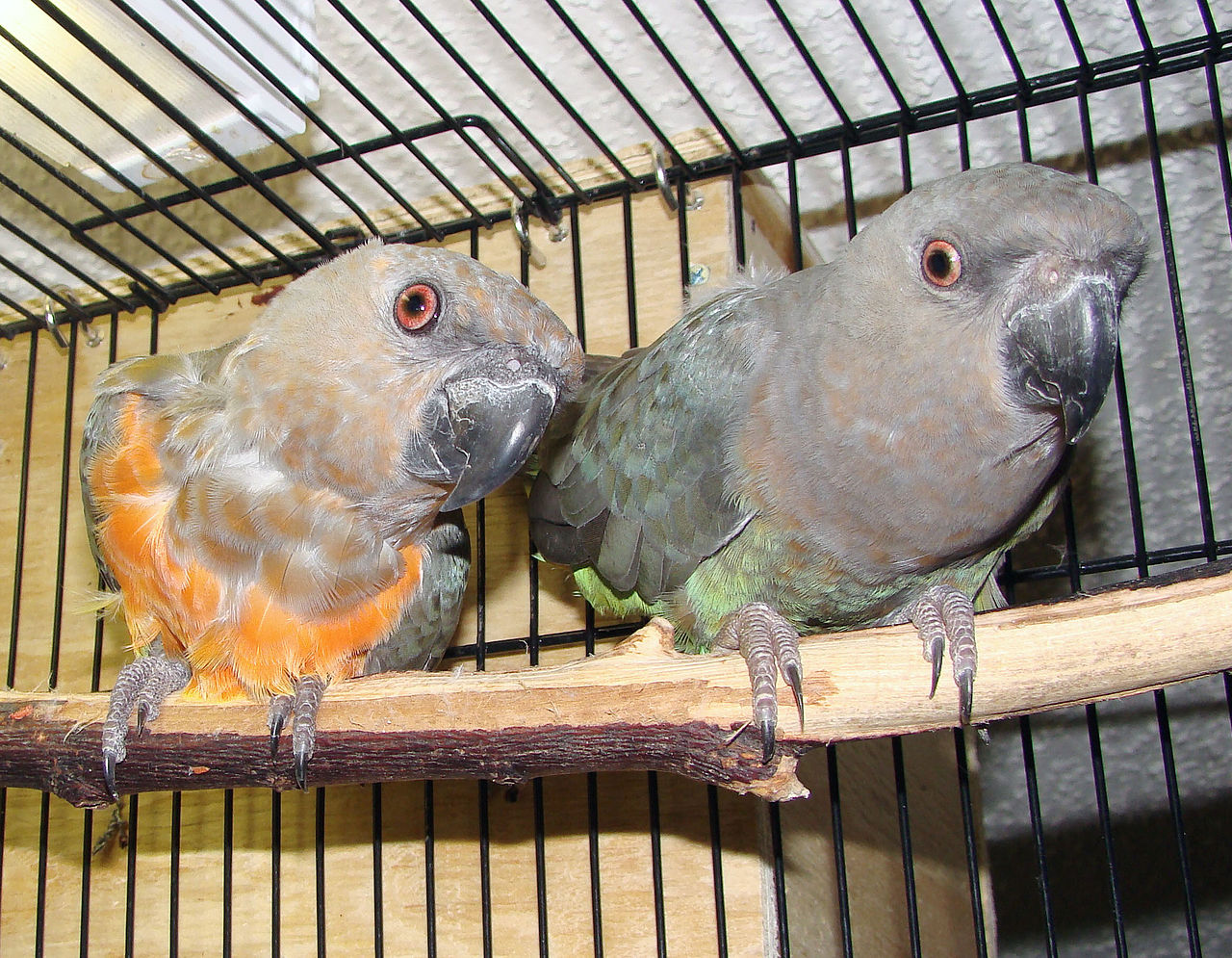
The red-bellied grackle is a species of bird in the family Icteridae. Its genus, Hypopyrrhus, is monotypic.
Region
Colombian Andes
Typical Environment
Occurs on the western and central Andean slopes of Colombia in humid montane forests, edges, secondary growth, and shade-coffee plantations. Prefers forest edges, clearings with scattered trees, and riparian strips. Often uses bamboo thickets and regenerating forest patches near human-modified landscapes. Although tolerant of some disturbance, it depends on a mosaic of tree cover and continuous mid-story vegetation.
Altitude Range
900–2400 m
Climate Zone
Highland
Ease of Keeping
Beginner friendly: 1/5
The red-bellied grackle is the sole member of its genus, Hypopyrrhus, and is endemic to the Colombian Andes. It is notable for its striking crimson belly contrasting with glossy black plumage. The species adapts well to forest edge and shade-coffee habitats but is threatened by ongoing deforestation. Groups are often vocal and conspicuous, making them easier to detect than many montane forest birds.


Temperament
social and noisy
Flight Pattern
short rapid wingbeats with bursts between perches
Social Behavior
Typically found in small family groups or loose flocks that move together through forest edges and secondary growth. They are active, conspicuous foragers and may roost communally. Nests are placed in trees or dense vegetation; both sexes participate in breeding activities.
Migratory Pattern
Resident
Song Description
Vocalizations include sharp chatters, metallic clacks, and wheezy whistles characteristic of grackles. Calls are often given in chorus when groups are moving or alarmed.
Plumage
Glossy black overall with a vivid crimson-red belly and vent; long, slightly graduated tail and subtle bluish sheen on the body.
Diet
An opportunistic omnivore that consumes insects, spiders, and other arthropods gleaned from foliage and bark. It also takes small fruits and berries from shrubs and canopy trees and may sample seeds. Occasional foraging near human-modified areas provides access to cultivated or fallen fruits.
Preferred Environment
Forages along forest edges, in secondary growth, and within shade-coffee plantations where mid-story vegetation is intact. Often feeds from low understory to mid-canopy, hopping between branches and probing leaf clusters.