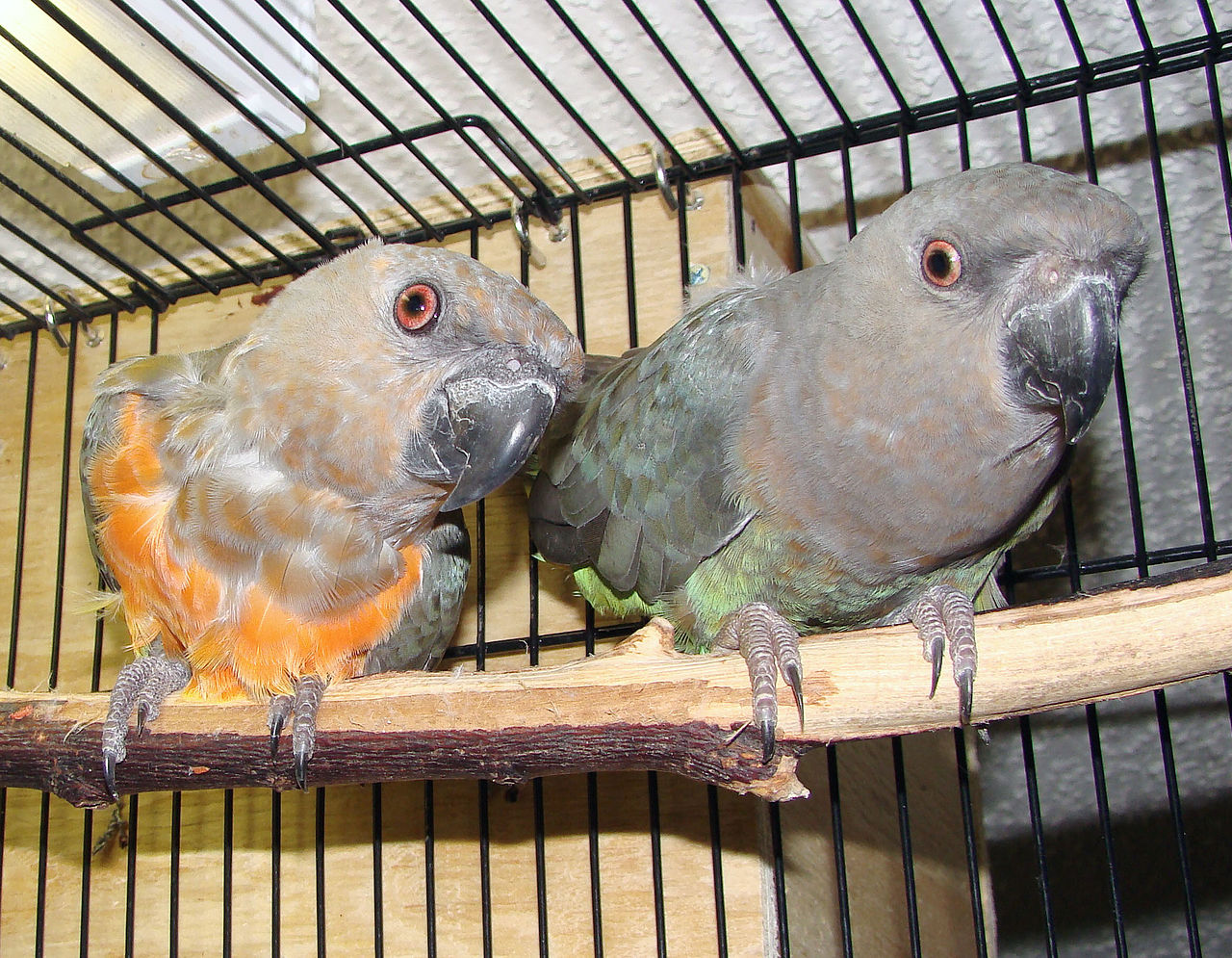
The red-bellied fruit dove is a species of bird in the family Columbidae. It is found in lowland forest in New Caledonia, Santa Cruz Islands (Solomons), and Vanuatu, and it is common in most of its range.
Region
Melanesia
Typical Environment
Occurs in lowland and foothill forests across New Caledonia, the Santa Cruz Islands (Solomon Islands), and Vanuatu. It favors primary and mature secondary forests, but also visits forest edges, riverine strips, and fruiting trees in gardens and agroforests. Most activity is in the mid- to upper canopy where fruit is abundant. It tolerates some habitat mosaic as long as large fruiting trees persist. Local abundance can fluctuate with fruiting cycles.
Altitude Range
Sea level to 900 m
Climate Zone
Tropical
Ease of Keeping
Beginner friendly: 1/5
A brightly marked island fruit-dove, it plays a key role in seed dispersal for many native trees. Despite the vivid red patch on the belly, it is often hard to spot as it forages quietly in the canopy. It is generally common across parts of its range but can be sensitive to extensive forest clearing.

Temperament
solitary and unobtrusive
Flight Pattern
short rapid wingbeats with swift, direct dashes between trees
Social Behavior
Usually seen singly or in pairs, occasionally in small loose groups at heavily fruiting trees. Pairs are likely monogamous and defend small areas around nest sites. The nest is a simple twig platform placed well above ground, typically holding a single white egg.
Migratory Pattern
Resident
Song Description
A series of soft, low-pitched coos, often delivered as spaced, muffled “whoo… whoo” notes from within the canopy. Calls carry poorly, aiding its secretive habits. Males may give more persistent sequences during courtship or territory advertisement.
Plumage
Glossy green upperparts with a soft grey head and breast, contrasting with a vivid crimson-red lower belly patch and yellow to golden undertail. Underparts otherwise pale grey to whitish, with clean, neat color boundaries. Females are similar but often duller and may show a reduced or less vivid belly patch.
Diet
Feeds primarily on small to medium fruits, especially figs and drupes from native forest trees. It swallows fruits whole and later disperses seeds across the forest, benefiting regeneration. Diet composition shifts seasonally with fruit availability, and it may travel between patches to track fruiting trees.
Preferred Environment
Forages mostly in the mid- to upper canopy of lowland and foothill forests. Frequently visits forest edges, secondary growth, and village gardens when fruiting trees are present.