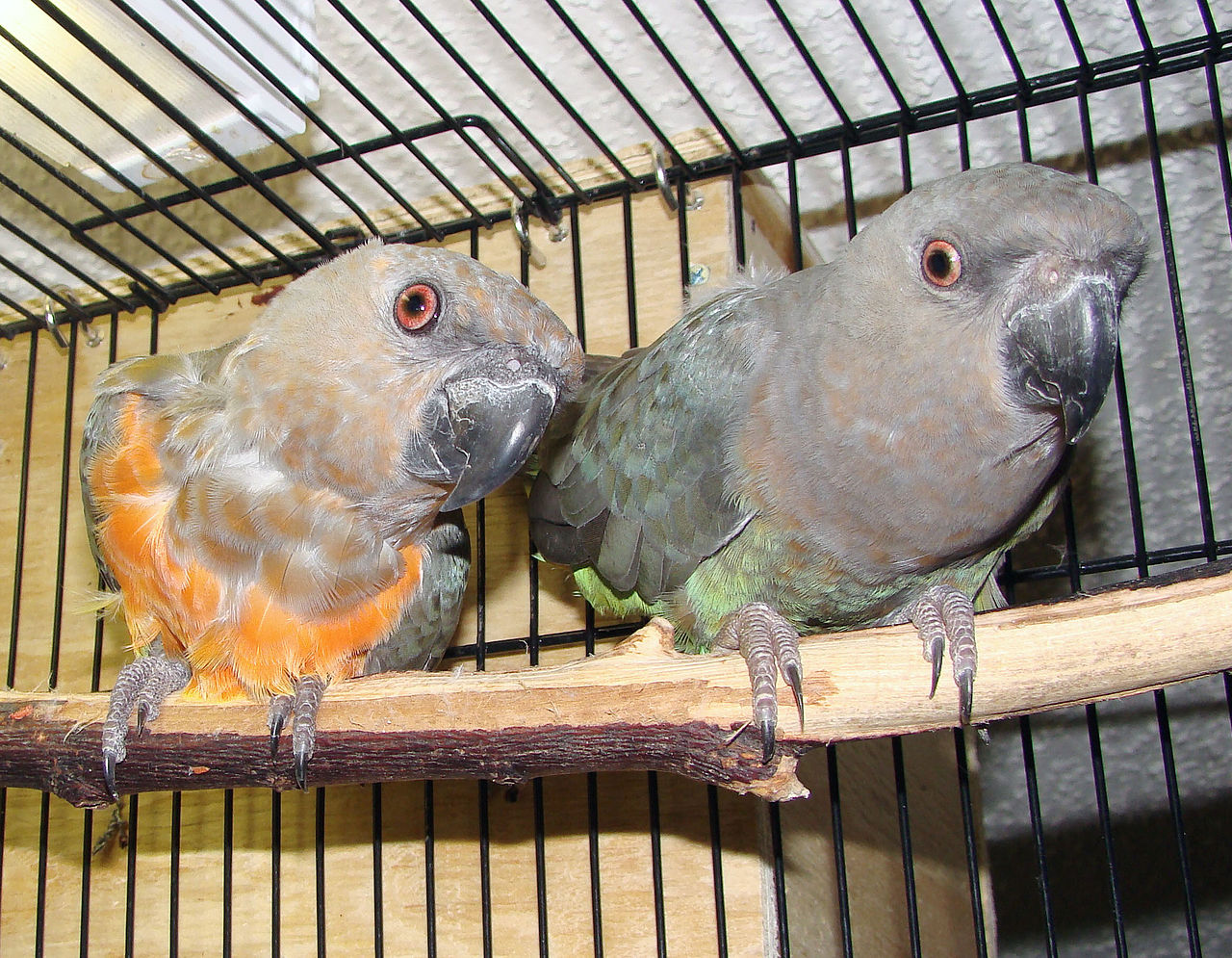
The red-banded fruiteater is a species of bird in the family Cotingidae, the cotingas. It is found in Brazil, Guyana, and Venezuela.
Region
Guiana Shield Tepui Highlands
Typical Environment
Occurs locally in the tepui (table-mountain) forests and edges of southeastern Venezuela, western Guyana, and adjacent northern Brazil. It favors cloud forest, mossy montane woodland, and elfin forest on tepui summits and upper slopes. The species is patchy, reflecting the island-like nature of tepui habitats separated by lowland rainforest. It usually keeps to the midstory and canopy and is most often encountered around fruiting trees on ridges and in sheltered gullies.
Altitude Range
1000–2200 m
Climate Zone
Highland
Ease of Keeping
Beginner friendly: 1/5
A small, canopy-dwelling cotinga of the Guiana Shield tepuis, the red-banded fruiteater is best known for the male’s vivid crimson chest band. It is typically quiet and unobtrusive, often detected by its thin, high whistles near fruiting trees. Its isolated mountaintop habitats contribute to a naturally patchy distribution. Like other fruiteaters, it helps disperse seeds by swallowing small fruits whole.


Red-banded fruiteaters

Temperament
quiet and unobtrusive
Flight Pattern
short rapid wingbeats between perches
Social Behavior
Most often seen singly or in pairs, sometimes accompanying mixed-species flocks when fruiting trees are abundant. Courtship likely involves soft vocalizations and display perches within dense canopy. The nest is a small cup placed on a branch or in a mossy fork, with both sexes presumed to attend.
Migratory Pattern
Resident
Song Description
Song consists of thin, high, sibilant whistles delivered at intervals from concealed perches. Calls are soft and easily overlooked, often a series of faint notes given at dawn and in calm periods of the day.
Plumage
Compact, short-tailed fruiteater with smooth green upperparts. Male shows a striking, narrow red band across the chest with whitish to pale underparts; female lacks the red band and has green upperparts with heavily barred yellowish-olive underparts. Both sexes have a short, broad-based bill and a clean, neat appearance.
Diet
Primarily eats small, soft fruits and berries, especially from melastomes and other montane forest shrubs and trees. It swallows fruits whole and later regurgitates the seeds, aiding seed dispersal. Insects and other small arthropods are occasionally gleaned to supplement its diet.
Preferred Environment
Feeds in the midstory and canopy of cloud forest, particularly at fruiting trees along forest edges, ridges, and sheltered ravines. It often remains within dense foliage, making brief sallies to pluck fruit.