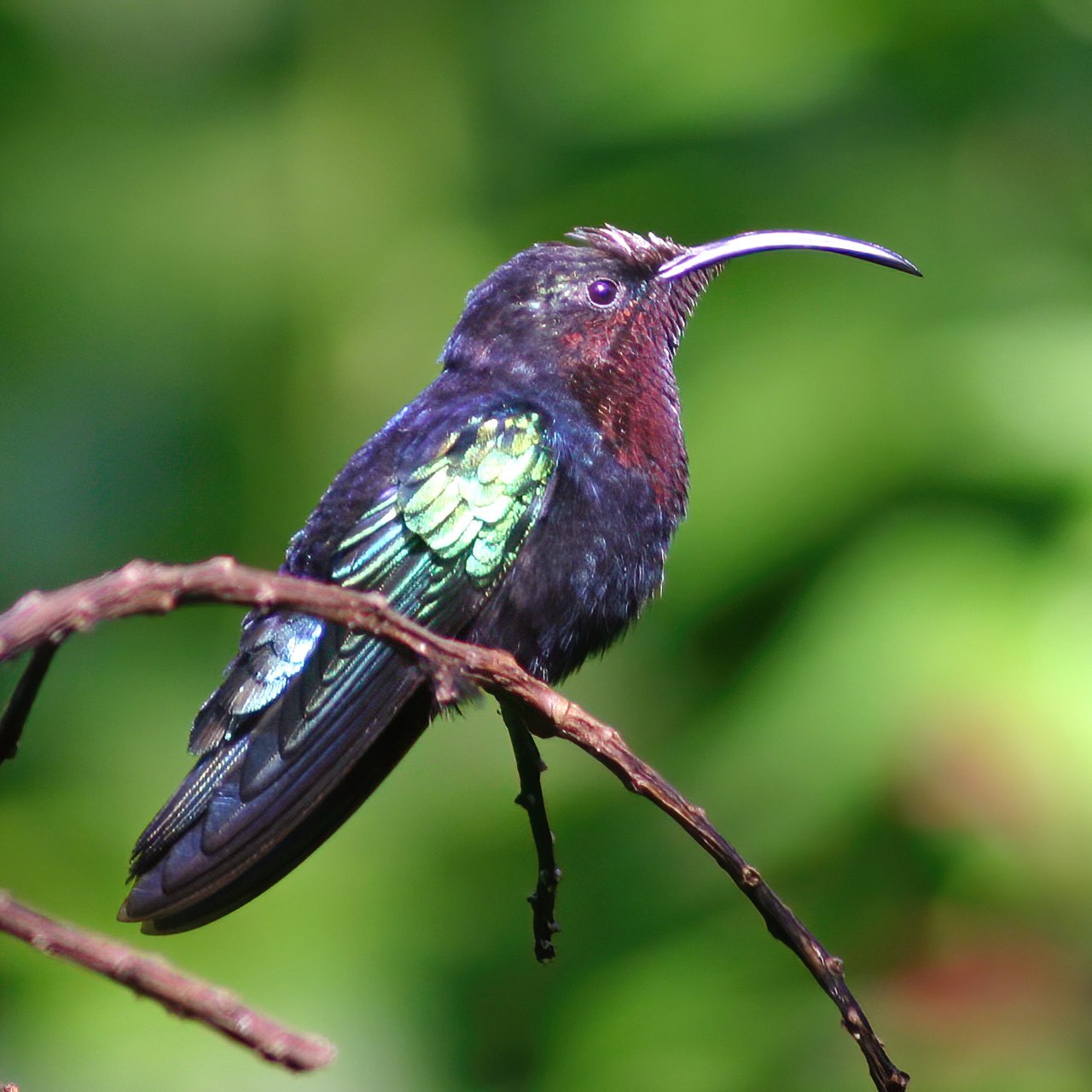
The purple-gaped honeyeater is a species of bird in the family Meliphagidae. It is endemic to semi-arid southern Australia, where it inhabits mallee, tall heath and associated low eucalypt woodland.
Region
Southern Australia
Typical Environment
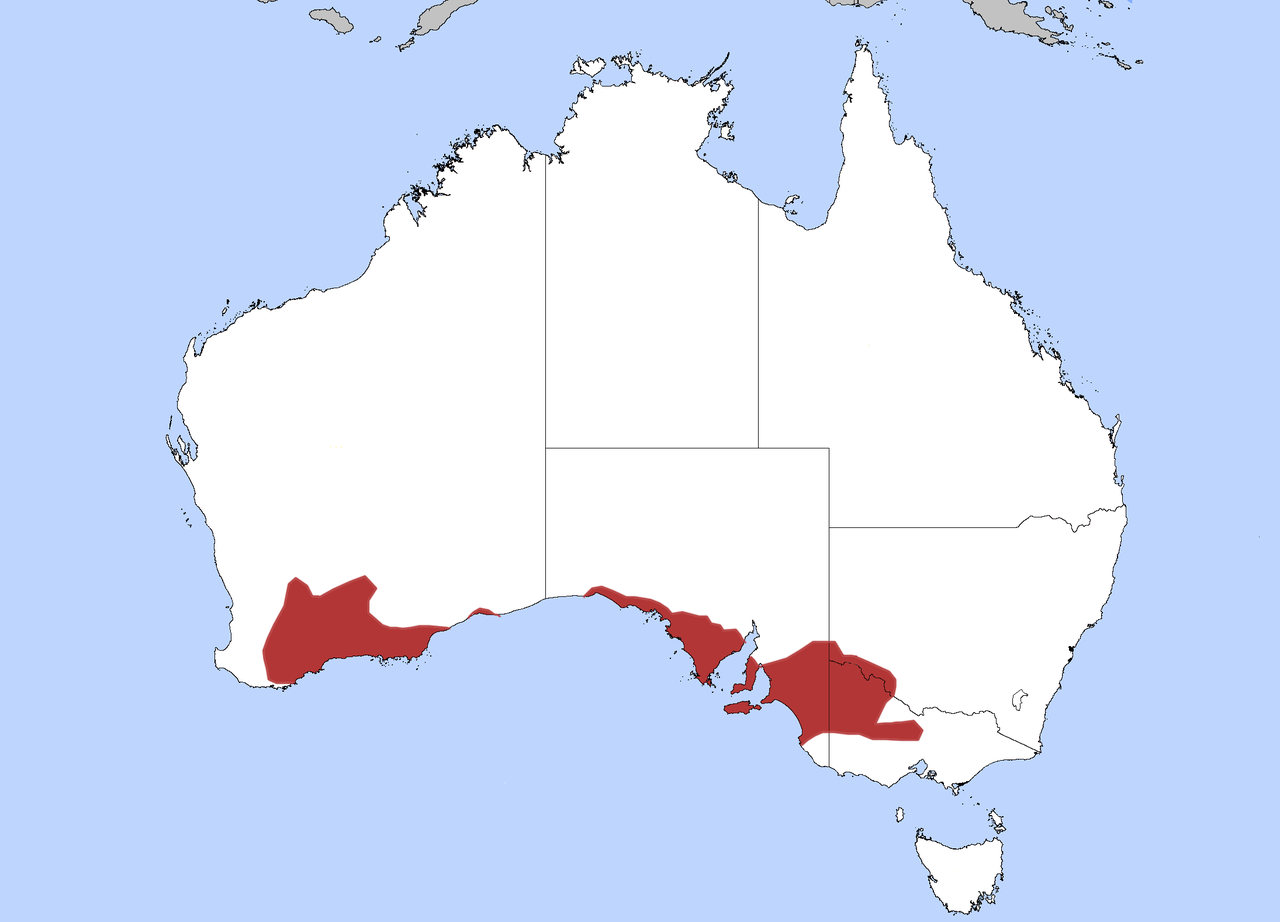
Occurs in semi-arid to Mediterranean regions of southern Australia, especially the mallee belt of South Australia and western Victoria, with an additional population in southwest Western Australia. It favors mallee eucalypt shrublands, tall heath, and low open woodlands with a dense midstory. Birds often use sandy heaths and scrubby dunes, frequently along ecotones and regenerating mallee. Availability of flowering eucalypts and nectar-bearing shrubs strongly influences local presence and abundance.
Altitude Range
0–600 m
Climate Zone
Arid
Ease of Keeping
Beginner friendly: 1/5
The purple-gaped honeyeater is named for the distinctive purplish bare skin at the corner of its mouth, which can be surprisingly conspicuous at close range. It is a lively honeyeater of semi-arid mallee and heath where it follows seasonal flowering of eucalypts and other shrubs. Birds often move locally in response to nectar availability, forming small, noisy foraging parties.

Temperament
active and somewhat secretive
Flight Pattern
short rapid wingbeats with low, bounding flights through scrub
Social Behavior
Usually seen singly, in pairs, or small loose groups, especially where flowers are abundant. Pairs are monogamous during the breeding season and defend small nesting areas. The nest is a neat cup of fibers, bark, and spider silk placed in dense shrubs or low eucalypt branches.
Migratory Pattern
Partial migrant
Song Description
Calls are bright, tinkling and chattering notes interspersed with sharper scolds. Song includes short phrases of clear whistles delivered from within cover, often repeated and mixed with soft warbles.
Plumage
Olive-brown to grey-brown above with paler, lightly streaked underparts and a slightly paler throat. Feathers appear smooth and close-fitting, with subtle edging on wings and tail. Face shows a dusky mask and pale ear-covert crescent.
Diet
Takes nectar from flowering eucalypts, melaleucas, and other shrubs, and also gleans insects and spiders from foliage and bark. Will forage for lerps, honeydew, and small caterpillars, especially when nectar is scarce. Occasionally consumes small fruits or sugary exudates.
Preferred Environment
Feeds in the midstory and canopy of mallee and heath, often moving quickly between flowering shrubs and trees. Frequently works along edges, regenerating patches, and mixed scrub with good floral resources.