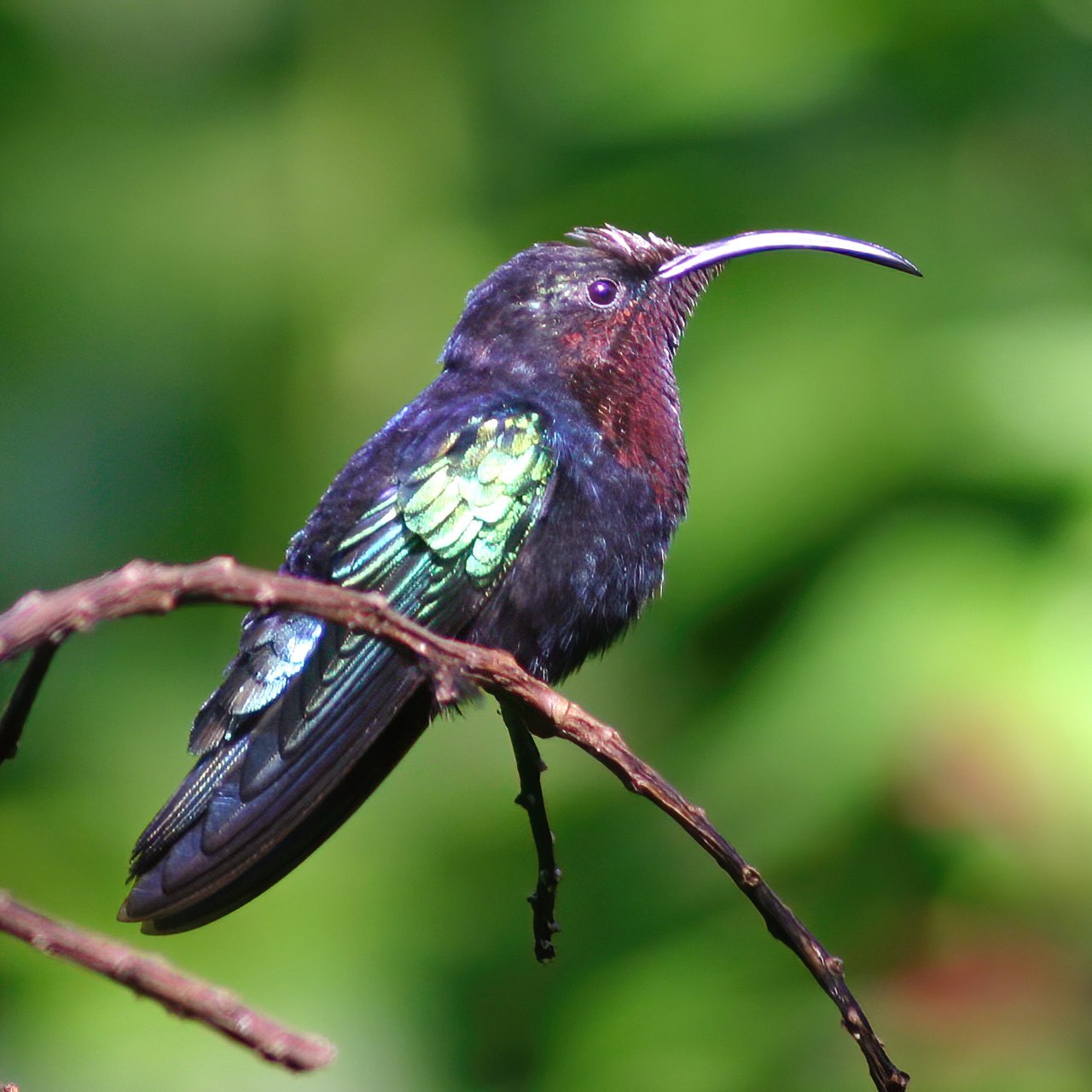
The purple-tailed imperial pigeon is a species of bird in the family Columbidae. It is found in New Guinea. Its natural habitat is subtropical or tropical moist lowland forests. It is sometimes affected by Gunabopicobia parasites.
Region
New Guinea
Typical Environment
Occurs across the lowland rainforests of New Guinea, in both Papua New Guinea and Indonesian Papua. It favors subtropical and tropical moist lowland forests, including riverine and swamp forests, and uses forest edges and secondary growth when fruiting trees are present. The species is largely canopy-restricted, descending only rarely. It is typically found in areas with abundant figs and other large-seeded fruiting trees.
Altitude Range
Sea level to 1200 m
Climate Zone
Tropical
Ease of Keeping
Beginner friendly: 1/5
A large canopy-dwelling pigeon of New Guinea, the purple-tailed imperial pigeon is an important seed disperser, especially for figs. It spends much of its time high in the forest crown and often travels between fruiting trees in small groups. Its deep, resonant coos carry over long distances in dense forest. Individuals have been reported to host feather mites such as Gunabopicobia.

Temperament
wary, canopy-dwelling and moderately social
Flight Pattern
strong, direct flight with powerful wingbeats
Social Behavior
Often seen singly, in pairs, or in small loose flocks moving between fruiting trees. Forms monogamous pairs during breeding; the nest is a simple platform high in the canopy. Typically lays a single egg, with both parents sharing incubation and chick care.
Migratory Pattern
Resident
Song Description
Delivers deep, resonant coos and booming notes that carry far through dense foliage. Phrases are slow and measured, often repeated in steady sequences from a concealed perch.
Plumage
Robust imperial pigeon with a smooth slate-grey head and upperparts, contrasting deep rufous belly and undertail, and an iridescent purplish tail. Wings often show a subtle greenish gloss; flight feathers darker. Overall appearance is clean and glossy with minimal streaking.
Diet
Primarily consumes fruits, especially figs (Ficus) and other large berries and drupes, which are swallowed whole. Acts as a key seed disperser by passing or regurgitating seeds away from the parent tree. Will occasionally take buds or softer plant matter when fruit is scarce. Foraging movements track seasonal and local availability of fruiting trees.
Preferred Environment
Feeds mainly in the upper canopy of mature lowland rainforest, visiting emergent fruiting trees. Also uses forest edges, river margins, and secondary growth when fruit is abundant.