
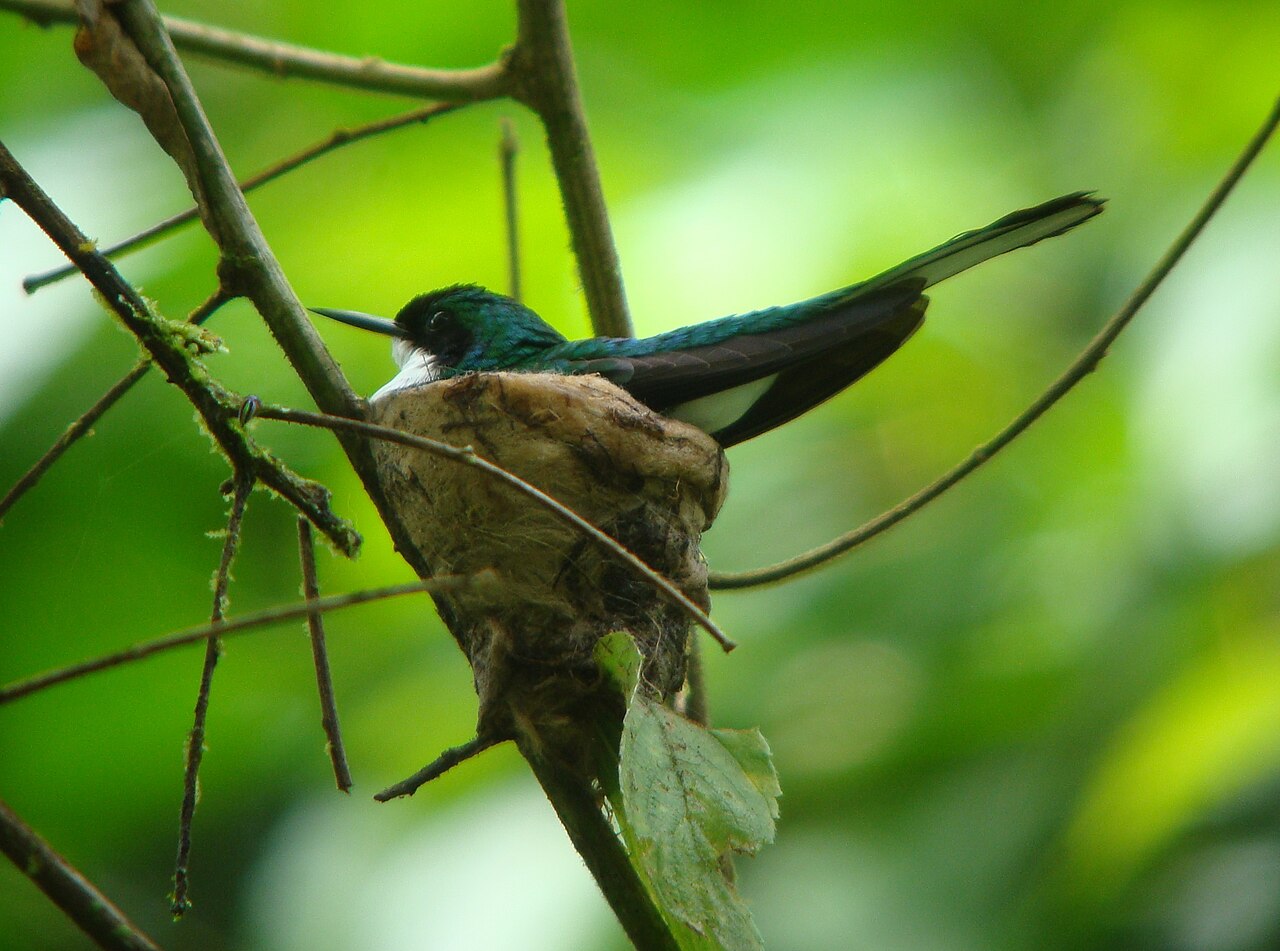
The purple-crowned fairy is a species of hummingbird in the subfamily Polytminae, the mangoes. It is found from southeastern Mexico south into northern Peru.
Region
Central America to northwestern South America
Typical Environment
Occurs from southeastern Mexico through Belize and Central America into Colombia, Ecuador, and northern Peru. Prefers humid lowland and foothill evergreen forests, forest edges, tall secondary growth, and shaded plantations. Often follows riparian corridors and clearings with rich flowering shrubs and trees. Frequently forages in the midstory to canopy, but will descend to visit understory blossoms along trails and streams.
Altitude Range
Sea level to 1500 m
Climate Zone
Tropical
Ease of Keeping
Beginner friendly: 1/5
This striking hummingbird is notable for the male’s iridescent purple crown and long white tail, which flash in dappled forest light. It forages by traplining between widely spaced flowers and also hawks tiny insects mid-air. Nests are often suspended beneath drooping leaves near streams, crafted from plant down and spider silk. Despite its vivid appearance, it can be surprisingly inconspicuous in the high canopy.


Temperament
solitary and territorial
Flight Pattern
short rapid wingbeats with agile hovering
Social Behavior
Generally solitary outside of breeding and feeding aggregations at rich flower patches. Males defend nectar sources vigorously. The tiny cup nest is typically suspended beneath a drooping leaf or overhanging bank near water; the female alone incubates and cares for the young.
Migratory Pattern
Resident
Song Description
Vocalizations are thin, high-pitched chips and twitters given from perches or while foraging. Males may deliver rapid, squeaky sequences during territorial interactions. Calls can be subtle and easily lost in forest background noise.
Plumage
Upperparts iridescent green with clean white underparts; long, mostly white tail. Male shows a vivid purple crown and a contrasting dark mask; female lacks the purple crown and is plainer-headed. Both sexes have a sleek, glossy look typical of hummingbirds.
Diet
Feeds primarily on nectar from a variety of tubular flowers, including canopy and midstory blossoms such as Inga and Heliconia. It follows a trapline, visiting a sequence of flowering plants for efficient nectar intake. Also consumes small arthropods, which provide essential proteins, by hawking in mid-air or gleaning from foliage. Will opportunistically exploit flowering trees at forest edges and along rivers.
Preferred Environment
Forages along forest edges, clearings, and riparian zones with abundant flowering shrubs and trees. Uses midstory to canopy perches to sally for insects and to guard productive nectar sources.


