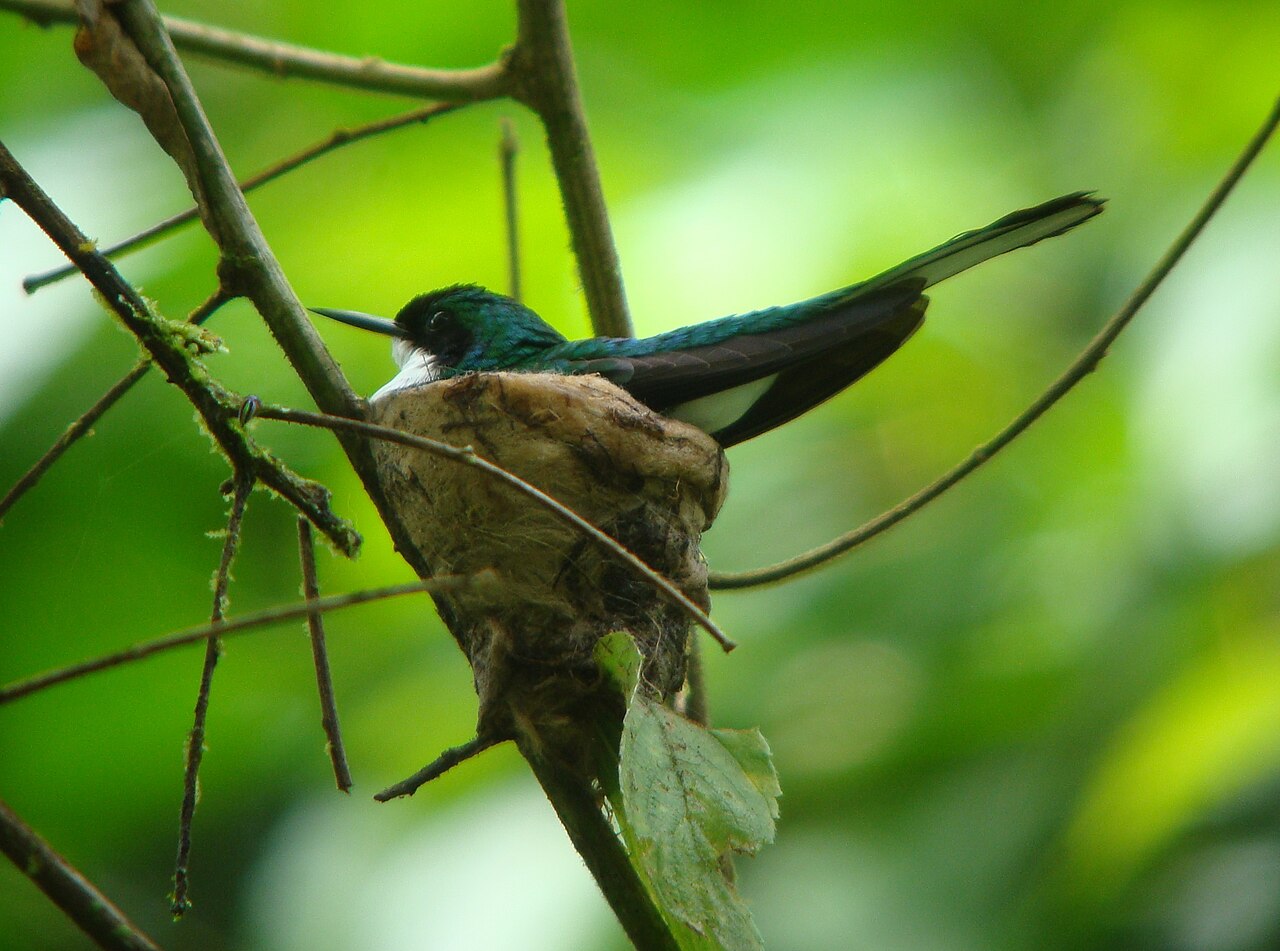
The purple-collared woodstar is a species of hummingbird in tribe Mellisugini of subfamily Trochilinae, the "bee hummingbirds". It is found in Ecuador and Peru.
Region
Western Ecuador and northwest Peru
Typical Environment
Occurs along the dry to semi-dry Pacific slope and intermontane valleys, including coastal desert scrub, thorny dry forest, and riparian corridors. It readily uses disturbed areas and flowering gardens in towns and villages. The species follows seasonal blooms of native and ornamental plants. It also occupies edges of deciduous forest and hedgerows where nectar sources are concentrated.
Altitude Range
0–2500 m
Climate Zone
Arid
Ease of Keeping
Beginner friendly: 1/5
The purple-collared woodstar is a tiny hummingbird known for the male’s striking violet-purple collar across the upper chest. It frequents arid and semi-arid habitats as well as gardens where tubular flowers are abundant. Like many hummingbirds, it supplements nectar with small insects for protein. Its agile, bee-like flight and brief, hovering flower visits can make it easy to overlook.


Purple-collared Woodstar in Peru

Temperament
solitary and territorial
Flight Pattern
short rapid wingbeats with agile hovering and darting
Social Behavior
Typically solitary at flowers and defends rich nectar sources from other hummingbirds. Courtship involves hover-displays and rapid shuttle flights by the male. The small cup nest is built of plant down bound with spider silk, often placed on a low horizontal branch or human-made structure.
Migratory Pattern
Resident
Song Description
Vocalizations are thin, high-pitched chips and short trills, often given while foraging or during brief chases. Wing hum is prominent at close range and may intensify during display flights.
Plumage
Male with iridescent green upperparts and a bold, gleaming purple collar across the upper breast contrasting with clean white underparts; tail relatively short. Female lacks the purple collar, shows green upperparts, whitish underparts with buffy or grayish tones, and a tail with dusky feathers tipped pale. Both sexes have a slender, straight bill.
Diet
Feeds primarily on nectar from a variety of tubular and brushy flowers, including native shrubs and ornamentals. It often visits flowering trees, cacti, and garden plants. Small arthropods such as gnats and tiny spiders are taken by hawking or gleaning to provide essential protein.
Preferred Environment
Most often forages along scrubby edges, flowering hedges, and in dry forest clearings. It also frequents urban gardens and plazas with reliable nectar sources.