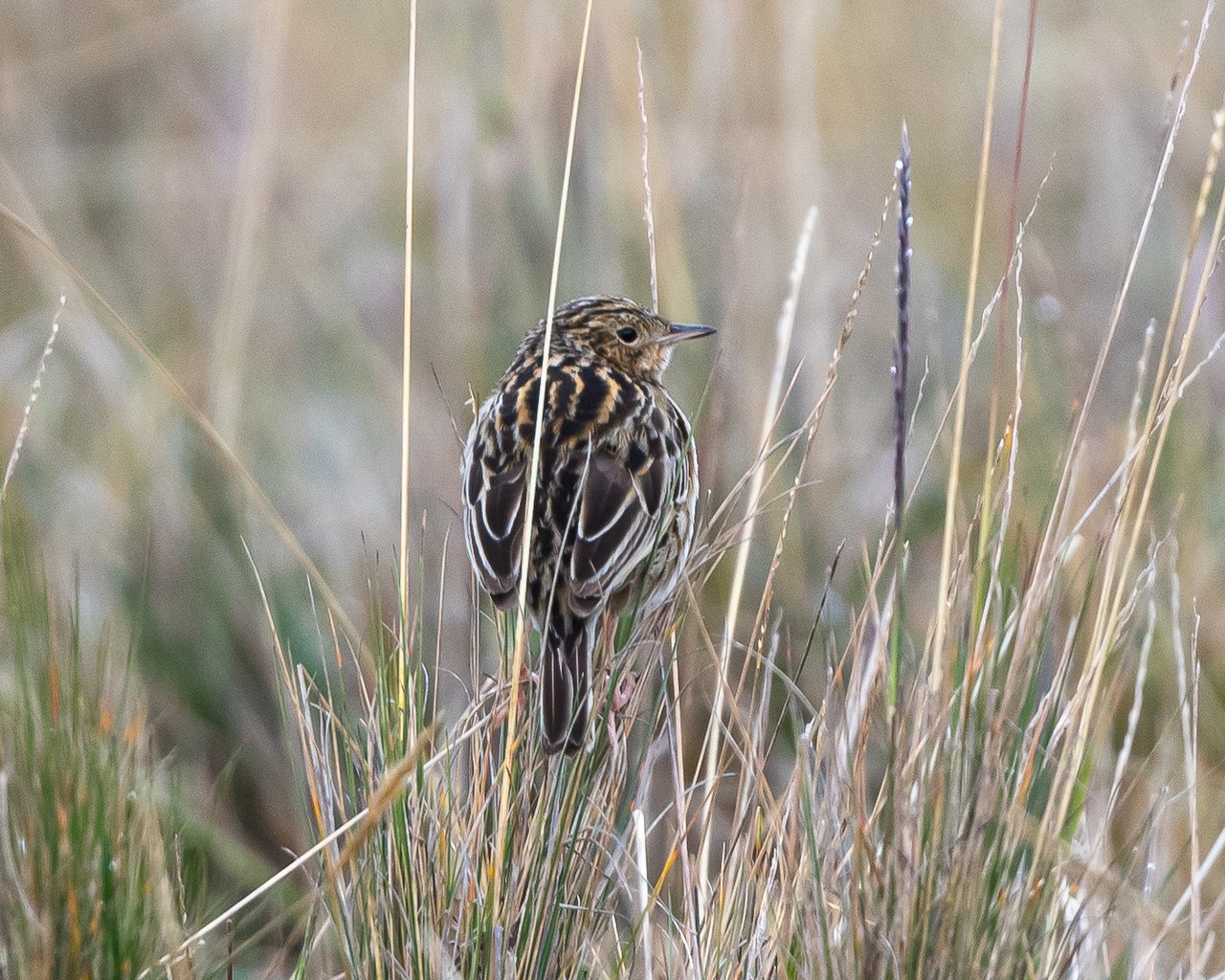
The Paramillo tapaculo is a species of bird in the family Rhinocryptidae.
Region
Northern Andes of Colombia
Typical Environment
Occurs in humid montane forests and at the edges of elfin forest and páramo, where dense understory and bamboo thickets provide cover. It favors steep ravines, mossy forest floors, and areas with abundant leaf litter. The species keeps to shadowy, tangled vegetation, often near streams or drippy slopes. Its range is localized around the Paramillo massif and adjacent highland ridges.
Altitude Range
1600–3400 m
Climate Zone
Highland
Ease of Keeping
Beginner friendly: 1/5
The Paramillo tapaculo is a shy understory specialist that spends most of its time near the ground, darting through dense vegetation. Like many tapaculos, it is more often detected by voice than seen. It is restricted to a small portion of the northern Andes of Colombia, making it sensitive to habitat change.
Temperament
skulking and territorial
Flight Pattern
short rapid wingbeats low through understory
Social Behavior
Usually solitary or in pairs, maintaining small territories in dense cover. Males sing from hidden perches close to the ground to advertise territory and attract mates. Nests are typically domed, mossy structures placed in banks, among roots, or within dense vegetation.
Migratory Pattern
Resident
Song Description
Song is a fast, repetitive series of clear notes that may accelerate or intensify, carrying surprisingly well from within thick cover. Calls include sharp ticks and churrs used in agitation or contact.
Plumage
Compact, mostly slaty to ash-gray with darker face and crown; flanks and lower belly show brownish tones with fine dark barring. Upperparts are plain, and the tail is short and often held cocked.
Diet
Primarily forages for small arthropods such as beetles, ants, spiders, and larvae gleaned from leaf litter and low vegetation. It probes among moss, roots, and fallen branches, often pausing to listen before making quick picks. Occasional small berries may be taken incidentally.
Preferred Environment
Feeds on or near the ground within dense understory, bamboo tangles, and along damp ravines. Often works shaded forest floors and edges where leaf litter accumulates and insect prey is abundant.