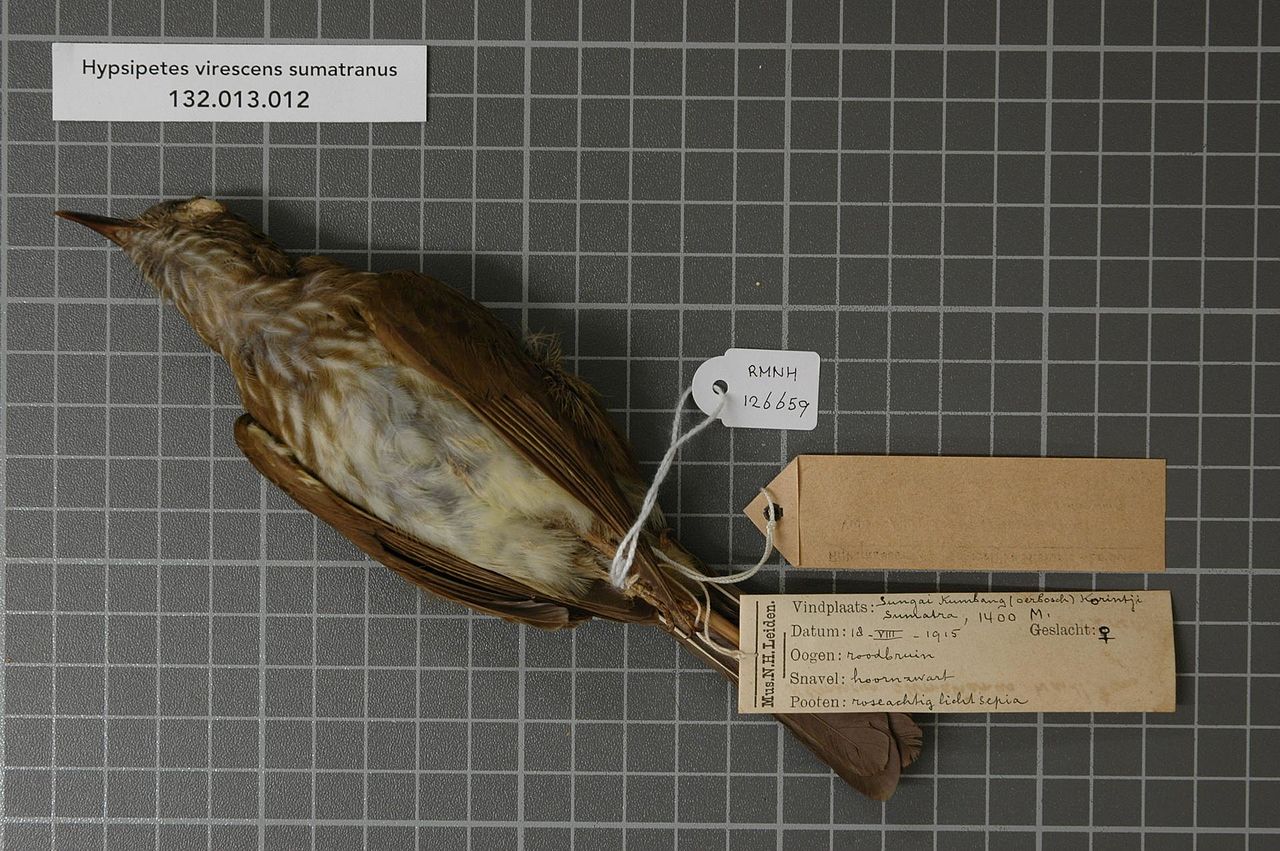
The olive bulbul is a species of songbird in the bulbul family, Pycnonotidae. It is found from southern Myanmar to south-western Thailand and the Malay Peninsula. Its natural habitats are subtropical or tropical moist lowland forests and subtropical or tropical moist montane forests.
Region
Malay Peninsula and adjacent mainland Southeast Asia
Typical Environment
Occurs from southern Myanmar through southwestern Thailand into the Malay Peninsula, inhabiting lowland to lower montane evergreen forests. It favors mature and secondary moist forests, forest edges, and bamboo thickets, and often forages in the mid-story to canopy. The species tolerates some disturbance where fruiting trees remain but is most numerous in intact forest. It is generally a resident throughout its range.
Altitude Range
Sea level to 1600 m
Climate Zone
Tropical
Ease of Keeping
Beginner friendly: 2/5
A quiet, canopy-loving bulbul, the olive bulbul often joins mixed-species flocks and can be overlooked despite being fairly common. It plays an important role in forest ecosystems by dispersing seeds from the fruits it eats. The species has shifted among genera in the past, reflecting ongoing refinements in bulbul taxonomy.


Temperament
shy and unobtrusive
Flight Pattern
short, direct flights with rapid wingbeats between trees
Social Behavior
Most often seen singly, in pairs, or small family groups, frequently joining mixed-species foraging flocks in the canopy. Builds a neat cup nest in shrubs or small trees, with both parents participating in care. Territorial calls are given from concealed perches within the mid-story.
Migratory Pattern
Resident
Song Description
Song is a series of mellow, whistled phrases interspersed with soft chattering notes. Calls include short chips and nasal notes, carrying modestly through dense foliage.
Plumage
Mostly olive-green to brownish-olive above with paler olive-washed underparts and a slightly grizzled, sometimes faintly streaked throat. Feathers appear soft and plain, with a slight, loose crest on the crown. Vent and undertail coverts can show a subtle yellowish wash.
Diet
Feeds on small fruits and berries, including figs and other fleshy drupes, and supplements its diet with insects and other small arthropods. It gleans prey from leaves and twigs and occasionally sallies short distances to catch flying insects. By consuming fruits, it helps disperse seeds across forest habitats.
Preferred Environment
Forages mainly in the mid-story to canopy of evergreen forest, along edges, and in secondary growth with fruiting trees. Often concentrates at fruiting trees and sometimes follows mixed flocks to exploit disturbed insects.