

The olive ibis is a species of ibis native to dense tropical forests in central Africa. Between 65 and 75 cm in length, it is a small ibis with olive plumage displaying an iridescent sheen. Four subspecies are recognized.
Region
West and Central Africa
Typical Environment
Occurs patchily from Upper Guinean rainforests through the Lower Guinean and Congolian forests, extending into parts of the Albertine Rift. It inhabits primary and mature secondary evergreen forest, often near streams, swampy glades, and forested river margins. The species also ventures into forest clearings and along logging tracks to forage but avoids open country. Local presence can be overlooked due to its secretive nature and preference for dense understory.
Altitude Range
Sea level to 2400 m
Climate Zone
Tropical
Ease of Keeping
Beginner friendly: 1/5
A shy forest ibis of West and Central Africa, the olive ibis is smaller than many ibises and cloaked in olive-brown plumage with a bronze-green sheen. It frequents dense evergreen forests and is most often detected by its harsh, grating calls at dawn and dusk. Four subspecies are recognized, spanning lowland rainforests to montane belts in the Albertine Rift.

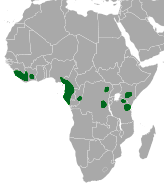

Illustration of an adult bird of the nominate subspecies – a native of the Upper Guinean forests
Temperament
shy and secretive
Flight Pattern
strong flier with steady, direct wingbeats; flies low over the canopy or along river corridors
Social Behavior
Typically seen singly, in pairs, or small family groups. Nests are platform-like structures of sticks placed in trees over water or in dense forest. Breeding pairs are territorial around nest sites and may call frequently at dawn and dusk. Clutch size is small, and both sexes likely share incubation and chick-rearing duties.
Migratory Pattern
Resident
Song Description
Vocalizations are rough, grating croaks and harsh nasal calls that can carry through forest at twilight. Calls often come in short series, given from concealed perches or during brief flights. Daytime is usually quiet aside from sporadic grunts.
Plumage
Uniform olive-brown plumage with a metallic bronze to green iridescent sheen; darker flight feathers and tail.
Diet
Feeds on a mix of invertebrates such as beetles, larvae, earthworms, snails, and crustaceans, as well as small amphibians and reptiles. It will also take fallen fruits and seeds opportunistically. Prey is probed from soft mud, leaf litter, and shallow water, using the long decurved bill to feel and extract food. Diet composition varies with season and local habitat.
Preferred Environment
Forages along shaded forest streams, swamp edges, and muddy banks within dense interior forest. It also searches leaf litter on trails, glades, and forest clearings, often under dense canopy cover. Human disturbance tends to push it deeper into intact forest.


