
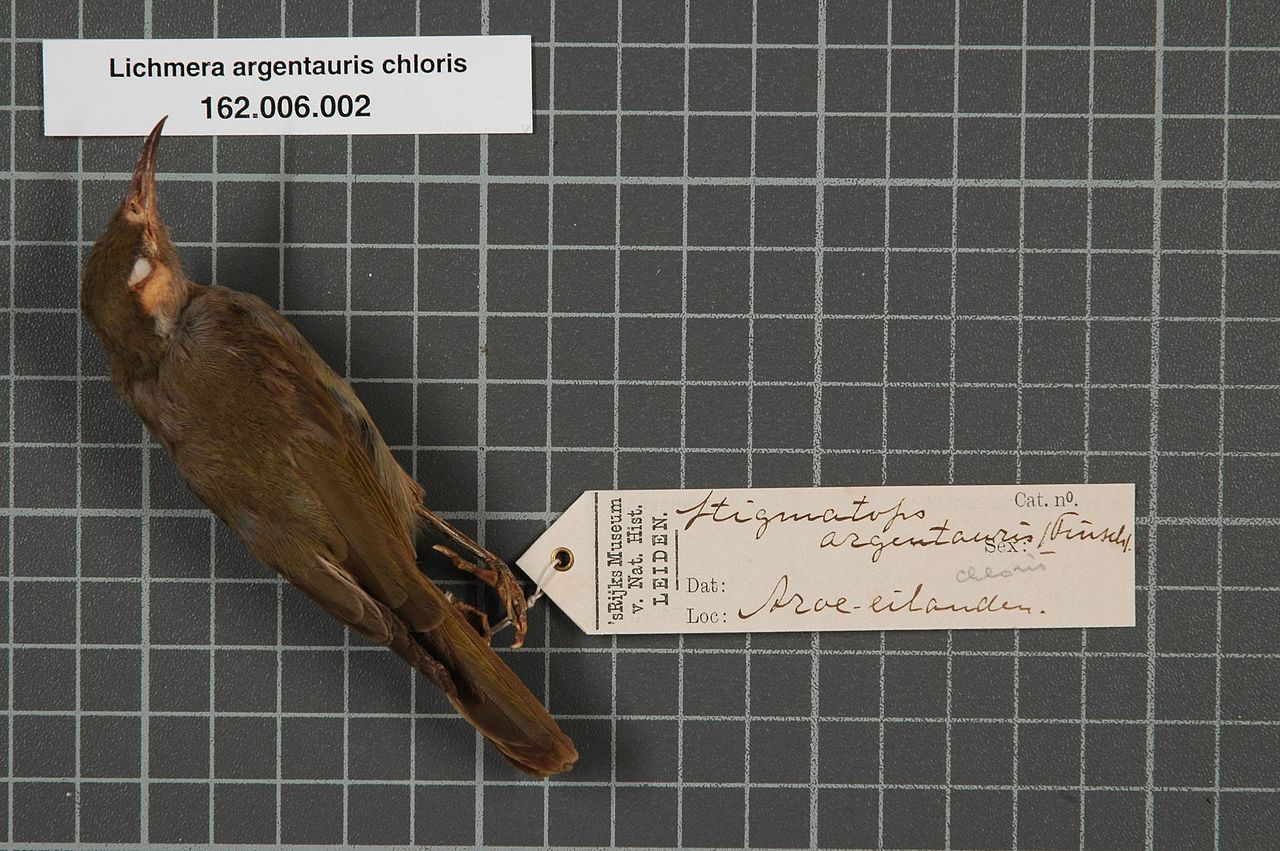
The olive honeyeater is a species of bird in the family Meliphagidae. It is endemic to Indonesia, where it inhabits the Maluku Islands and coastal Western New Guinea.
Region
Maluku Islands and coastal West Papua, Indonesia
Typical Environment
The species is found along coasts and lowlands, especially in mangrove forests, strand vegetation, and adjacent scrub. It also uses coconut groves, village gardens, and secondary growth with flowering shrubs and trees. Birds forage from the mid-canopy to the canopy but will descend to feed on low blossoms. It tolerates moderate habitat disturbance so long as nectar sources remain. Rivers, estuaries, and sheltered bays with mangroves are typical hotspots.
Altitude Range
Sea level to 500 m
Climate Zone
Tropical
Ease of Keeping
Beginner friendly: 1/5
A coastal specialist, the olive honeyeater frequents mangroves, beach scrub, and village gardens where flowering trees are abundant. It is active and inquisitive, often foraging in small groups and moving quickly between blossoms. Besides nectar, it also snaps up small insects, which provide protein. Its presence is a good indicator of healthy coastal vegetation in eastern Indonesia.

Temperament
social and active
Flight Pattern
short rapid wingbeats
Social Behavior
Often seen in pairs or small, loose groups, sometimes joining mixed-species flocks in flowering trees. It is territorial around rich nectar sources but generally tolerant of conspecifics when blooms are abundant. Nests are typically small cup structures placed in shrubs or trees in the lowlands.
Migratory Pattern
Resident
Song Description
A lively mix of sharp chips, scolding chatters, and thin, ringing whistles. Vocalizations are frequent while foraging and can intensify around flowering trees or during territorial disputes.
Plumage
Overall olive-brown to olive-grey with paler, lightly washed underparts and a clean, neat feather texture. The ear-coverts are contrastingly pale, giving a bright, silvery look against the dusky head. Wings and tail are darker olive-brown with subtle edging.
Diet
Nectar from mangroves, coastal shrubs, and ornamentals forms the core diet. It supplements with small arthropods such as insects and spiders gleaned from foliage and bark. Soft fruits and berries are taken opportunistically, especially when nectar is scarce. It often probes flowers methodically and hawks briefly for flying insects.
Preferred Environment
Feeds in mangrove canopies, coastal woodland edges, and village gardens with flowering trees like Erythrina and coconut blossoms. It favors sunlit edges and clearings where flowers are concentrated.


