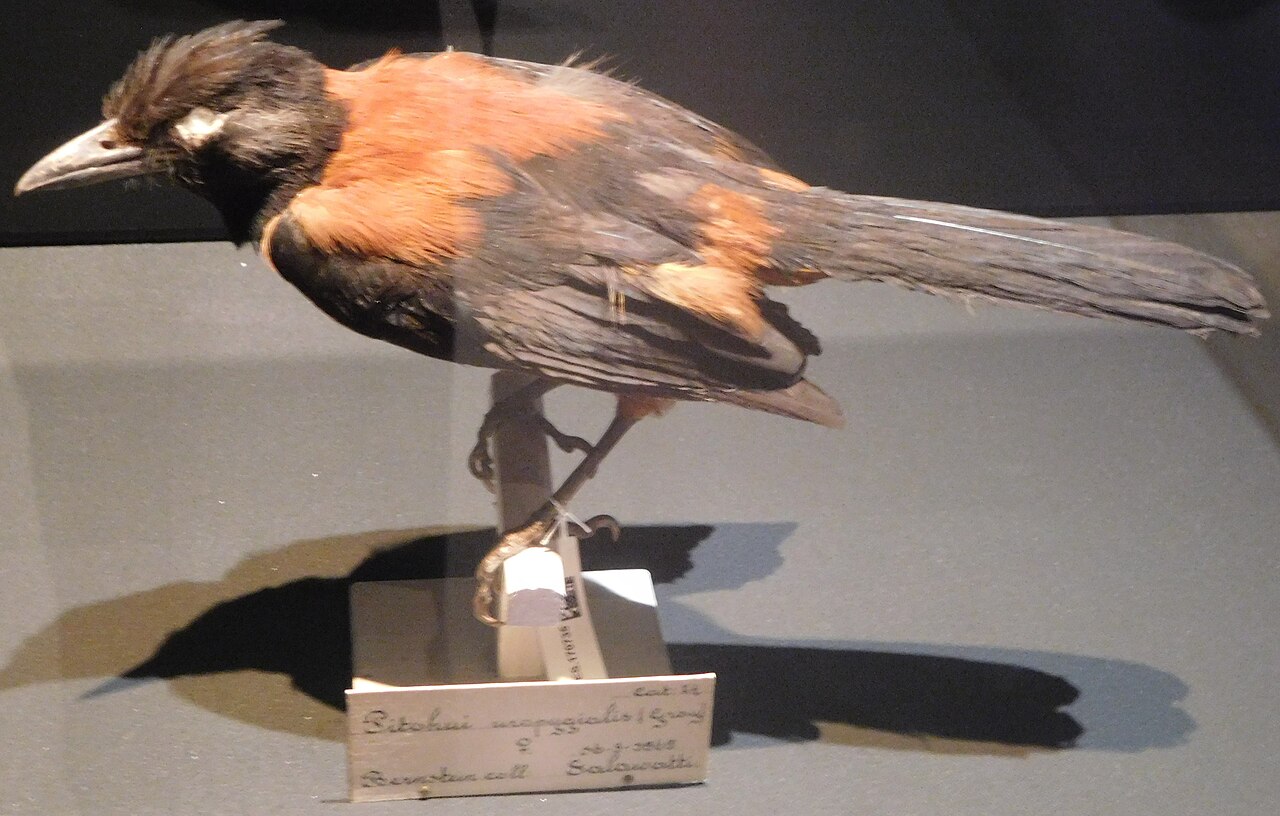
The northern shriketit is a species of bird in the family Falcunculidae. It is found in the Kimberley region of north-western Australia and the Top End of the Northern Territory.
Region
Northern Australia
Typical Environment
Occurs patchily across the Kimberley of Western Australia and the Top End of the Northern Territory. It favors mature eucalypt woodlands and open forests with rough, peeling bark, often near riparian corridors. Monsoon vine thickets and mixed woodland edges are also used, especially where older trees remain. The species avoids dense rainforest and treeless grasslands, concentrating its foraging on mid to upper trunks and large limbs.
Altitude Range
Sea level to 800 m
Climate Zone
Tropical
Ease of Keeping
Beginner friendly: 1/5
Northern shriketits use a powerful, parrot-like bill to prise and strip bark from eucalypts, exposing beetle larvae and other hidden prey. They are typically quiet and inconspicuous, occurring in pairs that work methodically through trunks and larger branches. Their distribution is patchy and closely tied to mature, rough-barked woodland.
Temperament
quiet, methodical, and somewhat secretive
Flight Pattern
short rapid wingbeats with brief undulating flights between trees
Social Behavior
Usually seen singly or in pairs, occasionally joining mixed-species foraging parties. Pairs are territorial in the breeding season and build a neat cup nest suspended in a fork or outer branch. Both parents feed the young, and family groups may remain together for a short period after fledging.
Migratory Pattern
Resident
Song Description
Song consists of soft, whistled phrases and trills, often delivered from within foliage and easily overlooked. Calls include sharp notes and scolding chatter when disturbed.
Plumage
Olive-green upperparts with a bright yellow to yellow-olive underside and a bold black breast band; head strikingly patterned black and white with an erectile crest. Wings and tail are darker with pale edging, and the throat is white contrasting with the black mask and bib.
Diet
Primarily takes insects and their larvae, especially beetle grubs and caterpillars obtained by prising and peeling bark. Also consumes spiders and other arthropods gleaned from crevices on trunks and large branches. Occasional intake of seeds or small fruits may occur but forms a minor part of the diet.
Preferred Environment
Forages on rough-barked eucalypts and other mature trees, working the mid to upper trunk and thicker limbs. Often feeds in quiet, shaded woodland interiors and along riparian strips where older trees persist.