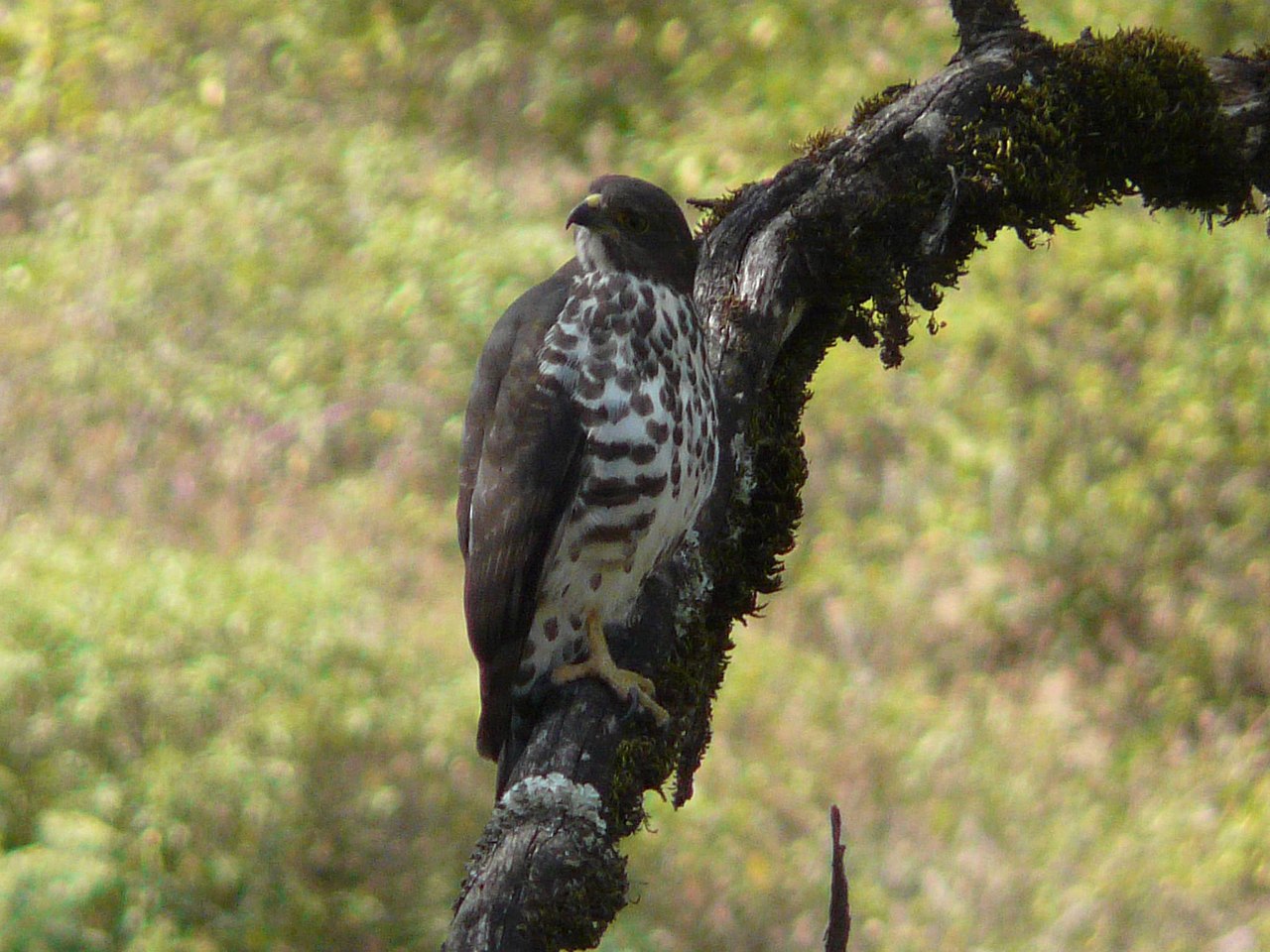
The mountain barbet is a species of bird in the family Megalaimidae. It is endemic to the Southeast Asian island of Borneo. Its natural habitats are subtropical or tropical moist lowland forests and subtropical or tropical moist montane forests.
Region
Borneo
Typical Environment
Occurs across the island of Borneo, with records from Malaysian Sabah and Sarawak, Brunei, and parts of Indonesian Kalimantan. It inhabits primary and secondary evergreen forests, hill and lower montane forests, and mature forest edges. The species forages high in the mid-story to canopy, often at fruiting trees. It tolerates selectively logged forest better than many specialists, provided large fruiting trees remain. In suitable habitat it can be fairly common but is patchy where forest is fragmented.
Altitude Range
Sea level to 2200 m
Climate Zone
Tropical
Ease of Keeping
Beginner friendly: 1/5
This barbet is endemic to Borneo and is most often detected by its repetitive, piping calls drifting across forested hillsides. Like other barbets, it excavates nest cavities in soft or dead wood, which are reused or enlarged over time. It is an important seed disperser, especially for figs and other forest fruits, aiding forest regeneration.
Temperament
quiet and unobtrusive in canopy; can be vocal and conspicuous when calling
Flight Pattern
short rapid wingbeats with undulating flights between trees
Social Behavior
Usually seen singly, in pairs, or small family groups, sometimes joining mixed-species flocks at fruiting trees. Pairs excavate nest cavities in dead or soft wood and share incubation and chick-rearing duties. Territorial calling is common, with neighbors countersinging from ridge tops or tall trees.
Migratory Pattern
Resident
Song Description
A series of steady, repetitive piping notes delivered at a measured pace, often carrying far over valleys. Calls can continue for long periods and are a key way to locate the species in dense foliage.
Plumage
Predominantly green and olive with a yellowish face and throat; underparts greenish with slightly paler belly. Plumage is smooth and unpatterned overall, lacking the bright head patches seen in some other barbets.
Diet
Primarily consumes fruits, especially figs (Ficus) and other soft berries, swallowing them whole and later dispersing the seeds. It also supplements its diet with insects such as beetles, ants, and caterpillars gleaned from foliage and bark. Occasional hawking for flying insects may occur near fruiting trees.
Preferred Environment
Feeds mostly in the forest mid-story and canopy, concentrating at fruiting trees along ridges and forest edges. It also uses secondary growth and selectively logged areas where fruit resources are abundant.