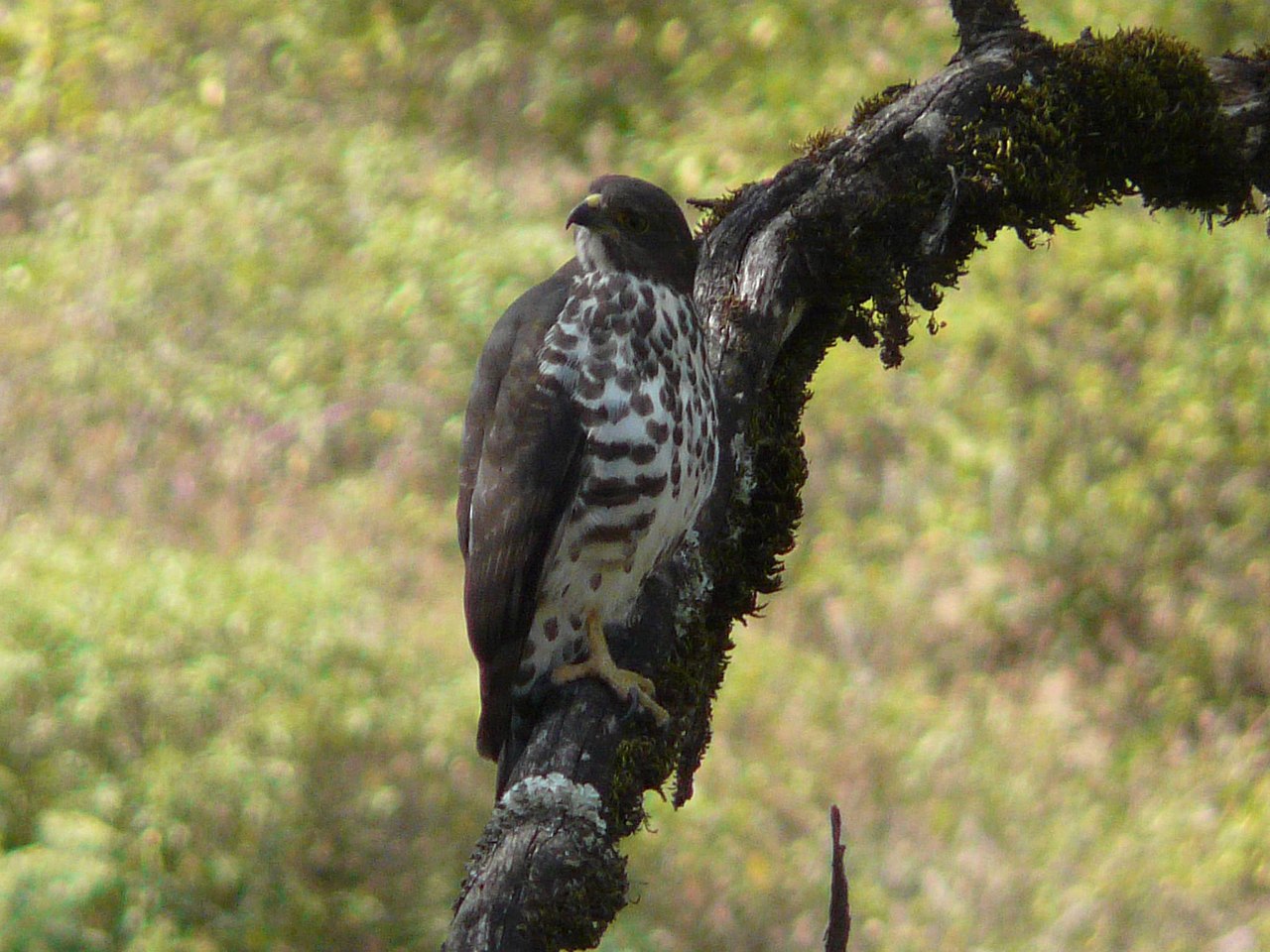
The mountain bulbul is a songbird species in the bulbul family, Pycnonotidae. It is often placed in Hypsipetes, but seems to be closer to the type species of the genus Ixos, the Sunda bulbul. It is found in Southeast Asia and is not considered a threatened species by the IUCN. It is named after British East India Company Surgeon John McClelland.
Region
Southeast Asia and southern China
Typical Environment
Occurs in the foothills and mountains from northeastern India and Myanmar through southern China (e.g., Yunnan, Guangxi) to northern Thailand, Laos, Vietnam, and into Peninsular Malaysia. It inhabits montane evergreen and moist broadleaf forests, forest edges, and secondary growth with dense understory. Often found along ridges, ravines, and in bamboo or fruiting trees. Tends to forage in the midstory to canopy, occasionally descending to shrubby clearings.
Altitude Range
600–2500 m
Climate Zone
Highland
Ease of Keeping
Beginner friendly: 1/5
The mountain bulbul is a forest songbird often placed in Hypsipetes but now commonly treated in Ixos; its name honors British naturalist John McClelland. It favors cool, montane broadleaf forests and makes short altitudinal movements following fruiting trees. By consuming berries and small fruits, it plays an important role in seed dispersal across mountain habitats.


Temperament
alert and somewhat shy, often keeping to cover
Flight Pattern
short rapid wingbeats with undulating hops between trees
Social Behavior
Usually seen in pairs or small family groups and often joins mixed-species flocks while foraging. Nests are cup-shaped and placed in shrubs or small trees, with breeding timing varying by locality in the monsoon months. Territorial near the nest but otherwise tolerant of conspecifics at fruiting trees.
Migratory Pattern
Partial migrant
Song Description
Song is a series of mellow, fluty whistles delivered from mid to upper canopy perches. Calls include liquid chups and sharper chattering notes when moving with flocks.
Plumage
Olive-brown upperparts with a slightly shaggier, crested head; paler grayish-olive underparts with a whitish, lightly streaked throat and upper breast.
Diet
Takes a wide variety of small fruits and berries, including figs and other soft fruits. Supplements its diet with insects such as beetles, caterpillars, and other arthropods, especially when feeding young. Forages by gleaning from foliage and twigs and occasionally sallies for flying insects. Visits fruiting trees regularly and may follow seasonal fruiting peaks upslope or downslope.
Preferred Environment
Forages primarily in the midstory and canopy of montane forest, along edges, and in secondary growth. Also uses bamboo thickets and fruiting roadside trees in highland areas.