
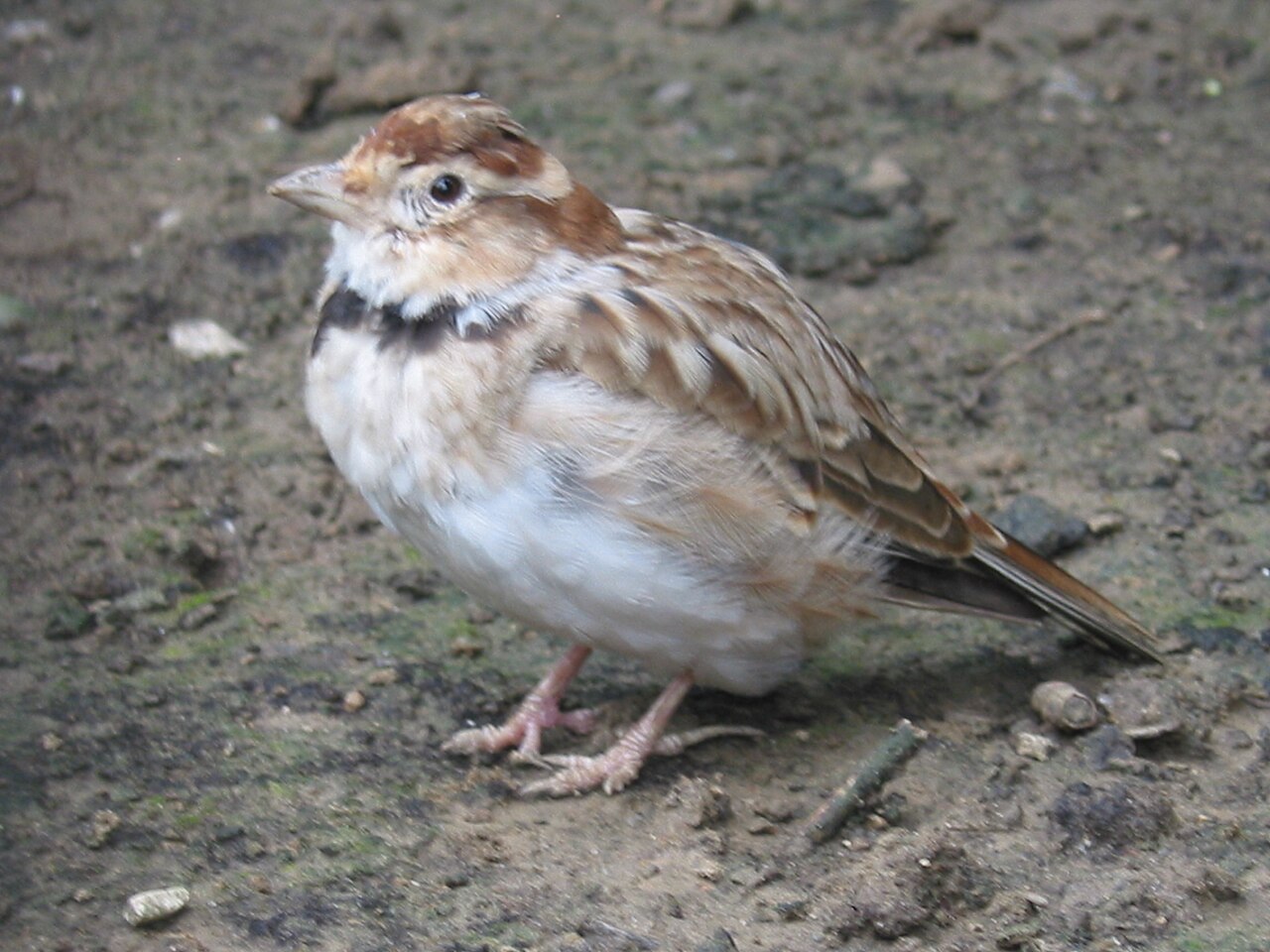
The Mongolian lark is a species of lark in the family Alaudidae found from southern Russia and Mongolia to central China.
Region
Mongolian Plateau and adjacent Northeast Asia
Typical Environment
Breeds widely across the open steppe and semi-arid grasslands from southern Russia (Transbaikalia) through Mongolia to northern and central China. Prefers expansive, treeless plains with short to mid-height grasses and scattered low shrubs. Often uses lightly grazed pasture, fallow fields, and road verges, avoiding dense forest and rugged high mountains. In non-breeding season it may move southward and to lower elevations, appearing in agricultural landscapes and stubble.
Altitude Range
300–2200 m
Climate Zone
Continental
Ease of Keeping
Beginner friendly: 1/5
A large, striking lark of the open steppe, the Mongolian lark performs energetic song-flights, delivering a rich, varied melody while fluttering high above its territory. In winter it gathers in sizable flocks and often frequents stubble fields and pasture edges. It nests on the ground in a shallow cup, well camouflaged among grasses. Broad white patches in the wings make it conspicuous in flight.


Stuffed specimen of a Mongolian lark (Melanocorypha mongolica) at the National Museum of Nature and Science, Tokyo, Japan
Temperament
social and active
Flight Pattern
strong flier with buoyant, fluttering song-flights and swift, direct commuting flight
Social Behavior
Pairs defend territories during the breeding season, with the male advertising via aerial display songs. Nests are shallow ground cups concealed in grass tussocks; clutches typically contain several speckled eggs. Outside the breeding season, it forms loose flocks that roam widely in search of food.
Migratory Pattern
Partial migrant
Song Description
A rich, melodious series of whistles, trills, and warbles delivered from the ground, perches, or during prolonged song-flights. Phrases are varied and fluid, often repeated in cascading sequences.
Plumage
Sandy-brown, lightly streaked upperparts with clean whitish underparts; bold, contrasting head pattern with pale supercilium and dark cheek/malar area; broad white in the wings and white outer tail feathers show clearly in flight.
Diet
Eats a mix of grass and weed seeds, grains, and green plant material outside the breeding season. During spring and summer it takes more animal prey, including beetles, ants, caterpillars, and other small invertebrates to feed growing chicks. Will glean from bare ground, low vegetation, and occasionally along field margins.
Preferred Environment
Open steppe and semi-desert with patches of bare soil and short grasses where prey is visible and accessible. In winter it often forages in stubble fields, grazed pastures, and along tracks.


