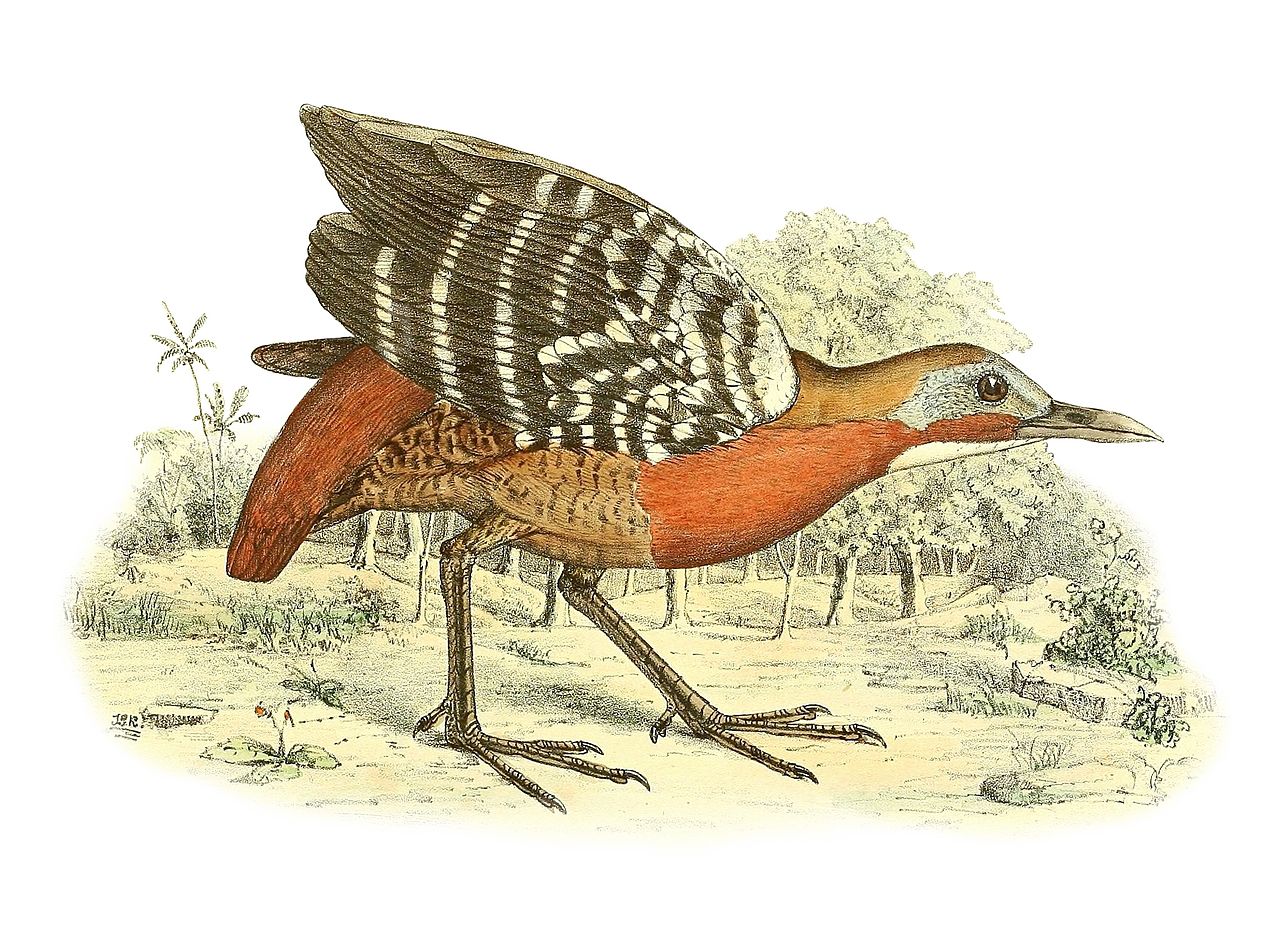
The Madagascar cuckoo-hawk, also known as the Madagascar baza or the Madagascan cuckoo falcon, is a species of bird of prey in the family Accipitridae. It is endemic to Madagascar.
Region
Madagascar
Typical Environment
Found mainly in eastern Madagascar’s evergreen lowland and mid-elevation rainforests, with records from forest edges and degraded secondary growth. It favors dense canopy and subcanopy layers where it can perch and watch for prey, and occasionally uses wooded plantations and riparian strips. Local occurrences are patchy, tracking intact forest blocks. It is generally scarce and easily missed due to secretive habits.
Altitude Range
Sea level to 1600 m
Climate Zone
Tropical
Ease of Keeping
Beginner friendly: 1/5
Also called the Madagascar baza or Madagascan cuckoo-falcon, this forest raptor has a small erectile crest and buoyant flight that can resemble a cuckoo. It hunts largely from perches in the canopy, taking large insects and small reptiles. It is shy and easily overlooked despite occurring in suitable forest. Ongoing deforestation in Madagascar is the main threat to its persistence.


Temperament
solitary and secretive
Flight Pattern
buoyant flier with short, shallow wingbeats interspersed with glides
Social Behavior
Typically encountered singly or in pairs, especially during the breeding season. Pairs nest high in tall forest trees, building a small stick platform. Courtship includes display flights and calling over territory. Parental care is shared, with the female brooding and both adults provisioning the young.
Migratory Pattern
Resident
Song Description
Vocalizations are soft, high-pitched whistles and repeated plaintive notes given from canopy perches. Calls often carry at dawn and early morning but are infrequent overall.
Plumage
Upperparts dark brown to grey-brown; underparts pale with bold rufous to dark brown barring. Tail strongly banded; small erectile crest on the head. Throat and breast often show paler ground color with contrasting bars.
Diet
Feeds on large insects such as cicadas, grasshoppers, stick insects, and caterpillars, as well as small reptiles including chameleons and geckos. Occasionally takes small birds or amphibians. Prey is usually taken by quick sallies from a perch or snatched from foliage and branches. It may methodically inspect the canopy, moving between perches to scan.
Preferred Environment
Hunts within the forest canopy and edges, especially along gaps, streams, and clearings where prey is more visible. Also forages along ecotones between primary forest and secondary growth or plantations.