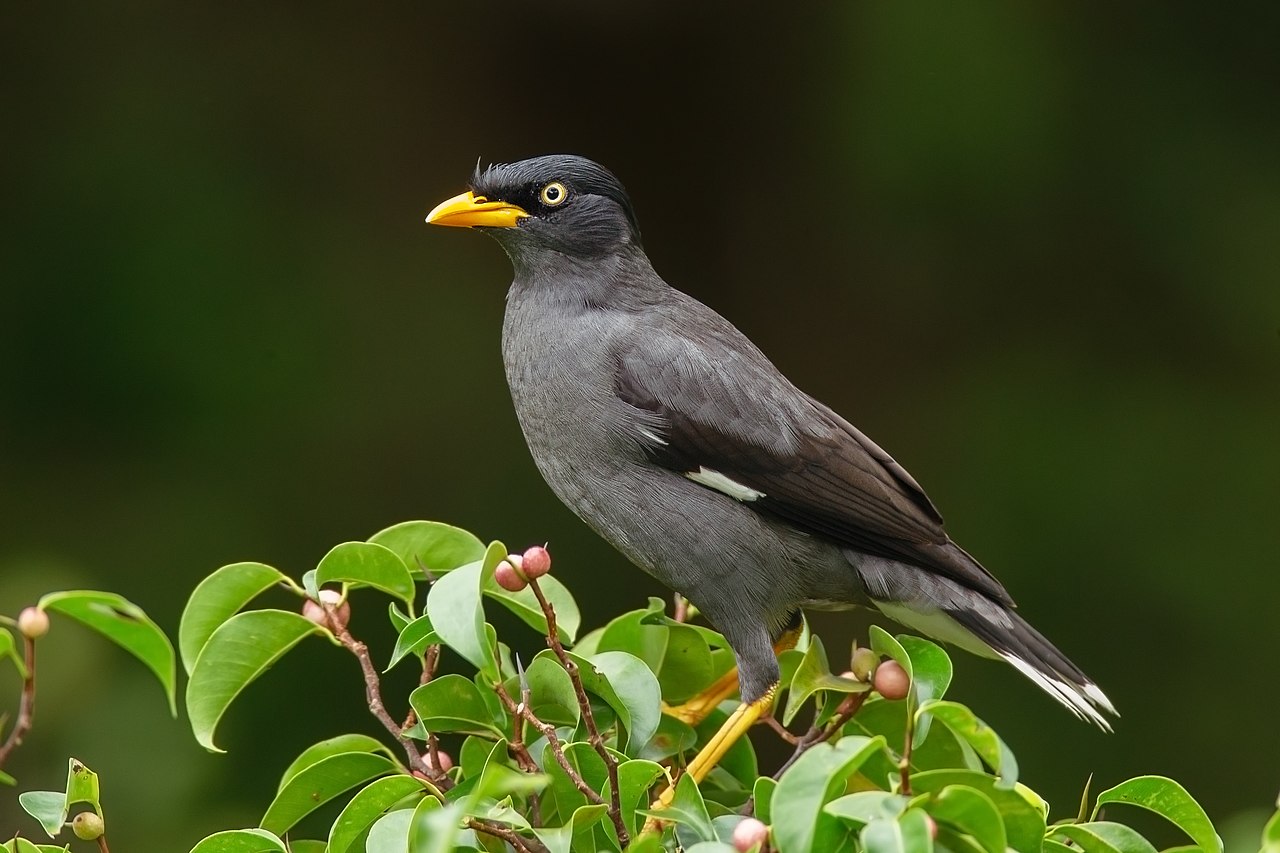
The Javan leafbird is a species of leafbird found in old-growth and second growth forests in Java. It was formerly considered as conspecific with the widespread blue-winged leafbird.
Region
Greater Sunda Islands
Typical Environment
Occurs only on Java, where it occupies lowland and hill forests, including old-growth, secondary growth, forest edges, and well-wooded gardens. It forages mainly in the canopy and mid-story, moving through flowering and fruiting trees. The species can persist in selectively logged forest if large trees and diverse fruiting plants remain. Habitat fragmentation and trapping pressure limit its presence outside protected areas.
Altitude Range
0–1500 m
Climate Zone
Tropical
Ease of Keeping
Beginner friendly: 2/5
This vibrant leafbird is confined to the island of Java, where it inhabits old-growth and secondary forests. It was formerly treated as conspecific with the Blue-winged Leafbird but differs in plumage and vocal traits. Intense trapping for the songbird trade has caused marked declines. Leafbirds are skilled mimics and can incorporate other species’ calls into their own songs.

Temperament
active and territorial
Flight Pattern
short rapid wingbeats with quick, bounding movements between tree crowns
Social Behavior
Usually encountered singly, in pairs, or family groups, and often associates loosely with mixed-species flocks in the canopy. Pairs defend small feeding territories around flowering or fruiting trees. Nests are typically neat, open cups placed on outer branches of mid-story trees. Breeding behavior suggests strong pair bonds with both sexes involved in care.
Migratory Pattern
Resident
Song Description
A rich series of liquid whistles, trills, and chattering phrases delivered from prominent perches. Frequently mimics calls of other forest birds, weaving them into variable song sequences.
Plumage
Glossy green body with contrasting blue highlights on the wings and tail; texture sleek and smooth. Males show a distinct black mask and throat, while females are greener-faced with a yellowish to bluish throat wash. Both sexes have brighter blue in the flight feathers visible in flight.
Diet
Takes a mix of small fruits (especially figs and other soft berries), nectar from flowering trees, and a variety of arthropods. It gleans insects from foliage and occasionally sallies to snatch flying prey. Nectar feeding often leads it to defend productive blossoms. Seasonal availability of fruit and flowers strongly influences its movements within a territory.
Preferred Environment
Feeds mainly in the canopy and upper mid-story of mature and secondary forest, but also visits forest edges and large garden trees. Frequently uses flowering canopy trees and fruiting figs as key resources.