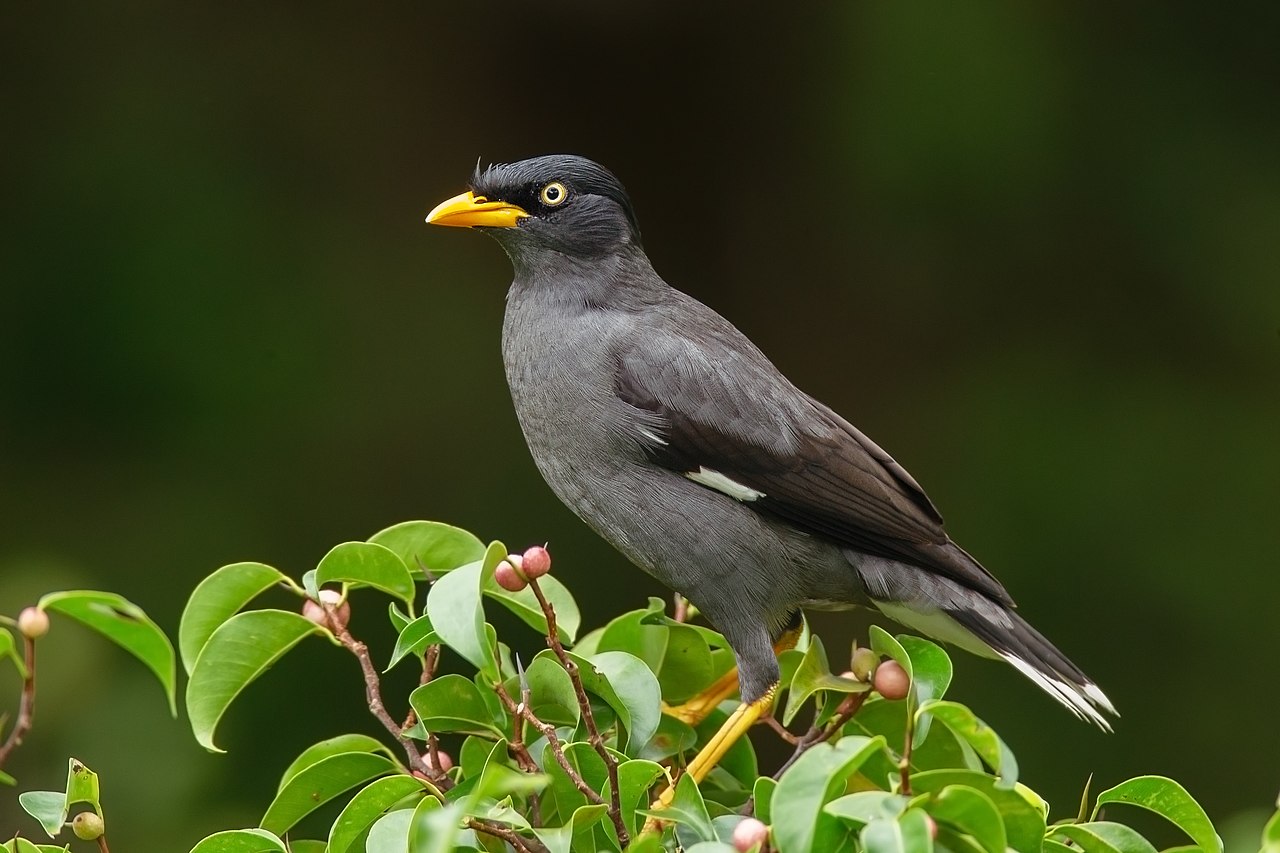
The Javan munia is a species of estrildid finch native to southern Sumatra, Java, Bali and Lombok islands in Indonesia. It was introduced in Singapore and the Malay Peninsula; It inhabits subtropical and tropical dry shrubland and grassland habitat. It has been assessed as Least Concern on the IUCN Red List.
Region
Southeast Asia
Typical Environment
Naturally found on southern Sumatra, Java, Bali, and Lombok, it favors open grasslands, dry scrub, fallow fields, and the margins of wetlands. It readily uses human-modified habitats such as rice paddies, roadside verges, and urban parks with tall grasses. Outside its native range it has been introduced to parts of Singapore and the Malay Peninsula, where it occupies similar habitats. It is generally common wherever seeding grasses and sedges are abundant.
Altitude Range
Sea level to 1500 m
Climate Zone
Tropical
Ease of Keeping
Beginner friendly: 3/5
A small estrildid finch native to Indonesia, the Javan munia thrives in open grassy areas and agricultural landscapes, especially rice fields. It often forms tight flocks and can quickly exploit ripening seed heads. Pairs build neat, ball-shaped nests from grasses tucked into shrubs, reeds, or crops. Although common in the cage-bird trade locally, it is not truly domesticated.

Temperament
social and active
Flight Pattern
short rapid wingbeats
Social Behavior
Occurs in small to medium flocks outside the breeding season, often mixing with other munias. Pairs are monogamous, constructing ball-shaped grass nests placed low in reeds, crops, or shrubs. They may breed in loose colonies where suitable cover and seed resources are concentrated.
Migratory Pattern
Resident
Song Description
Soft, high-pitched twitters and tinkling trills interspersed with sharp chip notes. Males give a slightly more varied, buzzy twitter during display from prominent perches.
Plumage
Compact finch with smooth, plain plumage: dark chocolate-brown head, back, and upper breast contrasting with clean white underparts.
Diet
Primarily granivorous, taking small grass and sedge seeds, including rice when available. Birds deftly pick seeds from seedheads and also glean fallen grain on the ground. During breeding they may supplement with tiny invertebrates to feed nestlings but seeds remain the staple.
Preferred Environment
Feeds along weedy field margins, rice paddies, fallow plots, and grassy wetlands. Often perches on tall stems to pluck seedheads and also forages in small flocks on open ground.