
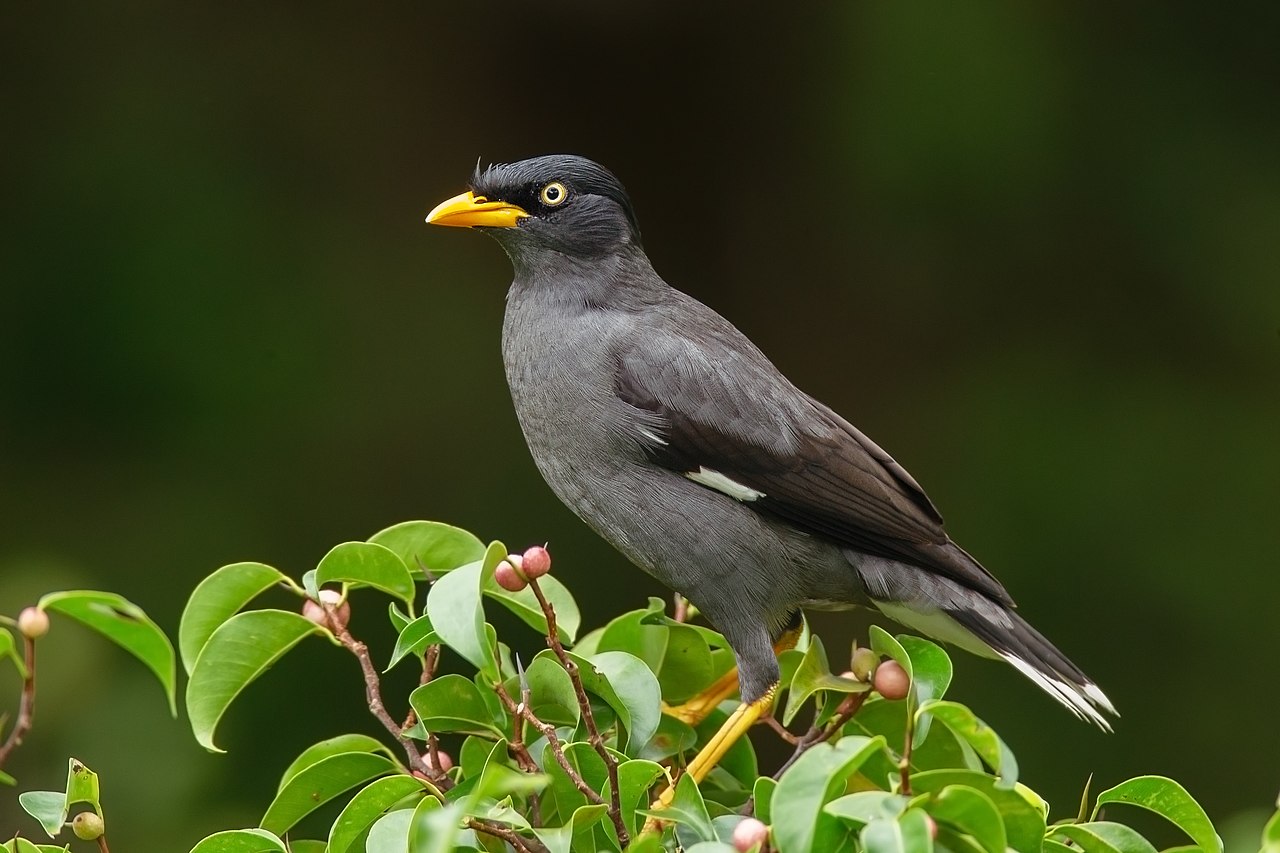
The Javan myna, also known as the white-vented myna, is a species of myna. It is a member of the starling family. It is native to Bali and Java. It has been introduced to other Asian countries, and as far away as Puerto Rico.
Region
Southeast Asia
Typical Environment
Native to Java and Bali, it is now widespread in urban and agricultural areas of Singapore, Peninsular Malaysia, southern Thailand, and has been introduced to Taiwan and Puerto Rico. It favors towns, gardens, parks, and open farmland with scattered trees. It readily nests in cavities in buildings, signs, and trees, and uses artificial structures for perching and roosting. In introduced regions it concentrates in lowlands and coastal plains but can extend inland where suitable open habitats exist.
Altitude Range
Sea level to 1500 m
Climate Zone
Tropical
Ease of Keeping
Beginner friendly: 3/5
Also called the white-vented myna, this adaptable starling thrives in human-altered landscapes and often forms loud communal roosts. It has spread far beyond Java and Bali through introductions, becoming abundant in places like Singapore and parts of Malaysia and Puerto Rico. It is sometimes confused with the common myna, but shows a small shaggy crest, a white vent, and bold white wing patches in flight.


Javan myna in flight, showing the distinctive white wing and tail bars
Temperament
social and bold
Flight Pattern
short rapid wingbeats with strong, direct flight
Social Behavior
Often in noisy flocks outside the breeding season and roosts communally in large numbers. Pairs are typically monogamous and nest in cavities, including holes in buildings and natural tree cavities. They are highly tolerant of people and often forage in groups on lawns, roadsides, and markets.
Migratory Pattern
Resident
Song Description
A varied mix of whistles, chatters, and squeaks with harsh scolding notes; includes mimicry of other species and urban sounds. Vocal and conspicuous around roost sites and feeding areas.
Plumage
Glossy black to sooty dark grey with a small shaggy crest; conspicuous white vent and undertail coverts; bold white wing patches flash in flight.
Diet
An opportunistic omnivore that eats insects, spiders, and other invertebrates, as well as fruits, seeds, nectar, and small vertebrates on occasion. It readily exploits human food waste and scraps around markets and outdoor eateries. It forages mostly on the ground but also picks food from low vegetation and human structures.
Preferred Environment
Open, human-dominated settings such as parks, gardens, lawns, roadsides, and agricultural fields. Frequently forages near people and livestock and along urban edges.


