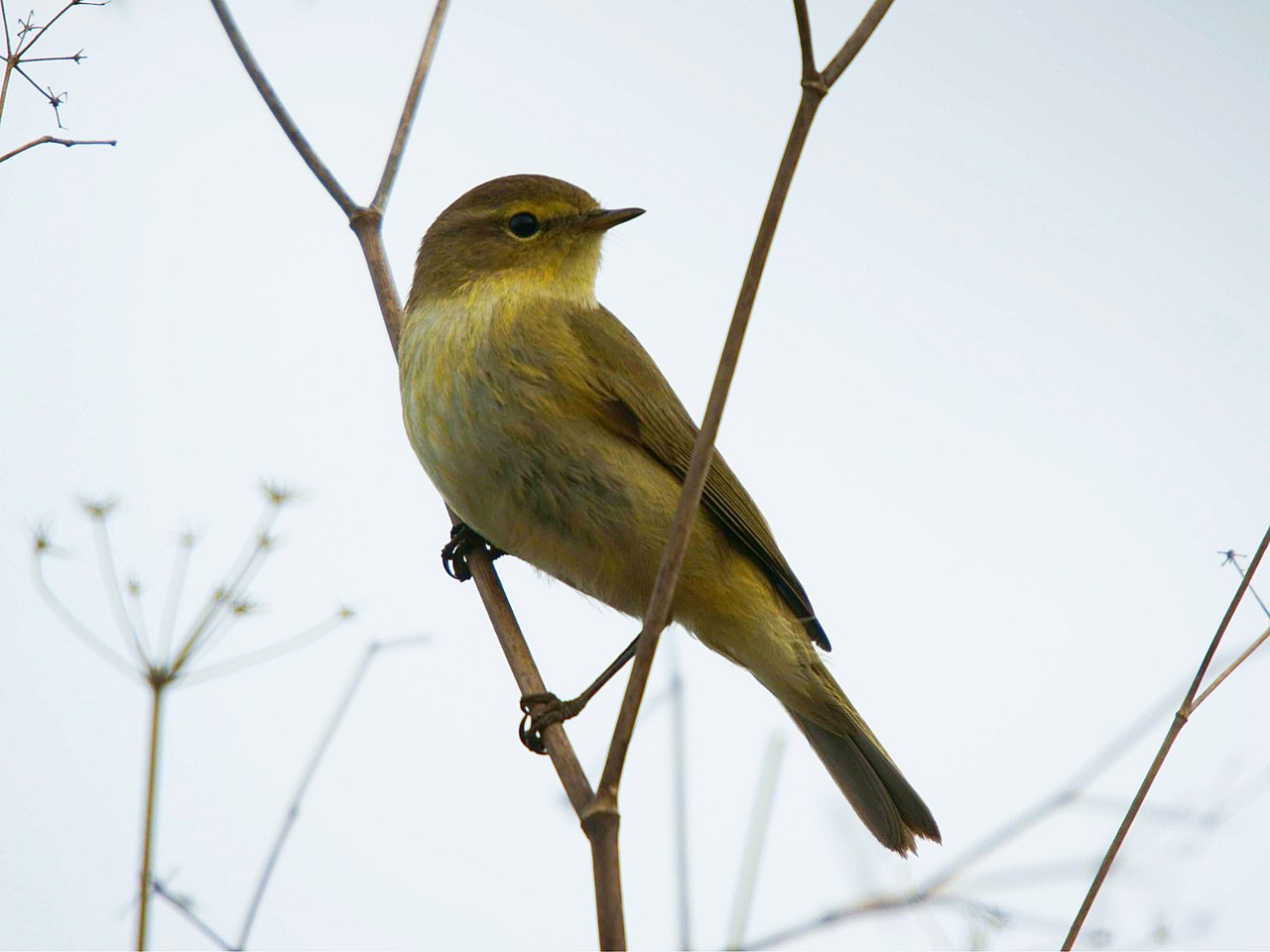
The hylocitrea, also known as the yellow-flanked whistler or olive-flanked whistler, is a species of bird that is endemic to montane forests on the Indonesian island of Sulawesi. It is monotypic within the genus Hylocitrea, and has traditionally been considered a member of the family Pachycephalidae, but recent genetic evidence suggests it should be placed in a monotypic subfamily of the family Bombycillidae, or even its own family, Hylocitreidae. A 2019 study found it to be a sister group to a clade containing the hypocolius (Hypocoliidae) and the extinct Hawaiian honeyeaters (Mohoidae), with the clade containing all three being a sister group to the silky-flycatchers (Ptiliogonatidae). The divergences forming these families occurred in the early Miocene, about 20-23 million years ago.
Region
Sulawesi Highlands
Typical Environment
Occurs in mossy montane and submontane evergreen forests, often along ridges and in mature forest with dense midstory. It forages mostly in the mid to upper canopy and sometimes at forest edges. It may join mixed-species flocks, especially where fruiting trees attract insects and other birds. Human-altered habitats are used rarely and primarily where forest structure remains intact.
Altitude Range
1000–2500 m
Climate Zone
Highland
Ease of Keeping
Beginner friendly: 1/5
Also called the yellow-flanked whistler or olive-flanked whistler, this species is endemic to the montane forests of Sulawesi, Indonesia. It is the sole member of the genus Hylocitrea and is often placed in its own family, Hylocitreidae. Genetic studies suggest it is closely related to hypocolius and the extinct Hawaiian honeyeaters, with divergences dating to the early Miocene.

Temperament
generally quiet, often unobtrusive; joins mixed flocks
Flight Pattern
short rapid wingbeats between perches; agile within canopy
Social Behavior
Usually seen singly, in pairs, or small family groups; frequently associates with mixed-species feeding flocks. Presumed monogamous; nesting biology is poorly known but likely involves a small cup nest placed in trees or tall shrubs. Territoriality appears mild, with birds tolerating close neighbors in rich foraging areas.
Migratory Pattern
Resident
Song Description
A series of clear, whistled notes delivered at a measured pace, often descending slightly in pitch. Calls include soft chips and thin whistles given while foraging within the canopy.
Plumage
Olive-green overall with contrasting bright yellow flanks; plumage appears smooth and uniform with slight duskiness on the head and chest.
Diet
Takes a mix of small fruits and berries along with arthropods such as beetles, caterpillars, and spiders. Gleans prey from leaves and twigs and occasionally sallies short distances to catch flying insects. Seasonal availability of fruit likely influences diet composition, with more insect intake during lean fruit periods.
Preferred Environment
Feeds mainly in the mid to upper canopy of mature montane forest, especially near fruiting trees. Also forages along ridges and forest edges where canopy gaps concentrate insects.