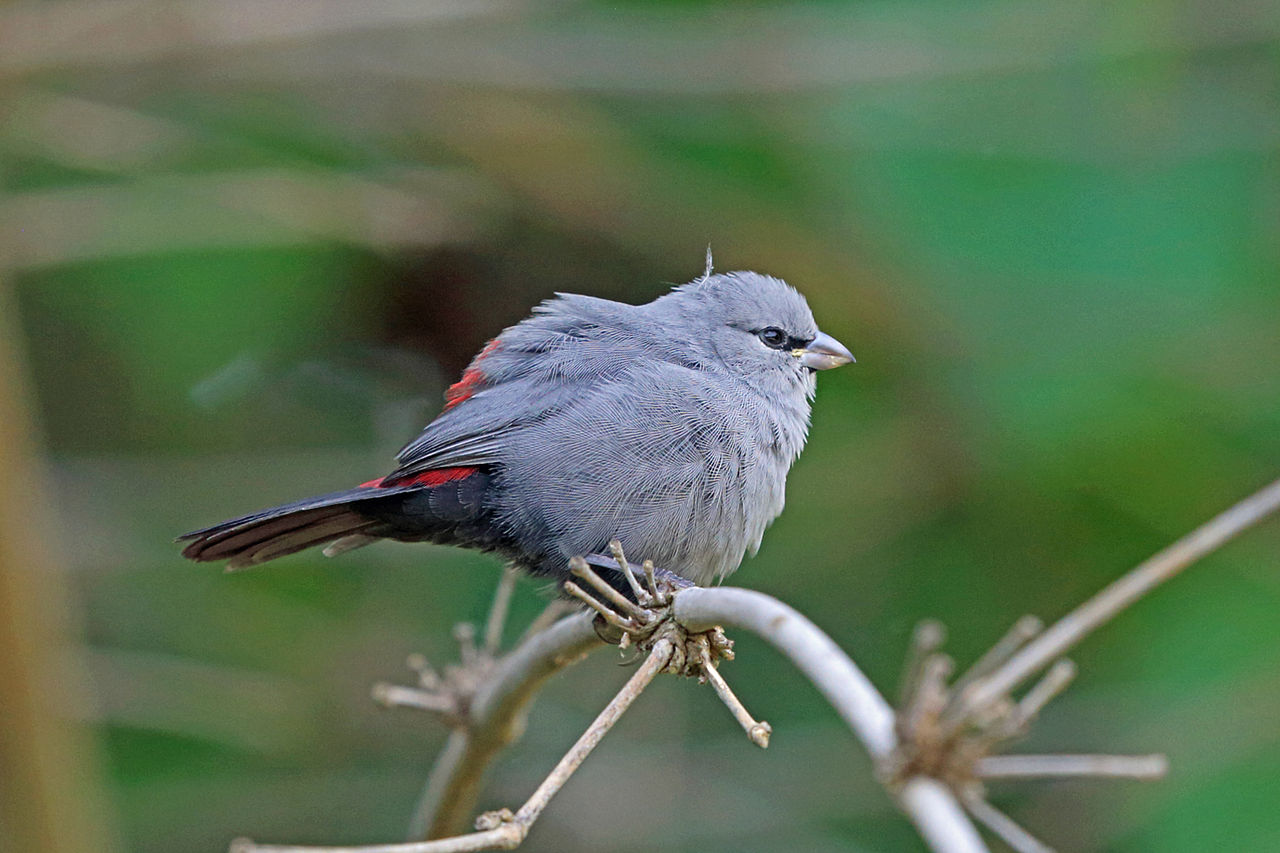
The grey tit is a species of bird in the tit family Paridae. It is found in Lesotho and South Africa. Its natural habitats are subtropical or tropical dry shrubland and Mediterranean-type shrubby vegetation.
Region
Southern Africa
Typical Environment
Occurs in South Africa and Lesotho, favoring dry shrublands, fynbos, and Karoo scrub, as well as rocky slopes and montane shrub mosaics. It frequents Mediterranean-type shrubby vegetation in the Western and Southern Cape and extends into highland scrub in Lesotho. The species uses ecotones and thicket edges, hedgerows, and lightly wooded ravines. It adapts to low-intensity farmland and rural gardens where native shrubs persist.
Altitude Range
Sea level to 3000 m
Climate Zone
Temperate
Ease of Keeping
Beginner friendly: 1/5
Also known as the southern grey tit, it belongs to the family Paridae and was formerly placed in the genus Parus. It is a cavity nester, using natural holes or old woodpecker nests and sometimes man‑made structures. Energetic and inquisitive, it often joins mixed-species foraging parties in shrublands.

Temperament
social and active
Flight Pattern
short rapid wingbeats
Social Behavior
Usually seen in pairs or small family groups and often joins mixed-species flocks while foraging. It nests in cavities, lining the nest with plant fibers, hair, and feathers; pairs are likely monogamous for the season. Territories are defended with chases and scolding displays.
Migratory Pattern
Resident
Song Description
Song is a series of clear, whistled notes and short phrases, repeated at regular intervals. Calls include sharp scolds and tsee-tsee contact notes given while moving through shrubs.
Plumage
Neat, clean-lined pattern with smooth grey upperparts and paler grey underparts, contrasted by a black head and throat bib. Shows a bold white cheek patch and a distinct white wing panel; outer tail feathers are narrowly edged white.
Diet
Feeds primarily on insects and other arthropods such as beetles, caterpillars, and spiders gleaned from foliage and bark. Supplements diet with seeds and small berries, especially in the dry season. Will occasionally hawk for flying insects and probe crevices on rocky slopes.
Preferred Environment
Forages in low shrubs, thicket edges, and fynbos stands, often working methodically through twigs and leaves. Also uses hedgerows, farm shelterbelts, and rocky scrub, and may visit native gardens adjacent to natural vegetation.