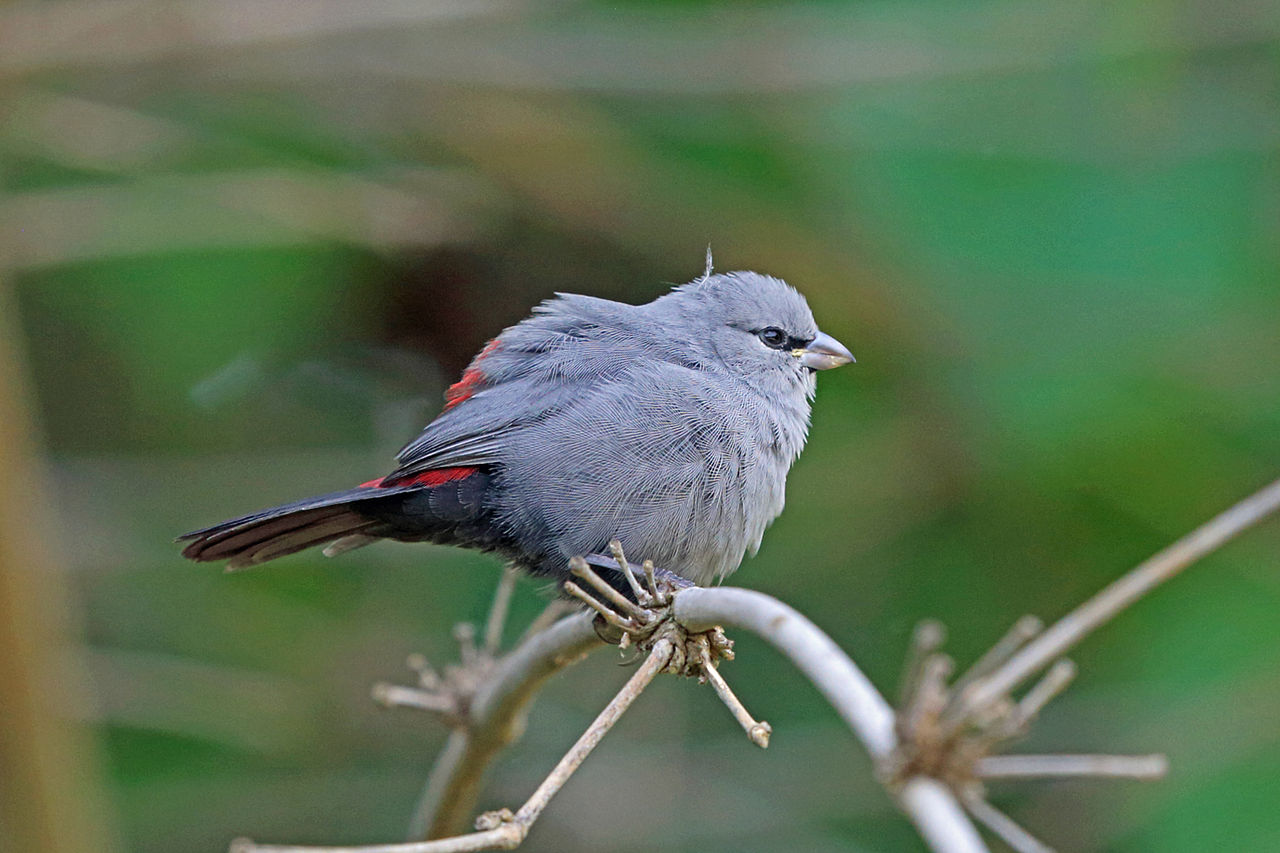
The grey treepie, also known as the Himalayan treepie, is an Asian treepie, a medium-sized and long-tailed member of the crow family. The species was first described by Robert Swinhoe in 1863. They are widely distributed along the foothills of the Himalayas in the Indian Subcontinent and extending into Indochina, Nepal, southern mainland China and Taiwan. The populations vary in plumage and several are named as subspecies.
Region
Himalayan foothills, Indochina, southern China, and Taiwan
Typical Environment
Occupies forest edges, secondary woodland, bamboo thickets, and open broadleaf forests. It readily uses human-altered habitats such as orchards, plantations, and large gardens near woodland. The species is most frequent in foothills and lower montane zones but can occur down to lowlands where suitable cover persists. It forages mainly in the mid- to upper canopy, occasionally descending to the ground or visiting fruiting trees.
Altitude Range
0–2500 m
Climate Zone
Subtropical
Ease of Keeping
Beginner friendly: 1/5
A member of the intelligent crow family, the grey treepie is agile and inquisitive, often joining mixed-species flocks in the forest canopy. It uses its long tail for balance while clambering through branches and is an adaptable forager around villages and orchards. Its diet ranges widely, and it can help disperse seeds but will also raid nests for eggs and nestlings. Vocal and versatile, it produces a range of chatters, whistles, and mewing notes.


Grey treepie from Sattal India

pair of D. f. himalayanaPokhara, Nepal
Temperament
social and active
Flight Pattern
short rapid wingbeats interspersed with glides
Social Behavior
Usually seen in pairs or small family groups and often participates in mixed-species foraging parties. Breeds in the canopy, building a cup nest in a fork; both sexes share incubation and chick-rearing. Territories are defended vocally, but nonbreeding birds may roam widely.
Migratory Pattern
Resident
Song Description
A varied repertoire of harsh chatters, mews, and whistles, often given in lively sequences. Calls carry through forest edges and are used for contact within pairs and groups. Occasional mimicry of other birds may be heard.
Plumage
Smooth grey to grey-brown body with darker wings showing a contrasting pale or white wing patch; long, graduated tail with a dark terminal band and pale tips. The face shows a dark mask and throat, contrasting with paler underparts.
Diet
Takes insects and other arthropods gleaned from foliage and bark, as well as small vertebrates, eggs, and nestlings when available. Regularly consumes fruits, berries, and figs, and may sip nectar. It opportunistically exploits human food scraps around settlements.
Preferred Environment
Forages mainly in the mid to upper canopy along forest edges and clearings. Frequently visits fruiting trees in orchards and plantations and will descend to the ground to pick prey or fallen fruit.