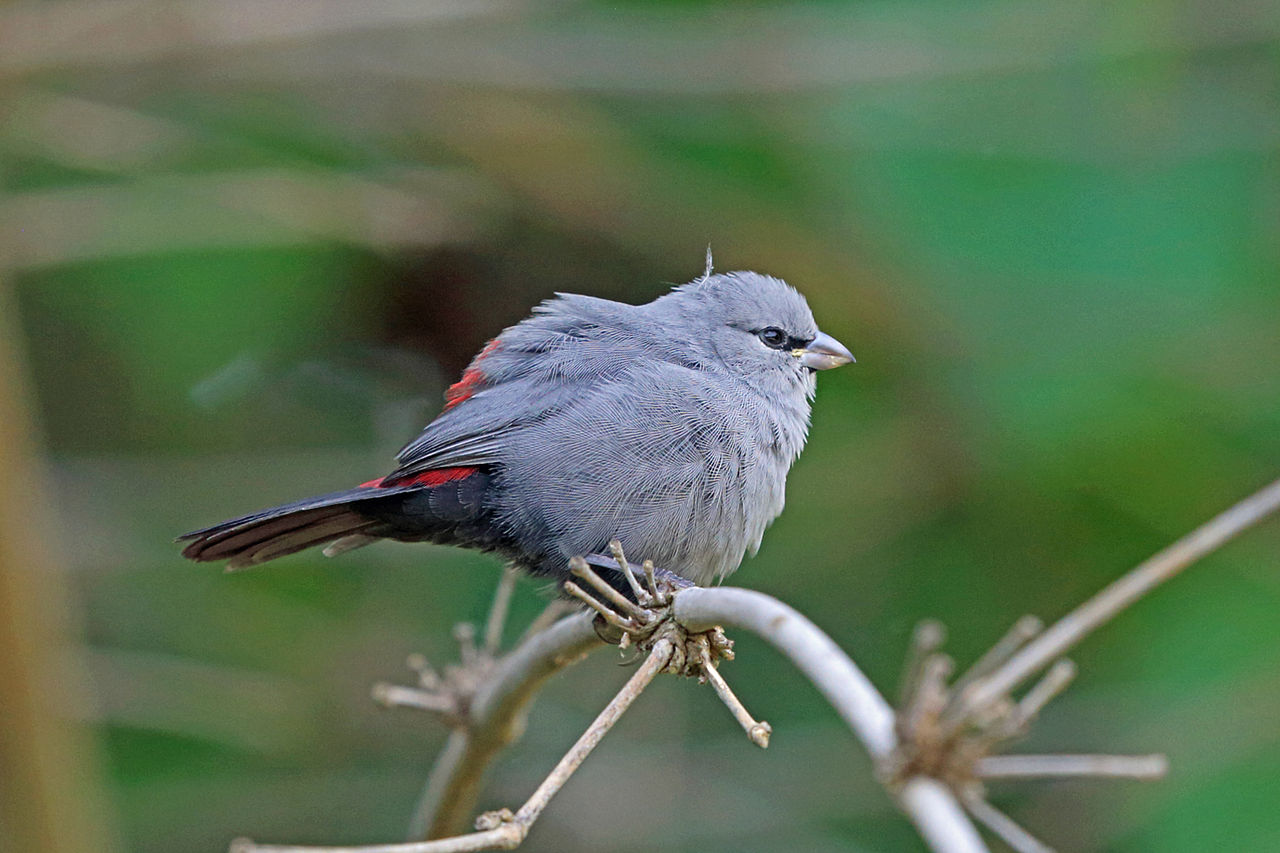
The grey trembler is a songbird species in the family Mimidae, the mockingbirds and thrashers. It is found only on Martinique and Saint Lucia in the Lesser Antilles of the Caribbean Sea.
Region
Lesser Antilles (Martinique and Saint Lucia)
Typical Environment
Occurs in humid evergreen and montane rainforests, mature secondary woodland, and forest edges. It frequents the understory and mid-story, moving methodically through dense foliage and along trunks and vines. On plantations and gardens adjacent to forest, it visits fruiting trees and dense thickets. It forages both on and just above the forest floor as well as in lower canopy layers.
Altitude Range
Sea level to 950 m
Climate Zone
Tropical
Ease of Keeping
Beginner friendly: 1/5
The grey trembler is a Mimidae noted for its habitual wing- and tail-trembling display while foraging or when excited. It lives only on Martinique (France) and Saint Lucia and is often seen in pairs or small family groups. As an omnivore that takes both fruits and invertebrates, it likely contributes to seed dispersal in native forests.


"Mascarene starling"

Temperament
wary but inquisitive; often skulking in dense understory
Flight Pattern
short rapid wingbeats with low, direct dashes between cover
Social Behavior
Typically seen in pairs or small family groups and may join mixed-species foraging flocks. Monogamous pairs defend territories within forested habitats. Nests are placed in dense vegetation; both sexes participate in care of the young. Wing- and tail-trembling displays are common during foraging and social interactions.
Migratory Pattern
Resident
Song Description
Song is a varied, rich warble of whistles, trills, and chattering notes delivered in brief phrases. Calls include sharp chips and scolds; occasional mimicry of other species may occur but is less extensive than in true mockingbirds.
Plumage
Plain grey-brown above with paler grey to buff underparts and slightly warmer brown wings and tail; throat usually paler with a subtle whitish wash.
Diet
Takes a wide range of invertebrates such as beetles, caterpillars, spiders, and other arthropods, gleaned from foliage, bark, and leaf litter. Also eats fruits and berries from native and cultivated plants, especially when invertebrate prey is less abundant. Occasionally probes moss and epiphytes and will pick fallen fruits from the ground.
Preferred Environment
Feeds in dense understory, along forest edges, and in ravines with thick cover. Also uses fruiting trees in secondary growth and adjacent agroforestry plots or gardens near forest.