
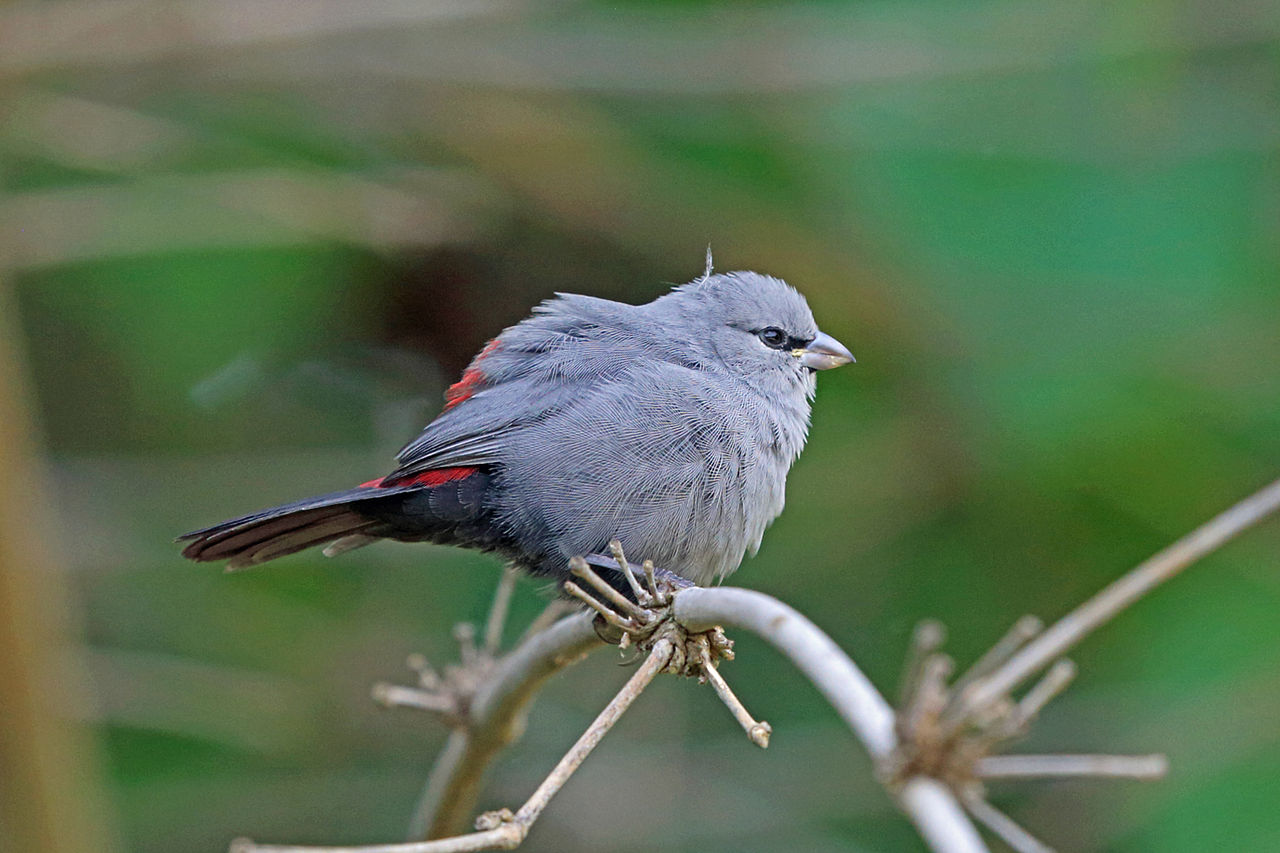
The grey waxbill or black-tailed waxbill is a common species of estrildid finch found in wetter land of Southern Africa. It has an estimated global extent of occurrence of 670,000 km2 (260,000 sq mi).
Region
Southern and Central Africa
Typical Environment
Occupies wetter landscapes including riverine thickets, marsh edges, seasonally flooded grasslands, and rank grass near streams and dams. Frequently uses secondary growth, overgrown fields, and edges of cultivation provided there is dense cover. Tends to remain close to water and avoids extensive open, arid ground. Often forms small, loose flocks outside the breeding season and may join mixed-species seedeater flocks.
Altitude Range
Sea level to 2000 m
Climate Zone
Subtropical
Ease of Keeping
Beginner friendly: 3/5
Also called the black-tailed waxbill, this small estrildid finch favors moist, grassy habitats with dense cover. It often forages in tight groups and keeps close to reedbeds or rank grass, where it is easily overlooked despite its red bill. Pairs build domed grass nests low in shrubs or tall grass. Its soft, tinkling calls help flocks stay in contact while moving through cover.

Temperament
social and active
Flight Pattern
short rapid wingbeats
Social Behavior
Usually found in pairs or small flocks, keeping low in grass and shrubs. Monogamous pairs build domed grass nests concealed in dense vegetation. Outside the breeding season, groups roost communally and may mix with other small seedeaters.
Migratory Pattern
Resident
Song Description
A soft, tinkling series of high-pitched notes, often given in contact while foraging. Calls are thin and sibilant, easily lost in rustling grass, with brief trills during courtship.
Plumage
Fine, smooth grey plumage with subtle barring on the underparts and a contrasting black tail; overall neat, satin-like appearance.
Diet
Primarily takes small grass seeds, gleaned from seed heads and the ground. Supplements diet with small insects such as termites or aphids, especially during breeding for added protein. Occasionally consumes other plant material, including small buds.
Preferred Environment
Feeds low in dense grass, reeds, and weedy patches near water. Often forages along edges of marshes, riverbanks, and overgrown field margins where cover is close by.


