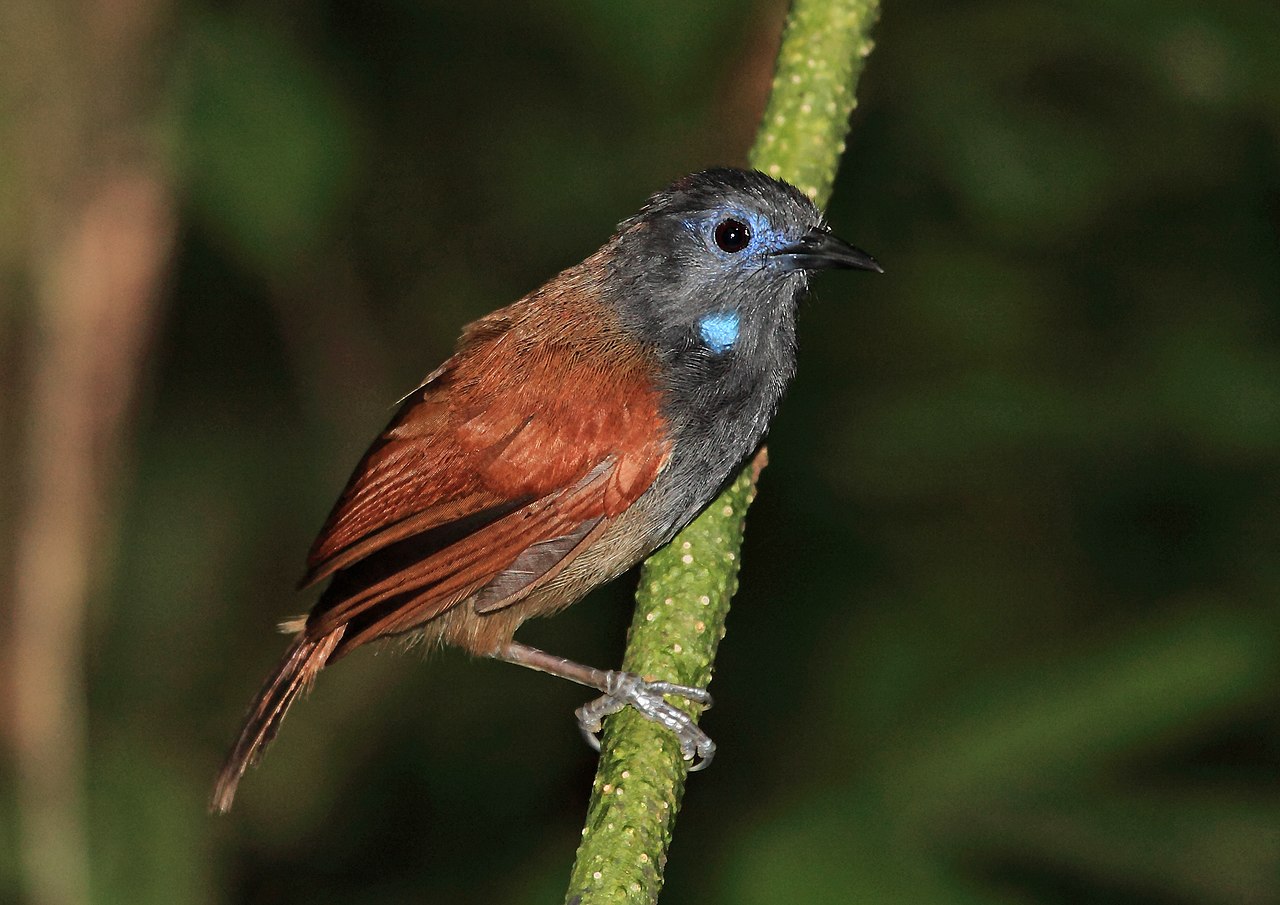
The grey-headed sunbird is a small passerine bird which breeds in mixed forest in the Democratic Republic of the Congo and western Uganda.
Region
Central Africa (Albertine Rift and adjacent lowlands)
Typical Environment
Occurs primarily in the Democratic Republic of the Congo and into western Uganda, favoring mixed and secondary forests. It uses forest edges, clearings with tall shrubs, riverine strips, and midstory layers of mature forest. The species tolerates some disturbance and will forage in selectively logged areas if flowering resources persist. It is typically local but can be fairly common where habitat is suitable. Movements are mostly within contiguous forest blocks.
Altitude Range
500–2200 m
Climate Zone
Tropical
Ease of Keeping
Beginner friendly: 1/5
The grey-headed sunbird is a small forest sunbird of Central Africa, often overlooked due to its subdued colors but detected by its quick, high-pitched calls. It forages methodically in the midstory, sipping nectar and gleaning tiny insects from foliage. The species name axillaris refers to its yellow underwing coverts (axillaries), a helpful field mark when it flits between branches.

Temperament
active but somewhat skulking
Flight Pattern
short rapid wingbeats
Social Behavior
Usually seen singly or in pairs, and frequently joins mixed-species flocks moving through the midstory. Likely monogamous during the breeding season. The nest is a small pendant structure of plant fibers and spider silk, suspended from a twig or vine; both adults feed the young.
Migratory Pattern
Resident
Song Description
Gives thin, high-pitched tsee-tsee series and quick twitters, often delivered while foraging. Song is a brief, rapid chatter with metallic notes that can be hard to localize in dense foliage.
Plumage
Olive-brown upperparts with a contrasting slate-grey head and throat, and yellowish to olive-tinged underparts. Feathers are sleek and close-fitting, giving a smooth appearance. Underwing coverts are bright yellow, often glimpsed in flight.
Diet
Takes nectar from a variety of tubular and brushy flowers, probing with its slender decurved bill. Also gleans small insects and spiders from leaves and twigs, and occasionally hawks tiny flying insects. Opportunistically visits flowering trees and shrubs and may take small berries.
Preferred Environment
Feeds in the midstory and canopy edges of mixed and secondary forest, along forest trails, and near forest-river margins. It readily uses flowering trees in clearings and regenerating gaps where nectar is abundant.