
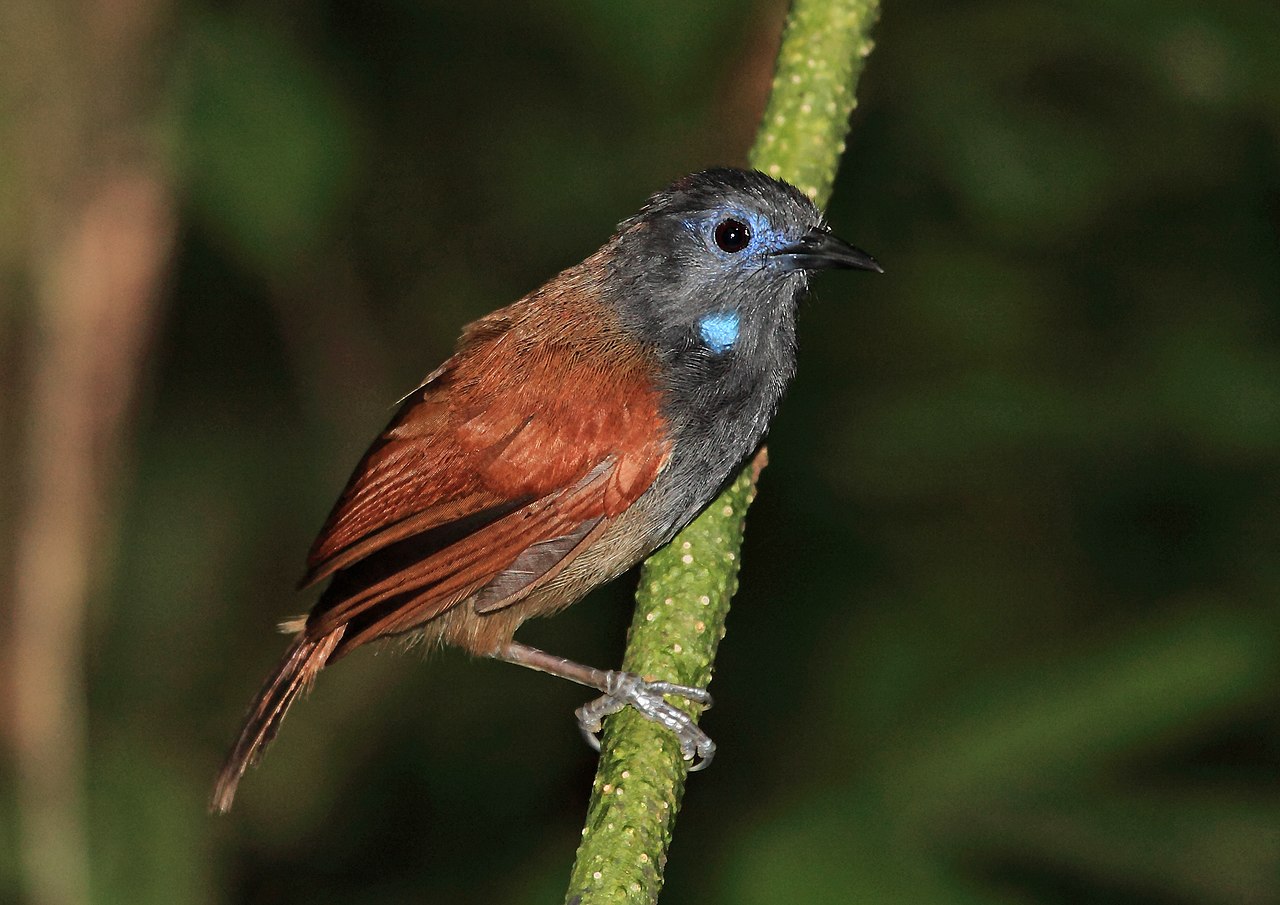
The grey-hooded babbler is a babbler species in the family Timaliidae. It occurs in Borneo and Banggai Island. The grey-hooded babbler was formerly considered conspecific to the chestnut-winged babbler. It is listed as Least Concern on the IUCN Red List.
Region
Sundaland and Wallacea
Typical Environment
The species inhabits the lowland and foothill forests of Borneo and the Banggai Islands. It favors dense understory in primary and well-developed secondary evergreen forest, forest edges, and thickets along streams. It also uses bamboo and regrowth tangles, provided there is ample cover. The bird typically keeps close to the ground or mid-understory and forages in shadowy, tangled vegetation.
Altitude Range
Sea level to 1200 m
Climate Zone
Tropical
Ease of Keeping
Beginner friendly: 1/5
This shy understory babbler was formerly treated as conspecific with the chestnut-winged babbler but is now recognized as distinct based on range and vocal differences. It occurs in Borneo and on Indonesia’s Banggai Islands, where it keeps to dense, low vegetation. Pairs and small parties often join mixed-species flocks, and their antiphonal duets help birders locate them. It is currently assessed as Least Concern on the IUCN Red List.

Temperament
skulking yet social
Flight Pattern
short rapid wingbeats
Social Behavior
Usually found in pairs or small family groups and frequently associates with mixed-species flocks in the understory. Nests are typically domed or cup-like structures placed low in dense vegetation. Both parents are believed to participate in nest building and chick rearing.
Migratory Pattern
Resident
Song Description
Vocalizations include clear, ringing whistles and thin tsee notes, often delivered as coordinated duets between pair members. Calls can shift to sharp scolds when alarmed, and soft contact notes keep parties together in dense cover.
Plumage
A neat grey hood and face contrast with warm brown to olive-brown upperparts and rich chestnut-toned wings; underparts are buffy to pale brown. Feathers are soft and sleek, giving a smooth appearance. The tail is medium-length and often held cocked slightly, showing rufous-brown tones.
Diet
Primarily feeds on small arthropods such as insects, spiders, and their larvae. It gleans from leaves and twigs, pecks at bark, and occasionally sally-gleans to snatch prey. It may supplement its diet with small berries during periods of low insect availability.
Preferred Environment
Forages within dense understory, vine tangles, bamboo, and forest edge thickets. Often feeds at 0.5–3 m above ground, working methodically through shaded foliage and along streamside vegetation.


