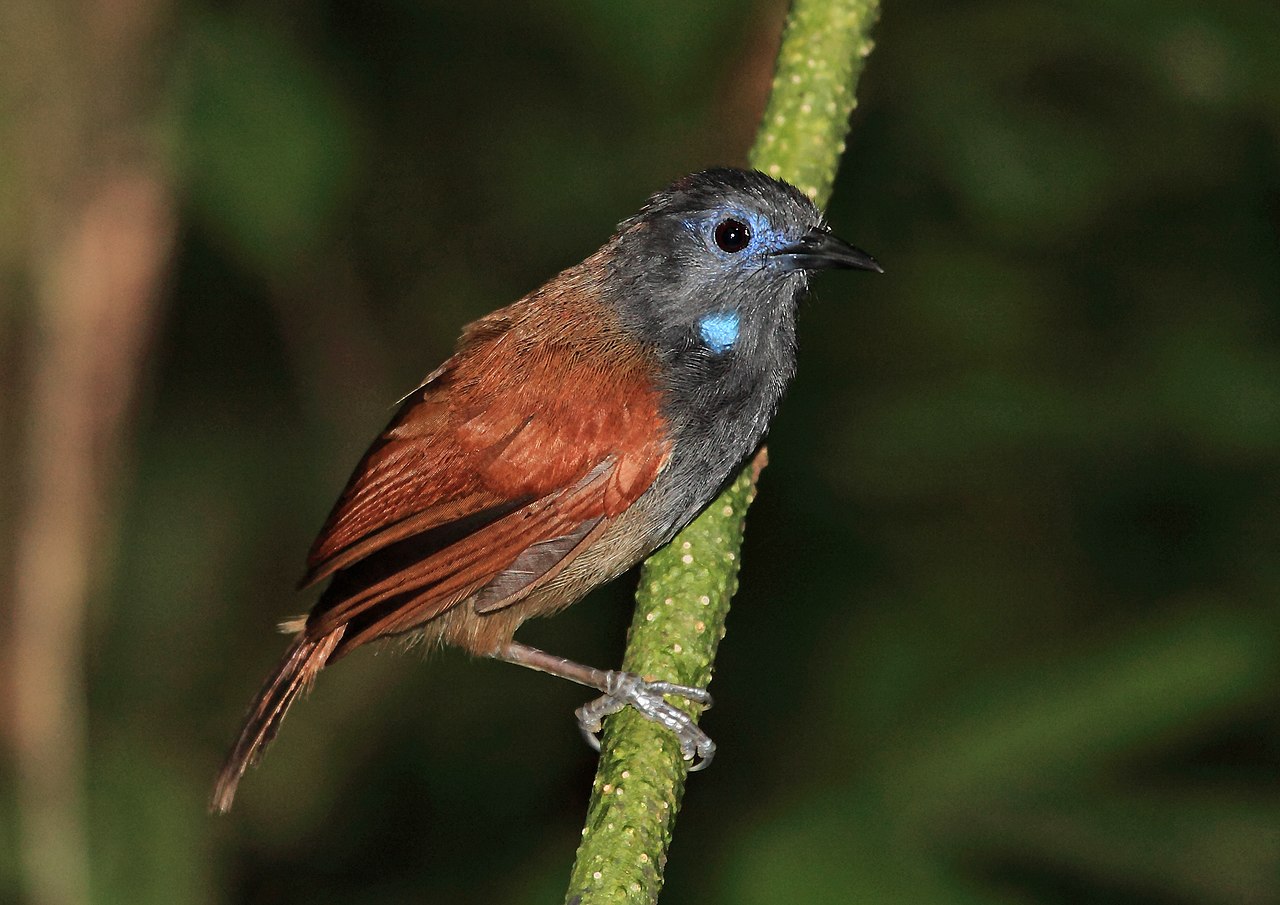
The grey-hooded attila is a species of bird in the family Tyrannidae, the tyrant flycatchers. It is endemic to Brazil.
Region
Atlantic Forest of eastern and southeastern Brazil
Typical Environment
Found in lowland and foothill tracts of the Atlantic Forest from Bahia south through Espírito Santo, Rio de Janeiro, São Paulo, and into Santa Catarina and Rio Grande do Sul. Prefers mature and secondary evergreen forest, forest edges, and well-wooded ravines. Typically uses midstory to subcanopy perches inside shaded forest. Often occurs along streams and in densely vegetated gullies where it forages by sallying to foliage and trunks.
Altitude Range
Sea level to 1500 m
Climate Zone
Subtropical
Ease of Keeping
Beginner friendly: 1/5
A stocky tyrant flycatcher of Brazil’s Atlantic Forest, the grey-hooded attila is named for its distinctive gray head contrasting with warm rufous body tones. It hunts by sitting quietly and making short sallies to snatch large insects, sometimes taking small vertebrates and fruit. Its clear, whistled phrases carry far through dense forest, often revealing its presence before it is seen.


Temperament
solitary and territorial
Flight Pattern
short rapid wingbeats with brief sallies from perches
Social Behavior
Usually seen alone or in pairs, maintaining territories within forest. During breeding, pairs remain close and may duet; both sexes participate in territory defense. Nests are placed in trees or dense vegetation; both parents care for nestlings.
Migratory Pattern
Resident
Song Description
Gives clear, penetrating whistles and repeated phrases, often delivered from a concealed perch. Calls can be mournful and carry well through dense forest, aiding detection even when the bird remains hidden.
Plumage
Compact flycatcher with a smooth gray hood and nape contrasting with warm rufous to cinnamon-brown upperparts and underparts. The throat is paler and may appear whitish, with subtle dusky lores. Wings show darker brown with rufous edging; tail is rufous-brown.
Diet
Takes large insects such as beetles, orthopterans, and caterpillars, as well as spiders. Occasionally captures small lizards or other tiny vertebrates. Will also consume small fruits, especially when insect activity is low.
Preferred Environment
Forages from shaded midstory perches inside mature and secondary forest. Frequently sally-strikes to foliage, branches, or the ground and also gleans from leaves and bark. Often hunts along forest edges and stream corridors.