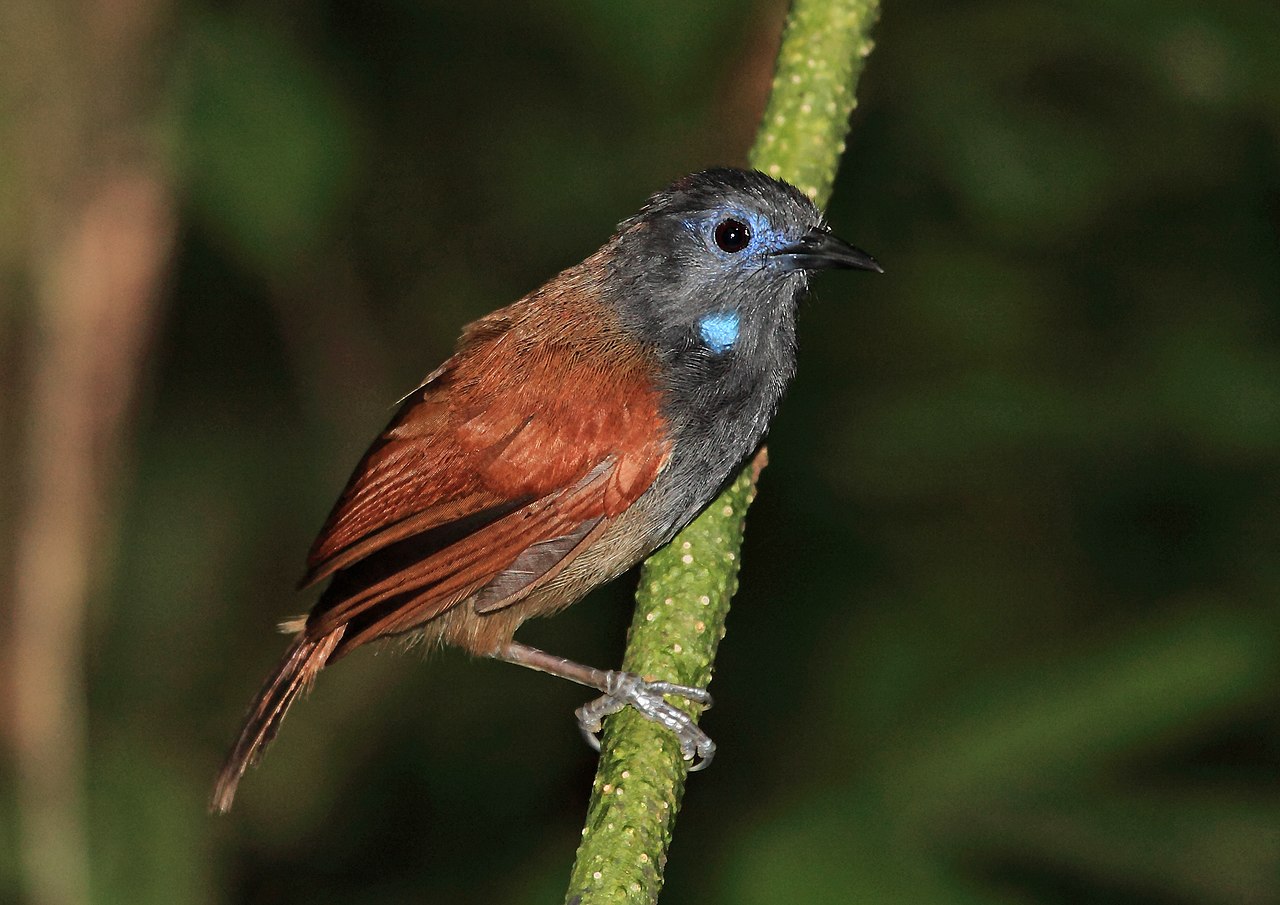
The grey-headed tanager is a widely distributed species of small Neotropical bird in the tanager family Thraupidae. It is the only member of the genus Eucometis.
Region
Central America and the Amazon Basin
Typical Environment
Occurs from southern Mexico through Central America into northern and central South America, including Colombia, Venezuela, the Guianas, Ecuador, Peru, Bolivia, and much of Brazil. It inhabits humid lowland and foothill forests, forest edges, and secondary growth, often near streams or light gaps. Frequently joins mixed-species flocks in the understory and midstory. It adapts reasonably well to selectively logged forests and mature second growth where sufficient cover remains.
Altitude Range
Sea level to 1500 m
Climate Zone
Tropical
Ease of Keeping
Beginner friendly: 1/5
The grey-headed tanager is the only member of the genus Eucometis and ranges widely from southern Mexico through much of the Amazon Basin. It often accompanies mixed-species flocks and is well known for following army-ant swarms to snatch prey flushed from the leaf litter. Despite its name, much of its body is olive with bright yellow underparts that contrast with the gray head.


Temperament
social and active
Flight Pattern
short rapid wingbeats
Social Behavior
Often travels with mixed-species flocks in the understory and is a regular attendant at army-ant swarms. Pairs are commonly observed, and they defend small breeding territories. The cup nest is placed low to mid-level in dense vegetation, and both parents participate in care.
Migratory Pattern
Resident
Song Description
Gives a series of sharp chips and thin whistles, often delivered from low perches. The calls are bright, metallic notes that carry well in dense forest and are interspersed with softer contact calls when following flocks.
Plumage
Smooth gray head contrasting with olive-green upperparts and bright yellow underparts; wings and tail olive with slightly darker flight feathers.
Diet
Consumes a mix of arthropods such as insects and spiders, along with small fruits and berries. Frequently forages by gleaning and sallying within the understory. When attending army-ant swarms, it captures prey flushed from the leaf litter. Fruit intake increases seasonally when available.
Preferred Environment
Feeds in shaded understory and edges of humid forest, along streams, clearings, and second-growth thickets. Regularly works within mixed-species flocks and near ant swarms where prey is concentrated.