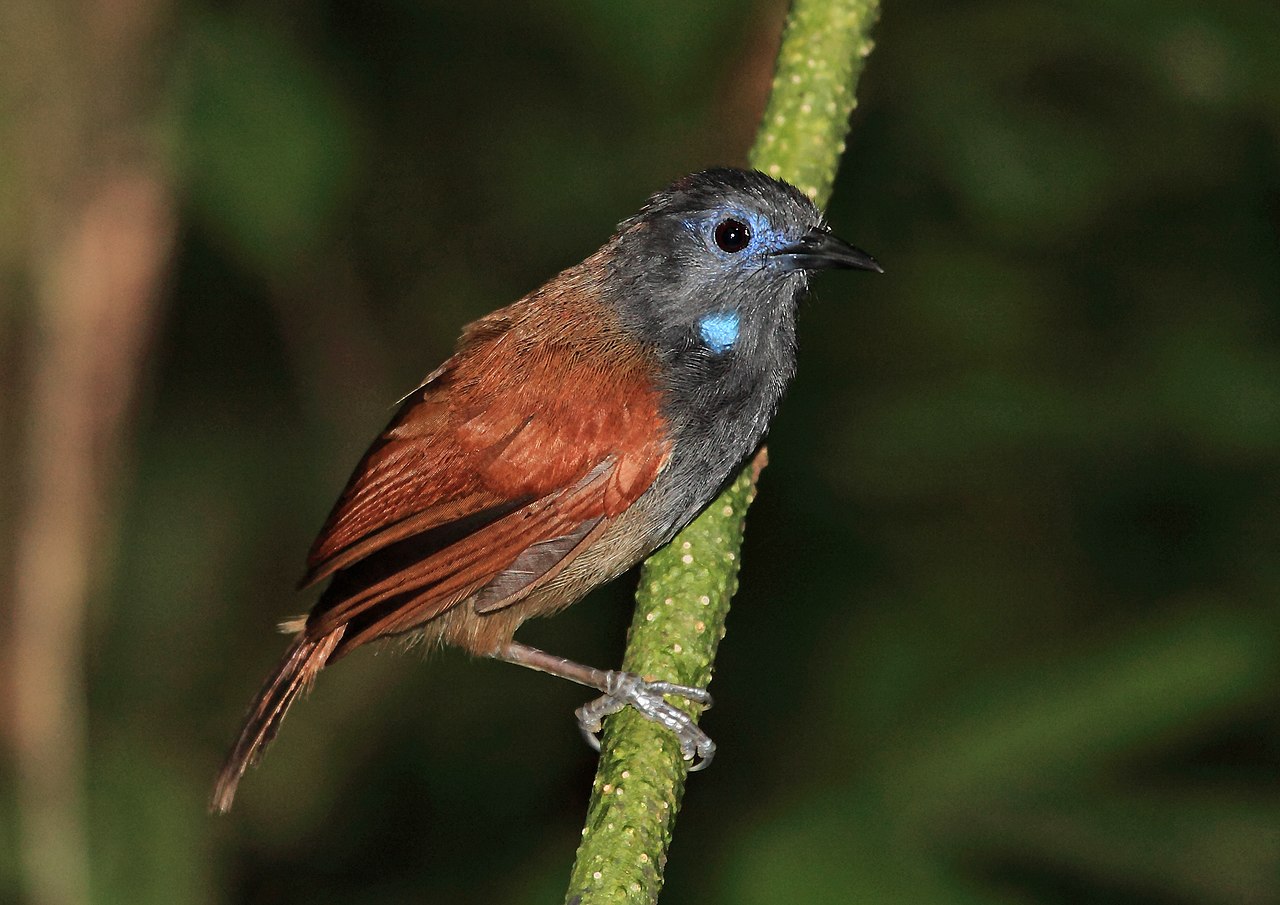
The grey-headed warbler is a species of bird in the family Parulidae. It is endemic to Venezuela.
Region
Venezuelan Coastal Range
Typical Environment
Occurs in subtropical and tropical moist montane forests of northern Venezuela, especially in dense understory along slopes and ravines. It favors forest edges, second growth, and thickets near streams where cover is abundant. The species typically keeps within a few meters of the ground, moving through vine tangles, bamboo, and ferny understory. It tolerates some habitat disturbance but depends on contiguous humid forest blocks for stable populations.
Altitude Range
600–2000 m
Climate Zone
Highland
Ease of Keeping
Beginner friendly: 1/5
This small New World warbler is confined to the Venezuelan Coastal Range, where it keeps to dense, moist montane forest. It forages low in the understory and often joins mixed-species flocks. Formerly placed in Basileuterus, it is now commonly treated in the genus Myiothlypis. Ongoing cloud-forest loss and fragmentation are its main threats.


Temperament
skulking and active
Flight Pattern
short rapid wingbeats
Social Behavior
Usually seen singly or in pairs within dense understory, often joining mixed-species flocks moving through the forest. Likely monogamous, with cup-shaped nests placed low, sometimes on banks or among dense vegetation. Territorial during breeding but otherwise tolerant of close neighbors in suitable habitat.
Migratory Pattern
Resident
Song Description
A series of thin, high-pitched notes and trills delivered from low perches, often accelerating slightly. Calls include sharp chips used to maintain contact within pairs or flocks.
Plumage
Olive upperparts with a smooth gray hood covering the head and nape, contrasting with bright yellow underparts. The throat to belly is yellow, with olive wings and tail. Subtle whitish eye-arcs or a faint supercilium may be present, and the underparts are clean and unmarked.
Diet
Primarily small arthropods such as insects, larvae, and spiders gleaned from leaves, twigs, and the forest floor. It methodically searches low vegetation and vine tangles, occasionally sallying short distances to capture prey. Small fruits may be taken opportunistically, but animal prey dominates.
Preferred Environment
Feeds in dense understory of humid montane forest, along streamside thickets, and at forest edges. Frequently forages within bamboo, heliconias, and dense shrub layers where cover is thick.