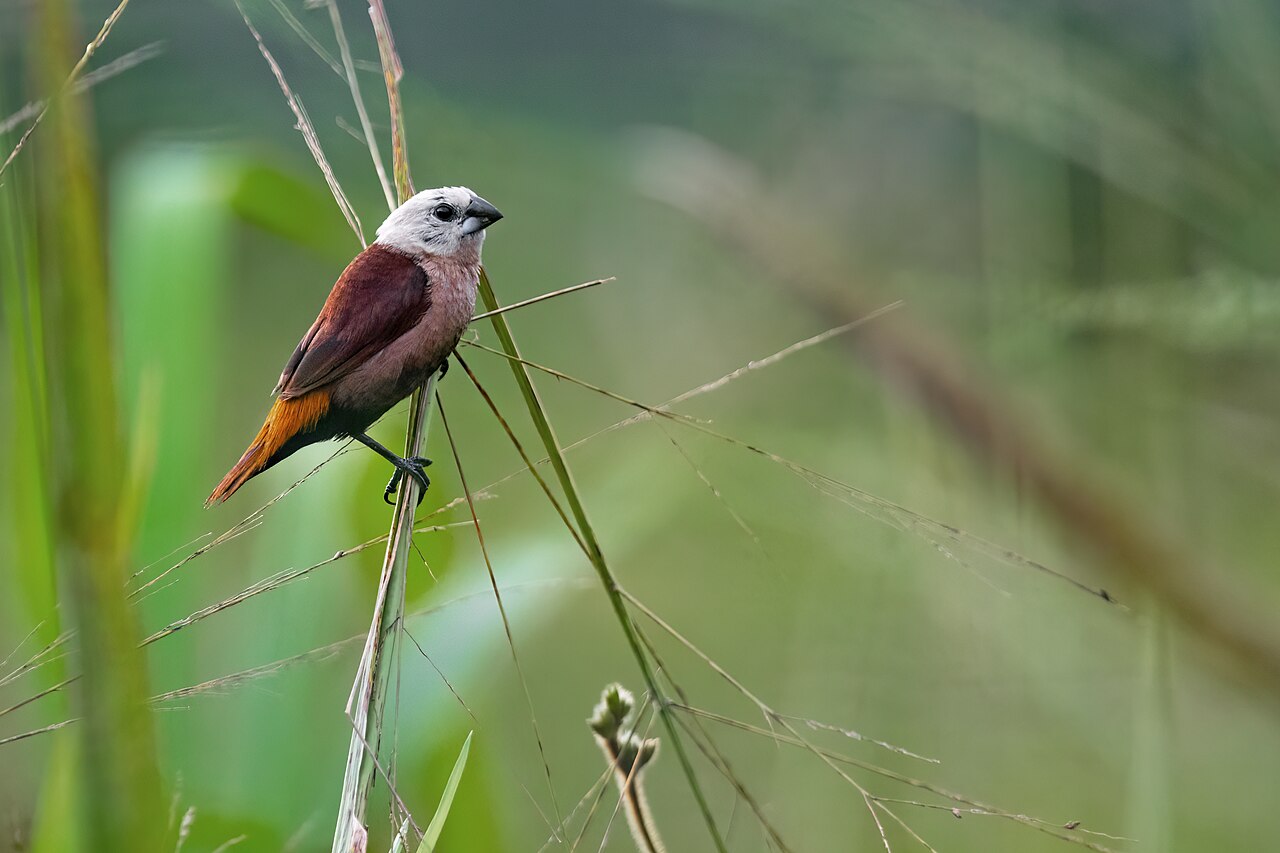
The grey-headed honeyeater is a species of bird in the family Meliphagidae. It is endemic to Australia.
Region
Arid interior of Australia
Typical Environment
Found across the interior of Western Australia, the Northern Territory, South Australia, and far western Queensland in arid and semi-arid landscapes. It frequents mulga and acacia woodlands, spinifex grasslands with scattered shrubs, and rocky ranges and gorges. The species often concentrates along dry watercourses and in eucalypt groves when in flower. It is patchy but can be locally common where nectar is abundant.
Altitude Range
100–1200 m
Climate Zone
Arid
Ease of Keeping
Beginner friendly: 1/5
An arid-zone specialist, the grey-headed honeyeater follows flowering events of eucalypts and acacias and may move locally as resources shift. It often joins mixed-species foraging flocks and becomes conspicuously vocal around rich nectar sources. Nests are usually small, neat cups placed low in shrubs or small trees, often after rain.


An adult grey-headed honeyeater feeding, Northern Territory

Grey-headed honeyeater eggs


Temperament
active and alert
Flight Pattern
short rapid wingbeats
Social Behavior
Usually seen singly, in pairs, or small loose parties, and often joins mixed honeyeater flocks at flowering trees. Territorial around rich nectar sources, with aerial chases and vocal displays. Breeding typically follows rainfall; the small cup nest is placed in shrubs or low tree forks.
Migratory Pattern
Partial migrant
Song Description
Calls are thin, metallic tinkling notes interspersed with sharper chips. The song is a light, tinkling series delivered from perches, often accelerating during social interactions near flowers.
Plumage
Grey head and face with olive-brown to olive-green upperparts and paler, lightly yellow-washed underparts. The texture is sleek, with subtle streaking minimal to absent. Edges of wings and tail can show yellowish tones.
Diet
Takes nectar from eucalypts, grevilleas, melaleucas, and acacias, and supplements with insects, spiders, and sugary lerp. Gleans from foliage and bark, probes flowers, and occasionally hawks short distances for flying insects. Diet composition shifts seasonally with flowering and after rain.
Preferred Environment
Feeds in the mid-canopy and shrub layers of mulga and acacia woodlands, along dry creek lines, and in rocky gullies with flowering shrubs. Concentrates at blossoms but also forages among spinifex and leaf litter for small arthropods.