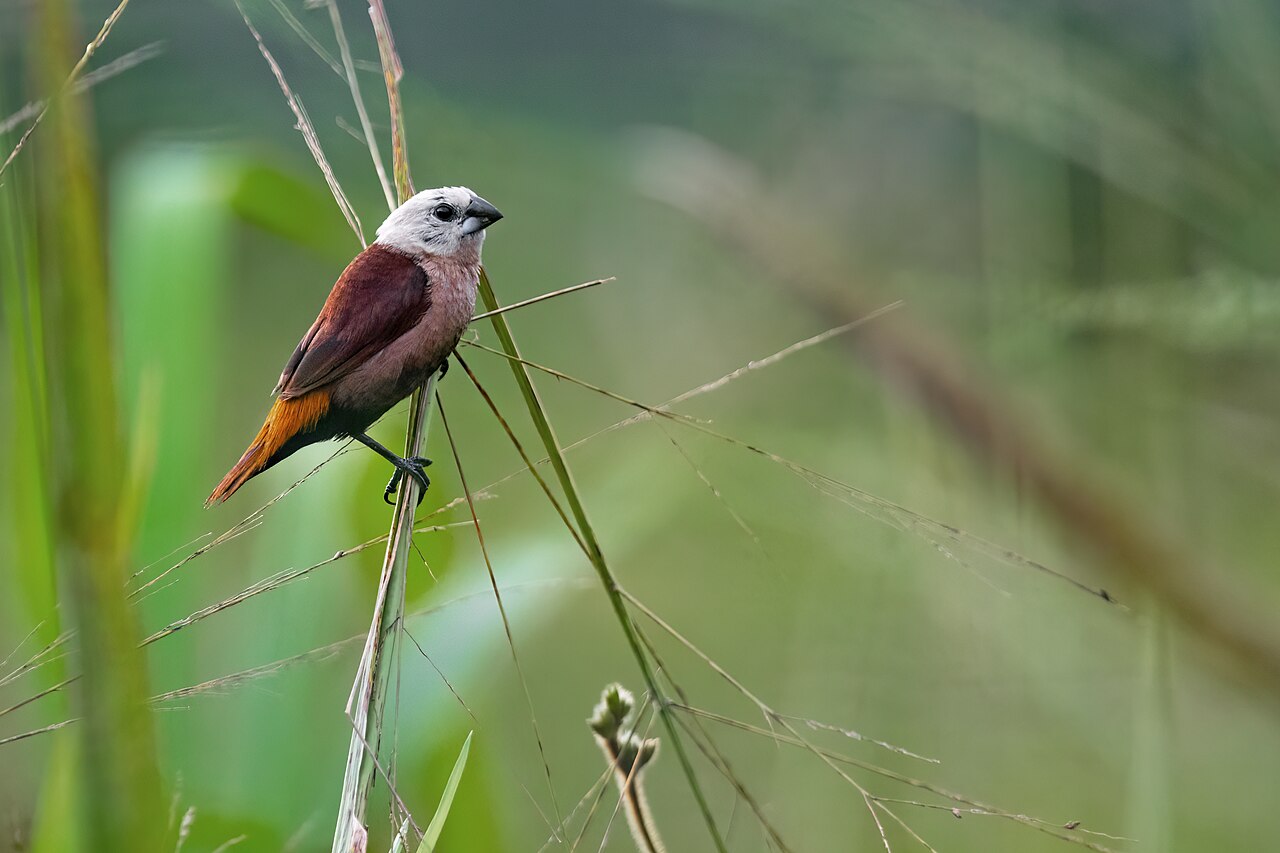
The grey-headed lapwing is a lapwing species which breeds in northeast China and Japan. The mainland population winters in northern Southeast Asia from northeastern India to Cambodia. The Japanese population winters, at least partially, in southern Honshū.
Region
East and Southeast Asia
Typical Environment
Breeds in northeast China and parts of Japan, especially Hokkaidō and northern Honshū, favoring open wetlands and agricultural fields near water. The mainland population winters from northeastern India through Bangladesh and Myanmar to Thailand, Laos, Vietnam, and Cambodia. Japanese breeders winter partly in southern Honshū and also farther south on the Asian mainland. Typical habitats include rice paddies, riverbanks, floodplains, lakeshores, and seasonally flooded grasslands. It is mainly an inland species but may occur on coastal mudflats during migration.
Altitude Range
0–1500 m
Climate Zone
Other
Ease of Keeping
Beginner friendly: 1/5
The grey-headed lapwing breeds in northeast China and Japan and winters across northern Southeast Asia. It readily uses human-modified wetlands such as rice paddies and floodplains. In flight it shows striking white wing panels and a bold black tail band, making identification at distance easier.


In flight at Kathmandu Valley, Nepal.

The first grey-headed lapwing seen in Britain was on 1 May 2023 at Newton-by-the-Sea in Northumberland.
Temperament
alert and territorial during breeding
Flight Pattern
strong flier with steady, direct wingbeats; circles and swoops during display
Social Behavior
Breeds in pairs or loose colonies on open ground near water, nesting in shallow scrapes. Both sexes share incubation and chick rearing. Outside the breeding season it forms small to sizable flocks, often congregating in rice fields and on exposed mud.
Migratory Pattern
Seasonal migrant
Song Description
Calls are loud, ringing and repeated, often given in flight, sounding like clear 'kreee-kreee' or 'kyew' notes. Alarm calls become more rapid and insistent near the nest. Vocal activity increases at dawn, dusk, and during display flights.
Plumage
Grey head and neck with warm brown upperparts, white underparts, and a contrasting dark breast band. In flight shows bold white wing panels with black primaries and a broad black tail band above a white rump.
Diet
Primarily consumes insects such as beetles, grasshoppers, and crickets, along with earthworms and small mollusks. Forages by walking and picking prey from the ground or shallow water. Will probe soft mud and glean along the edges of puddles and ditches. Occasionally takes small crustaceans or other invertebrates in flooded fields.
Preferred Environment
Feeds in wet agricultural lands, especially rice paddies, as well as on muddy river margins, floodplains, and marshy meadows. Often uses recently ploughed or shallowly flooded fields where prey is concentrated. Prefers open areas with short vegetation and exposed mud.