
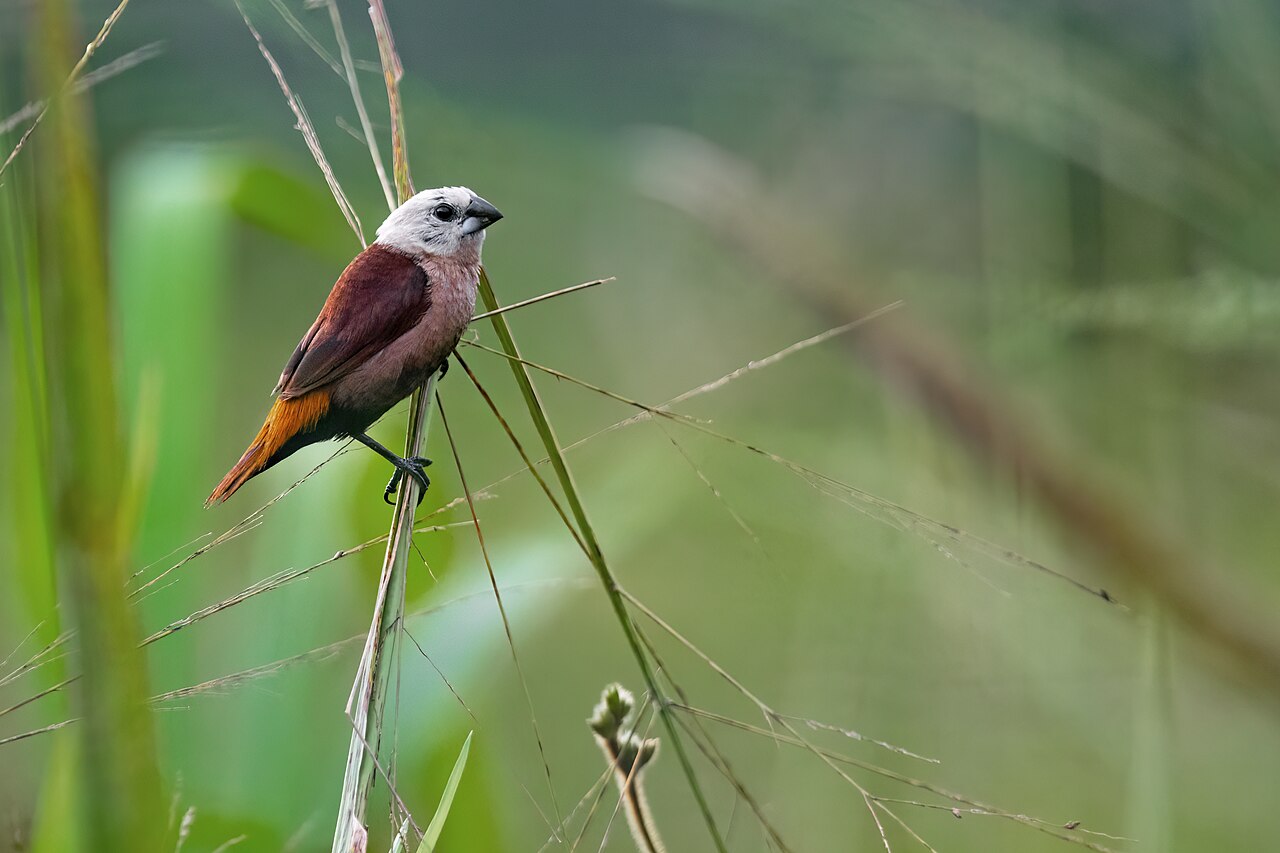
The grey-headed mannikin or grey-headed munia is a species of estrildid finch, native to the Papuan Peninsula. It has an estimated global extent of occurrence of 50,000 to 100,000 km2. It is found in moist savanna, shrubland & wetlands. The status of the species is evaluated as Least Concern.
Region
New Guinea
Typical Environment
Occurs primarily in the lowlands and foothills of the Papuan Peninsula in southeastern New Guinea. It frequents moist savannas, tall grasslands, reedbeds, and shrublands, especially near wetlands and along river floodplains. The species readily uses secondary growth, garden edges, and agricultural margins such as rice or cane fields. Its range is patchy, following belts of suitable grassy and wet habitats.
Altitude Range
0–1500 m
Climate Zone
Tropical
Ease of Keeping
Beginner friendly: 3/5
Also known as the grey-headed munia, this small estrildid finch is confined to the Papuan Peninsula of southeastern New Guinea. It forms loose flocks outside the breeding season and often forages in tall grasses and along wetland edges. Like many munias, it feeds mainly on grass seeds but may take tiny invertebrates when raising young. Its quiet, twittering calls can make it inconspicuous despite being fairly common where suitable habitat exists.

Temperament
social and active
Flight Pattern
short rapid wingbeats
Social Behavior
Often seen in small flocks or family parties outside the breeding season, sometimes mixing with other munias. Pairs are monogamous and build a domed grass nest hidden in dense grasses or low shrubs. Both sexes participate in nest building and chick rearing. Clutches are small to moderate, and birds may breed opportunistically with rainfall.
Migratory Pattern
Resident
Song Description
Soft, twittering series of thin notes interspersed with dry chips. The song is simple and repetitive, used for pair contact and establishing territory near the nest.
Plumage
Smooth, neat plumage with a clean grey head contrasting against warm brown upperparts and buffy to cinnamon underparts; tail darker.
Diet
Primarily consumes small grass and sedge seeds, often taking seeds directly from ripening seed heads. It also gleans fallen seeds on the ground and along paths. During breeding, it may supplement with tiny insects or other invertebrates to feed nestlings.
Preferred Environment
Feeds along the edges of wetlands, in tall grasslands, and in weedy field margins. It also uses secondary scrub and the fringes of agricultural plots such as rice paddies and sugarcane fields.


