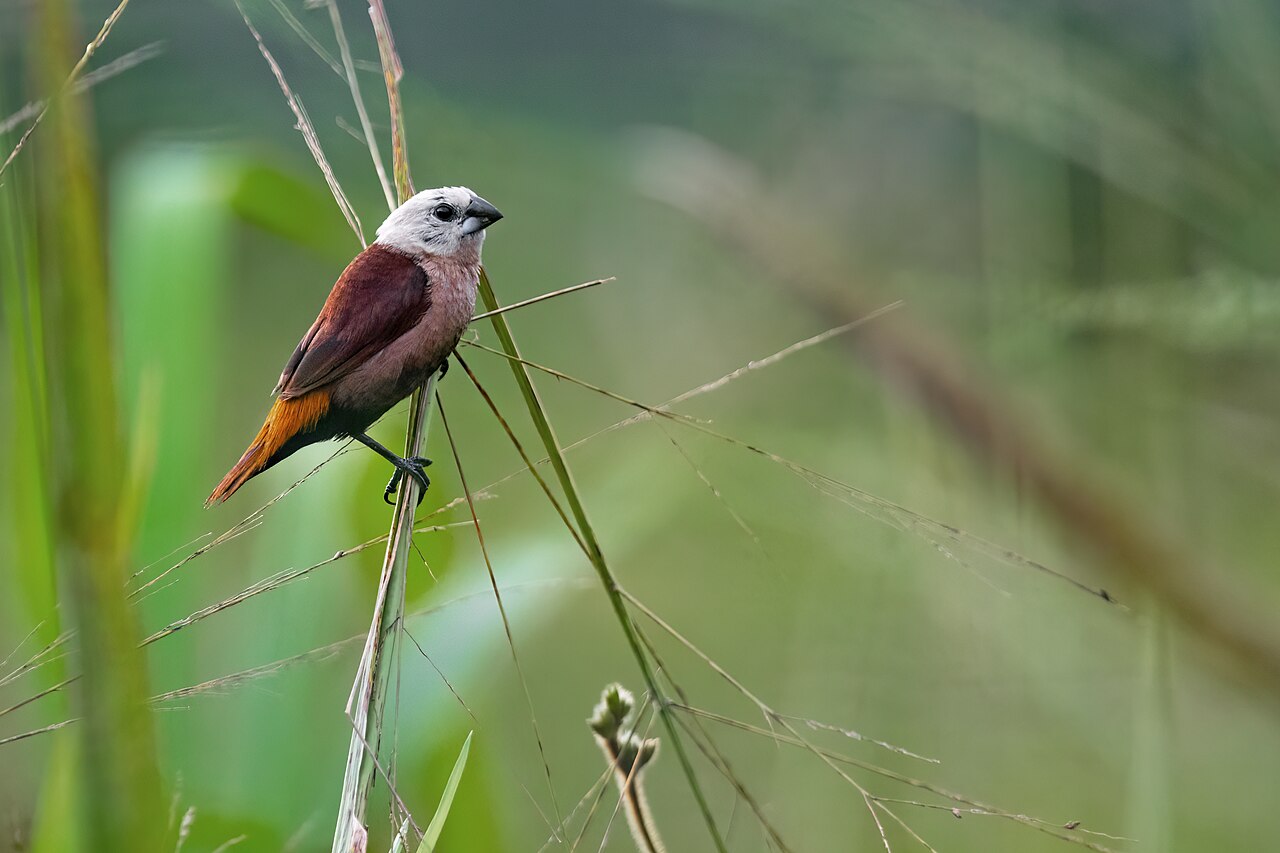
The grey-headed greenbul, or grey-headed yellow-bellied greenbul, is a species of songbird in the bulbul family, Pycnonotidae. It is native to the Western High Plateau.
Region
Lower Guinea and Cameroon Highlands (West-Central Africa)
Typical Environment
Occurs from southeastern Nigeria through western Cameroon (including the Cameroon Highlands) to Equatorial Guinea and Gabon, with populations in both lowland and montane moist forests. Prefers dense understorey, forest edges, secondary growth, and gallery forests. Common along shaded streams and in thickets where it can forage discreetly. It tolerates some disturbance and can persist in selectively logged forest, provided understorey remains intact.
Altitude Range
200–2400 m
Climate Zone
Tropical
Ease of Keeping
Beginner friendly: 2/5
The grey-headed greenbul, also called the grey-headed yellow-bellied greenbul, is a shy forest songbird of the bulbul family. It keeps to the understorey and mid-levels of moist forests, where its soft whistles can reveal its presence before the bird is seen. It often joins mixed-species flocks while foraging. Habitat loss is a local threat, but the species remains fairly widespread in suitable forests.
Temperament
shy and skulking
Flight Pattern
short rapid wingbeats through dense cover
Social Behavior
Usually seen singly or in pairs, often accompanying mixed-species foraging flocks in the understorey. Builds a small cup nest low in shrubs or saplings. Both parents are involved in caring for the young. Territorial songs and calls are delivered from concealed perches.
Migratory Pattern
Resident
Song Description
Song is a series of soft, clear whistles and mellow notes, often rising and falling gently. Calls include thin tseet and chipping contact notes given while foraging in cover.
Plumage
Olive-green upperparts with a contrasting cool grey head and nape; underparts are yellow to yellow-olive with paler throat. Feathers appear soft and unpatterned, giving a clean, even-toned look. Tail is olive with slightly darker central feathers.
Diet
Takes a mixed diet of small fruits and berries along with insects and other arthropods such as beetles, caterpillars, and spiders. Gleans prey from leaves and twigs and occasionally sallies a short distance to snatch flushed insects. Fruit from understorey shrubs and forest-edge trees forms an important seasonal component.
Preferred Environment
Feeds primarily in the forest understorey and lower mid-storey, often within dense thickets. Frequently forages along forest edges, clearings, and riparian vegetation where insect abundance and fruiting shrubs are common.