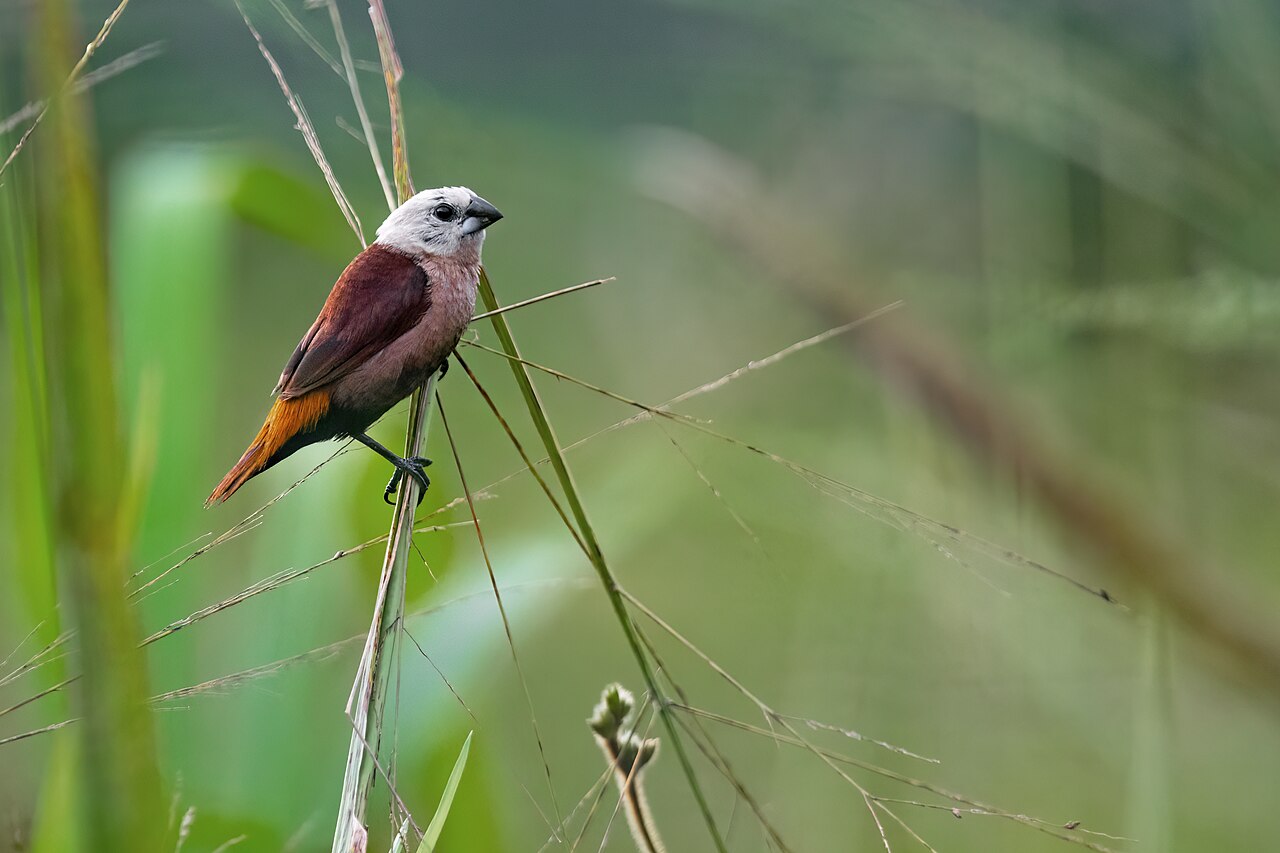
The grey-headed goshawk is a lightly built, medium-sized bird of prey in the family Accipitridae. This species was formerly placed in the genus Accipiter.
Region
New Guinea and adjacent islands
Typical Environment
Occurs across the island of New Guinea and nearby islands such as the Aru and Yapen groups. It inhabits primary and secondary lowland rainforest, riverine forest, forest edges, and tall mosaic woodland. The species forages within the canopy and subcanopy but also patrols along clearings and tracks where prey movement is easier to detect. It tolerates some habitat disturbance and can appear in plantations bordering forest.
Altitude Range
Sea level to 1500 m
Climate Zone
Tropical
Ease of Keeping
Beginner friendly: 1/5
The grey-headed goshawk is a lightly built forest raptor native to New Guinea and nearby islands. It hunts by stealth from perches inside or along the edge of rainforest, launching short, rapid dashes at prey. Juveniles are browner and more streaked than adults, which can cause confusion with other small Accipiter hawks. Some authorities have discussed alternative generic placement, but it is commonly treated within Accipiter.

Temperament
solitary and territorial
Flight Pattern
short rapid wingbeats with brief glides; occasionally soars over forest
Social Behavior
Typically seen alone or in pairs. Pairs maintain territories and nest high in tall trees, building a stick platform lined with leaves. Clutches are small, and both adults guard the nest and provide food. Young remain near the nest area for some weeks after fledging.
Migratory Pattern
Resident
Song Description
Gives a series of high, sharp kek-kek or ki-ki-ki notes, often delivered from a concealed perch. Alarm calls are faster, more insistent chatter. Vocal activity increases near the nest and at dawn.
Plumage
Adult with smooth pale grey head and mantle, whitish underparts that are mostly unbarred, and a dark grey tail with broad darker bands. Juveniles are brown above with buffy fringes and streaked underparts.
Diet
Feeds on small birds, lizards, large insects, and occasionally small mammals. Hunts by sit-and-wait from shaded perches, then ambushes with a rapid burst through foliage. Will pursue prey along forest edges and across clearings. Uses its long legs to snatch prey from branches or the ground.
Preferred Environment
Most often hunts within rainforest edges, along rivers, and in secondary growth adjacent to mature forest. Also forages in forested plantations and along tracks where visibility is improved.