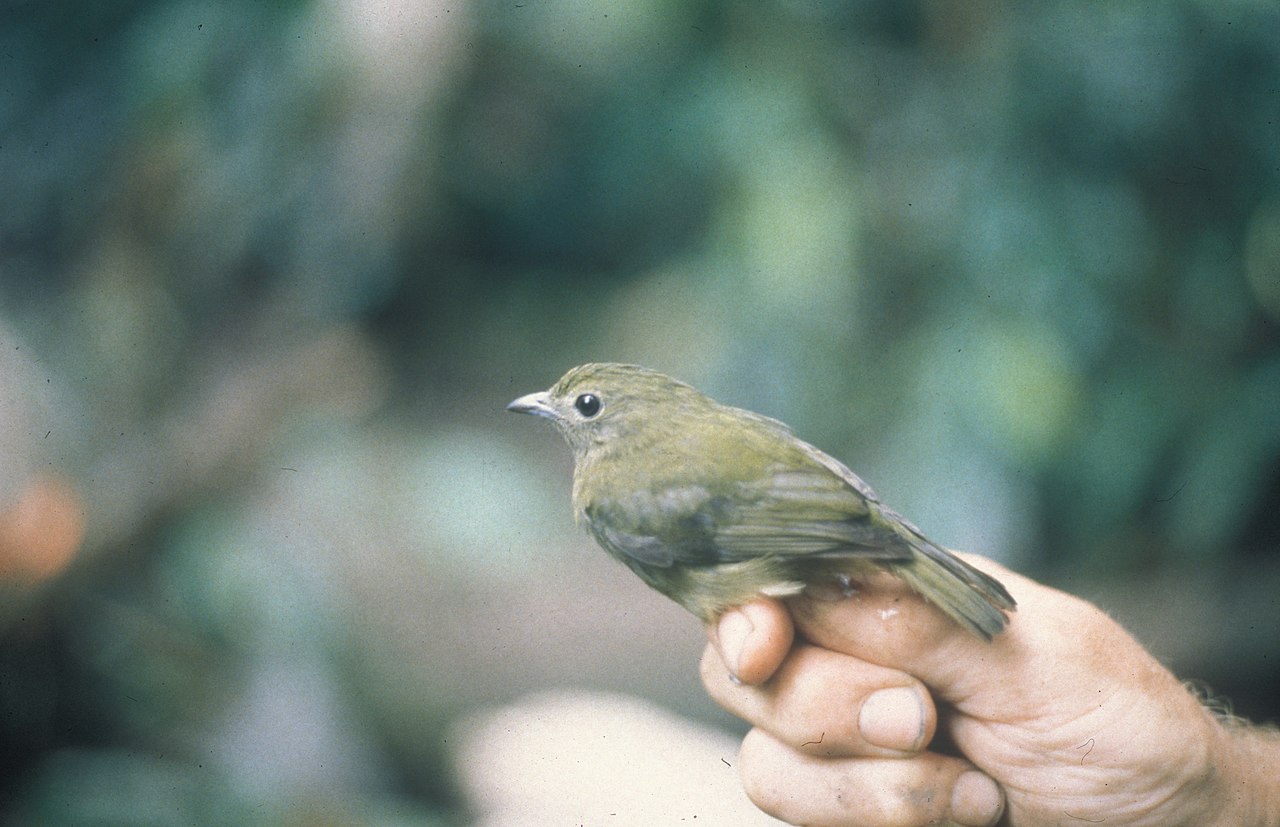
The green jery is a species of bird in the family Cisticolidae. It is endemic to Madagascar.
Region
Madagascar
Typical Environment
Occurs widely in Madagascar’s humid eastern forests and locally in drier deciduous forests in the northwest. It favors tropical moist lowland forest, evergreen forest edges, and secondary growth with dense foliage. The species forages from the understory to the mid-canopy and adapts moderately well to degraded forest patches. It generally avoids open grasslands and urban cores.
Altitude Range
Sea level to 1200 m
Climate Zone
Tropical
Ease of Keeping
Beginner friendly: 1/5
The green jery is a small Malagasy warbler in the family Cisticolidae and is found only on Madagascar. It is active and often joins mixed-species foraging flocks in forest understory and mid-story. Its name “jery” comes from Malagasy local usage, reflecting its quick, high-pitched calls.

Temperament
active and somewhat skulking
Flight Pattern
short rapid wingbeats
Social Behavior
Usually seen singly or in pairs, often joining mixed-species flocks moving through forest understory and mid-story. Breeding pairs maintain small territories and build neat, well-hidden nests in dense foliage. Nests are typically domed or cup-like and placed low to mid-level in shrubs or small trees.
Migratory Pattern
Resident
Song Description
A high, thin series of twittering notes and short trills, often delivered from inside cover. Contact calls are sharp and sibilant, repeated as birds move through foliage.
Plumage
Olive-green upperparts with paler, yellow-washed underparts and a cleaner whitish belly. Fine, soft plumage with subtle streaking absent; overall smooth, uniform tones. A faint pale supercilium and slightly darker eye-line can be visible, with short rounded wings and a fairly long tail.
Diet
Primarily small arthropods such as caterpillars, beetles, and spiders gleaned from leaves and twigs. It methodically searches foliage, probing clusters of leaves and fine branch tips. Occasional intake of tiny fruits or nectar may occur but is not central to its diet.
Preferred Environment
Forages in dense foliage of forest edges, secondary growth, and understory to mid-canopy layers of humid forest. Frequently accompanies mixed-species flocks along vegetated trails and clearings.