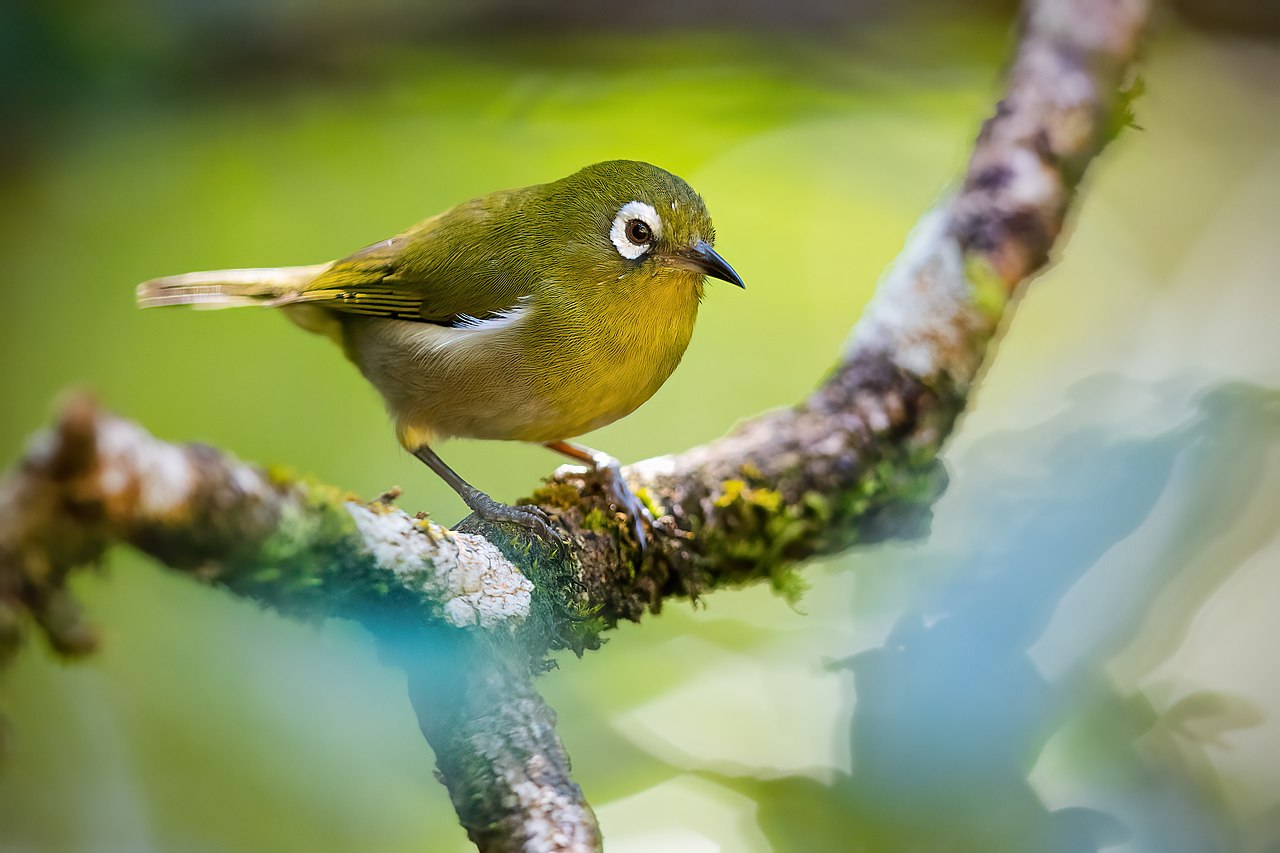
The green-backed robin is a species of bird in the family Petroicidae. It is found in New Guinea. Its natural habitats are subtropical or tropical moist lowland forest and subtropical or tropical moist montane forest.
Region
New Guinea
Typical Environment
Occurs across both lowland and montane rainforests of New Guinea, including foothills and mid-elevation slopes. It prefers dense, humid forest with a well-developed understory and ample leaf litter. Birds are frequently associated with ravines, streamside thickets, and mossy forest interiors. It generally avoids open habitats and heavily disturbed areas, though it may use mature secondary forest.
Altitude Range
0–2200 m
Climate Zone
Tropical
Ease of Keeping
Beginner friendly: 1/5
The green-backed robin is an understory specialist of New Guinea’s rainforests, where it keeps to shaded, mossy gullies and quiet forest floors. It is often seen alone or in pairs, hopping deliberately to glean insects from leaf litter and low vegetation. Its soft, high whistles can be hard to locate, making the bird more often heard than seen.

Temperament
shy and secretive
Flight Pattern
short rapid wingbeats between low perches
Social Behavior
Usually solitary or in pairs within well-defined territories. Breeding pairs are thought to be monogamous, building a neat cup nest low in vegetation or on a mossy ledge. Both adults typically attend the nest and feed the young.
Migratory Pattern
Resident
Song Description
Song consists of soft, high-pitched whistles and thin phrases delivered from concealed perches. Calls are subtle and ventriloquial, making the bird difficult to locate within dense forest.
Plumage
Olive-green to greenish upperparts with a paler, grayish-white throat and belly; flanks may show a faint yellowish wash. Plumage is smooth and fairly uniform, lacking bold wing bars or striking facial patterns.
Diet
Primarily feeds on insects and other small arthropods gleaned from leaf litter, logs, and low foliage. It hops methodically on the forest floor, probing and picking prey from crevices. Occasionally takes small fruits or seeds when insect prey is less abundant.
Preferred Environment
Forages in shaded understory and along the forest floor of primary and mature secondary rainforest. Frequently works along stream edges, gullies, and mossy patches where invertebrates are plentiful.