
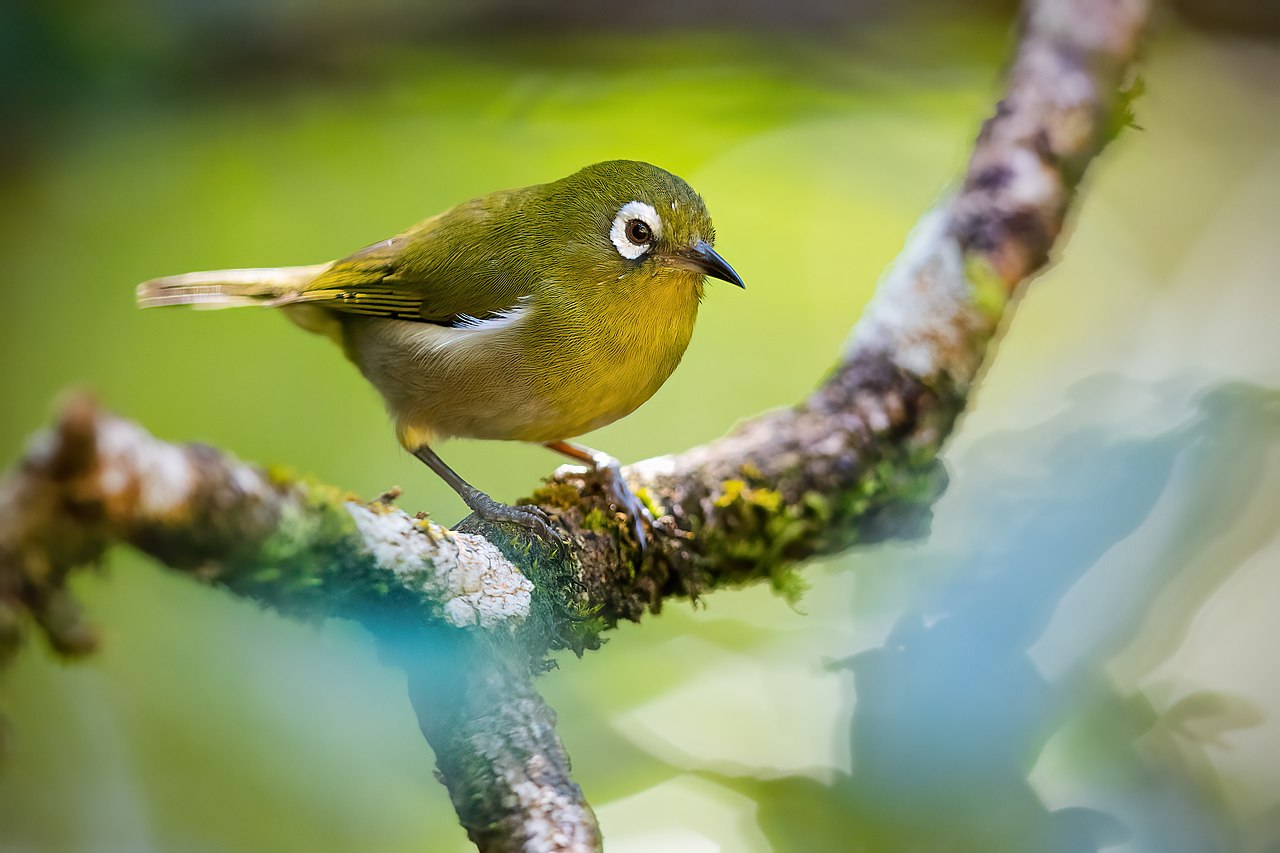
The green-backed white-eye is a species of bird in the family Zosteropidae. It is also known as the New Caledonian white-eye. It is endemic to New Caledonia.
Region
Southwest Pacific (Melanesia)
Typical Environment
Endemic to New Caledonia, it is widespread on the main island’s forests, maquis scrub, and edges, and occurs in secondary growth and well-vegetated gardens. It forages from understory to canopy, especially along forest margins and in flowering shrubs. The species tolerates habitat mosaics and disturbed areas if native vegetation persists. It is generally absent from treeless or heavily urbanized zones.
Altitude Range
Sea level to 1500 m
Climate Zone
Subtropical
Ease of Keeping
Beginner friendly: 2/5
Also called the New Caledonian white-eye, it is a lively, canopy-hopping songbird easily recognized by its crisp white eye-ring. It often joins mixed-species flocks and helps pollinate native plants while feeding on nectar. The species adapts well to secondary growth and gardens, provided flowering shrubs and insect-rich foliage are available.


Two green-backed white-eyes foraging
Temperament
social and active
Flight Pattern
short rapid wingbeats with agile, darting movements
Social Behavior
Outside the breeding season it travels in small flocks and often joins mixed-species foraging parties. Breeding pairs build a small cup nest suspended in shrubs or slender branches. Both parents typically participate in caring for the young.
Migratory Pattern
Resident
Song Description
A high, thin series of twitters and warbles interspersed with sharp contact chips. Songs are fast and musical, often delivered from mid-canopy while foraging.
Plumage
Bright olive-green upperparts with a yellowish throat and undertail, grading to greyish or whitish underparts; smooth, sleek feathering.
Diet
Feeds on small insects and spiders gleaned from leaves and twigs, along with nectar from flowering shrubs and trees. Also takes soft fruits and occasionally sips sugary exudates. Its nectar-feeding helps pollinate native plants.
Preferred Environment
Forages along forest edges, in secondary growth, and in gardens rich in flowering plants. Frequently moves through the mid to upper canopy but will descend to shrubs when blooms or fruit are abundant.


